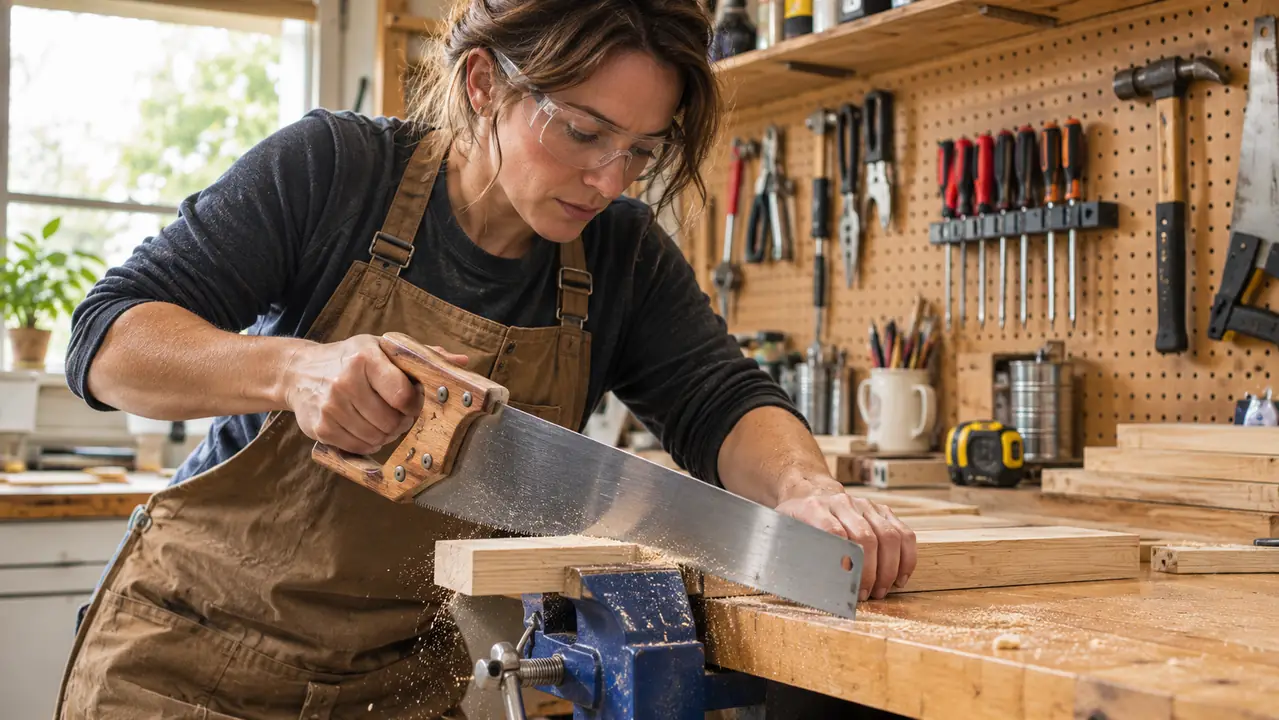
The first tenon I cut with a pull saw came out about a quarter inch out of square, and I spent twenty minutes blaming the tool. It was not the tool. I was pushing the saw forward like a western backsaw, and pushing is the one thing a Japanese saw will not forgive. That was about three years ago. The saw in question is the SUIZAN Ryoba Double Edge Saw, the 9.5 inch model, and it has hung on the pegboard next to my bench ever since. I bought it with my own money, no free sample in the mail. This is not the piece where I tell you it is wonderful. It is closer to what I would say to a friend standing in my garage asking whether it earns the hook it hangs on.
Short answer, yes, with two conditions. The long answer is that a ryoba puts a rip cut and a crosscut in one handle, and it does both well enough that I quit reaching for the backsaw on anything under an inch thick. But it does not replace a saw with a stiff spine for fine joinery, you cannot sharpen it yourself, and the blade is thin enough that one careless afternoon costs you a replacement. Most of what I have to say is about living inside those three facts.
The Quick Verdict
A genuine two-in-one saw that cuts a tenon cheek in four or five pulls. Held back by a blade you cannot sharpen and a 30 day warranty that will be long gone before the teeth are.
Amazon Check Today's Price →The saw that taught me to stop pushing
Nine teeth per inch on one edge, fifteen on the other, and a kerf narrow enough to leave your pencil line standing. This is the one hanging by my bench after three years.
Amazon Check Today's Price on Amazon →How I Have Actually Used It
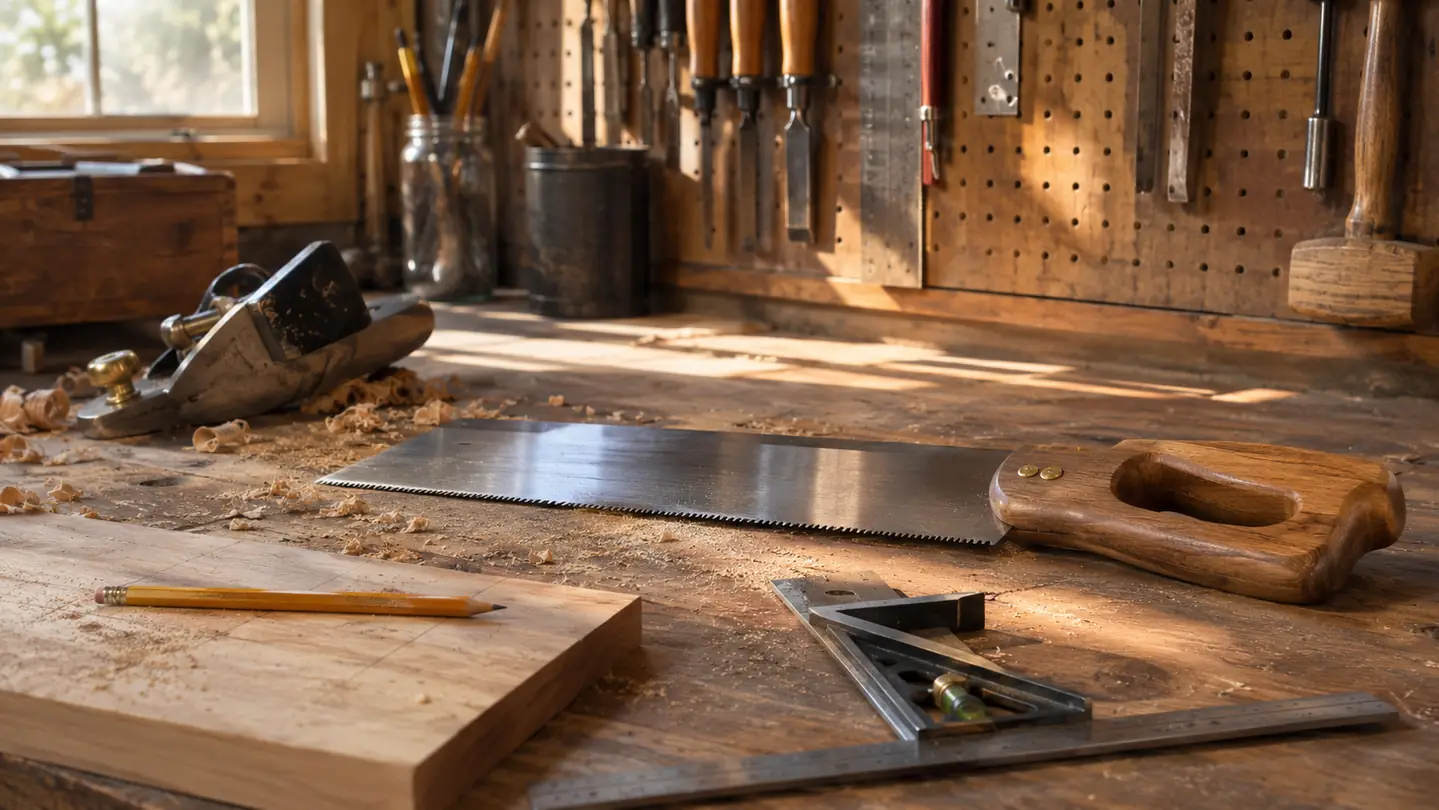
The saw lives on the pegboard between the combination square and the block plane. In three years it has cut tenon cheeks on a blanket chest, trimmed the ends of picture frame stock, flush cut dowel plugs on a step stool, and roughed out the shoulders on more dovetails than I can count. What it has not done is cut dovetail pins. The blade has no back, so it flexes, and freehanding a pin cut with a flexing blade is how a beginner ends up with gaps and a bad attitude.
The job it does best, honestly, is tenons. I mark the shoulder with the combination square, clamp the rail in the front vise, and cut down the cheek line with the rip side. Four or five pulls gets me most of the way through a one inch cheek, and the cut comes off the saw flat enough that a few strokes with a paring chisel finishes it. On poplar and pine it is almost too easy. On white oak it slows down, but it does not wander, and wandering is the thing I care about more than speed.
The project that taught me the saw's real limits was a blanket chest in red oak, sixteen mortise and tenon joints cut across four weekends in October. I marked every cheek line with a pencil and cut right on the line for the first four joints, which is wrong, because the kerf eats the line and the cheek comes out narrow. Move the line back the width of the kerf and the shoulders close square. Sixteen joints later I had not planed a single cheek down more than three strokes. My backsaw has never given me a record like that.
Flush trimming dowels is the use I did not expect. The crosscut side, laid flat on the surface, will take a plug down to the wood in about six strokes and leave a mark you sand out in a minute. I used to do that with a flush trim bit in a router, which is louder and, on a small piece, more exciting than I want in a garage with neighbors on the other side of the wall.
Picture frame miters are the other job that surprised me. Four cuts on a small frame, glued and clamped, and the corners closed without a gap I could see. I used a miter box for years and always ended up with one corner that needed filler and a second coat of finish. The fine crosscut edge does the work here, and it does it in about eight pulls per miter on three quarter inch stock. That is a small thing to be pleased about, and I am pleased about it anyway.
What the Two Edges Actually Do
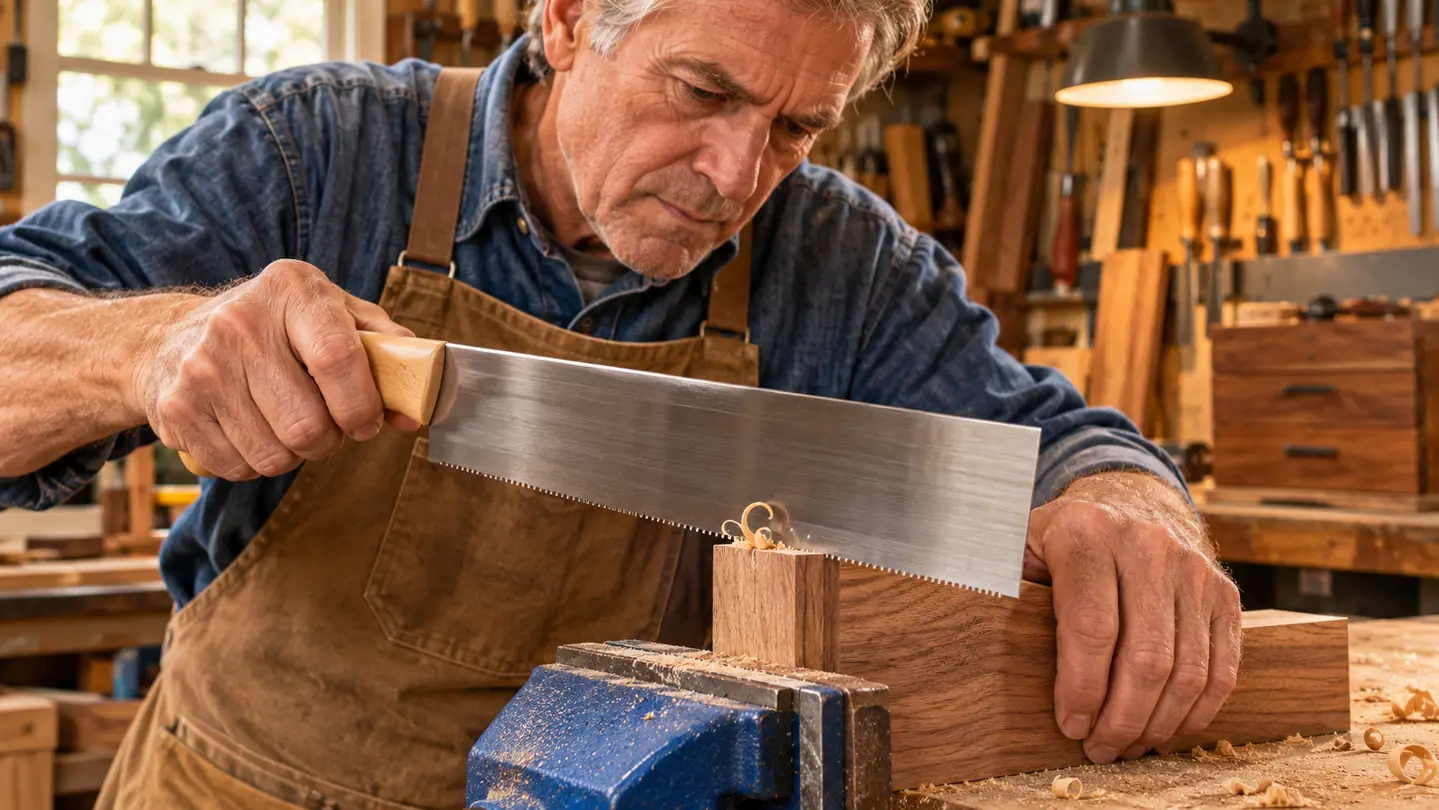
The crosscut edge runs 15 teeth per inch and the rip edge runs 9, and the listing gives a 9 degree cutting angle. That is the whole design. It works because the teeth are filed differently for each job, not because of any clever mechanism. Fifteen teeth per inch is fine enough to leave a smooth surface on end grain, which is why it handles picture frame miters. Nine teeth per inch clears waste fast enough that a tenon cheek does not take all afternoon. You flip the saw over, and you flip your thinking with it.
The blade is 0.02 inch thick and the cut it leaves, the kerf, is about 0.03 inch. That matters more than it sounds. My western backsaw takes a kerf closer to a sixteenth of an inch, which is fine when you are cutting on the waste side of a line, but it is a nuisance when you need the piece that comes out of the slot. With the ryoba I can cut a dado to fit a shelf and still have the offcut be useful stock instead of a shim.
The teeth point toward the handle on both edges, so whichever edge faces down, the cut happens on the pull. That sounds like a small thing until you are ten minutes into a project and realize you started a crosscut with the rip side. I pencil an arrow on the board pointing back at me now, so the line and the pull direction agree. Flipping the saw also means flipping your stance, and I still catch myself crowding the bench on the crosscut side after three years of doing it.
The blade sits in the handle on a single screw. That is the entire fastening system, and it is a good one, because you can lift the blade out to store it flat or swap it when it is done without hunting for a special driver. It also means the blade can shift if the screw works loose. I check mine about once a month with the screwdriver I keep in the bench drawer, and it has needed a quarter turn maybe twice.
What Nobody Tells You Before You Buy
No one tells you that the saw cuts on the pull. It sounds obvious written down. In the shop, three decades of muscle memory fights it. You will push your first twenty cuts and wonder why the blade binds and the line goes crooked. Pull it, let the teeth do the work, and use almost no downward pressure. The blade is tensioned by the pull, so pulling is what keeps it straight. Once that clicked for me, the saw went from fussy to nearly automatic, and I stopped thinking about it at all.
My first cut of a session is always the worst one. The blade is cold, my hands are cold, and the garage sits around fifty five degrees on a February morning. The saw wants a light, slow first stroke to establish the kerf, and a cold morning makes me want to hurry. What I do now is take three practice pulls on a scrap of pine before I touch the good stock. Three pulls, and the rest of the session goes the way it should. Skip them and I usually pay for it with a crooked start on the first tenon of the day.
No one tells you how easy it is to kink the blade. Thin steel is the reason the cut is clean and the reason one careless stroke ruins it. Twist the handle mid cut, or drop the saw tooth first onto a concrete floor, and you will put a bend in it that no amount of careful technique will take out. I put a small hook on the pegboard rather than laying it in a drawer for exactly that reason. It hangs, it does not stack.
And no one tells you the warranty is 30 days. That is not a knock on SUIZAN, it is just what the paperwork says, and it means the coverage is about the saw arriving in one piece and not much else. The teeth will still be cutting at 300 days. Plan on the tool outliving the warranty by a wide margin. Replacement blades are sold separately, which brings me to the next part.
The Blade Is the Whole Story, and It Cuts Both Ways
A Japanese saw is not something you sharpen in the shop. The teeth are hardened, which is what keeps them cutting oak and walnut as long as they do, and hardened teeth do not respond to a file. My chisels get touched up on the diamond stone whenever they need it. The saw does not get that treatment. When it dulls, you loosen the screw, lift the blade out, and fit a new one. SUIZAN sells the replacement blade separately for the 9.5 inch model.
I came close to ruining the blade about a year in. I had a rail clamped in the vise, twisted the handle to steer the cut, and felt the blade take a set. It did not snap. It just stopped cutting straight, drifting a hair to the left on every pass. I took the blade out, laid it on the bench top and sighted down the edge, and there was a slight bend near the toe. Straightening it by hand helped a little and did not fix it. I finished that project with the saw and have used it since, but I know the blade is not what it was. That is the whole argument for hanging it on a hook instead of laying it in a drawer full of chisels.
I have mixed feelings about the disposable blade and I will not pretend otherwise. On one hand it is honest. A saw you cannot sharpen is a saw with no maintenance ritual and no learning curve, and a fresh blade is simple compared to building a sharpening habit. On the other hand, every other edge tool in my shop is something I maintain. The saw is the one thing I throw away. Three years of weekend use and mine still cuts acceptably, so I am nowhere near the end of that road, but I know where the road ends.
The blade guard is the other piece. It is a clip that covers the teeth when the saw is not in use, and it does its job. It also falls off in a drawer and gets lost. Mine lives on the blade and comes off for the length of a project, then goes back on. If you are the sort who loses small things, plan on the guard going missing and the saw living on a hook instead.
What I Would Change
I would change the handle before I changed anything else. It is comfortable in a normal grip, but there is not much room in it, and I have average hands. A friend with bigger paws tried it and said the same thing. I would also like a hole through the end of the handle so the saw can hang from a nail rather than a peg, because a peg pushes the blade out from the wall and lets it swing. Small thing. But a saw with a blade this thin deserves a hanger that keeps it flat against the pegboard.
Second, the lack of a spine. It is not a defect, it is the design, but it deserves saying plainly. If you are cutting dovetail pins freehand, this is the wrong tool for that half of the joint. I cut pins with a saw that has a brass back and cut the tails with the ryoba. That is two tools doing what one tool cannot, and I would rather say so than sell you on a saw that does everything.
Third, and this one is small. Fifteen teeth per inch wants a light hand for the first three strokes on end grain. Start heavy and the saw skates across the surface instead of biting. My workaround is to start almost flat to the wood, raise the handle as the kerf establishes itself, and stop overthinking it. That is a technique problem more than a tool problem, but a buyer should hear it before the first cut rather than after.
What I Liked
- Two edges, 9 teeth per inch for ripping and 15 for crosscutting, so most bench cuts need one tool
- 0.03 inch kerf saves stock and leaves the offcut usable for something else
- Cuts flat enough off the saw that a few paring strokes finish a tenon cheek
- Blade lifts out with a single screw for flat storage or replacement
- Narrow blade tracks a pencil line in oak without wandering
Where It Falls Short
- Teeth cannot be sharpened at home, so a dull blade means buying a replacement
- Thin blade will kink if you twist mid cut or drop it
- No spine, so it is the wrong saw for cutting dovetail pins
- 30 day warranty covers the arrival, not the working life
- Handle is a little tight for very large hands
- Blade guard is easy to lose
Four or five pulls gets me through a one inch tenon cheek, and it comes off the saw flat enough that a paring chisel only has to clean up after it.
Who This Is For
This is for the hobby woodworker who has a table saw and a cordless drill and is starting to cut joints by hand. It is also for anyone who has been fighting a dull backsaw and does not want to learn to sharpen one. If you build step stools, picture frames, cutting boards and the occasional bookshelf, a ryoba will handle most of the hand sawing those projects ask for, and it will do it quietly, which counts for something in a garage with close neighbors. Beginners get a clean cut on day one, and that is worth more than it sounds, because a beginner who gets clean results keeps going.
Who Should Skip It
Skip it if you cut dovetail pins freehand on a regular basis, or if you want one saw that does everything including a stiff-backed joinery cut. Skip it if you are the kind of woodworker who enjoys maintaining edges, because this tool takes that pleasure away by design. Skip it if you work mostly in thick hard maple or exotic stock where a thin blade under pull tension wants more patience than you have on a Tuesday night. And skip it if you need a tool that survives being tossed in a toolbox with chisels, because the blade will not, and you will find that out the expensive way.
Three years on a pegboard hook, and I would buy it again
It is not the saw for every joint. It is the saw I reach for first on tenons, frame miters and dowel plugs, and it has earned the hook it hangs on.
Amazon Check Today's Price on Amazon →