The first tenon I cut with a pull saw was an accident. I had a western backsaw that had been sharpened one time too many, a stack of white oak offcuts for a blanket chest, and about forty minutes before Carol needed help moving furniture out of the spare room. The SUIZAN ryoba was hanging on the pegboard by the bench, so I grabbed it, marked the shoulder with the combination square, and pulled instead of pushed. Ninety seconds later I had a tenon with a shoulder line that closed up tight against the rail. No wander. No tearout on the far corner.
That was three years ago. The saw has hung on the same peg next to the square ever since. It has cut tenons, dovetails, dowel plugs, picture frame miters, and one unfortunate notch in a step stool stretcher that I would rather not get into. I bought it with my own money and nobody sent me a sample to try. What follows is what three years of weekend shop work has taught me about it, including the parts I do not love.
The Quick Verdict
A thin-plate pull saw that improved my joinery on the very first cut and has held up through three years of weekend work. Buy it for joinery. Do not buy it to break down plywood.
Amazon Check Today's Price →The hand saw that stopped my cuts from wandering
Rip teeth on one edge, crosscut teeth on the other, and a plate thin enough that the blade goes where you aim it. Three years on my own pegboard and the original blade still cuts.
Amazon Check Today's Price on Amazon →How I've Used It
Most of what I build is small. Cutting boards, picture frames, step stools, a bookshelf for my granddaughter that is still the only piece of furniture in her room I made. None of that needs a saw that can break down a two by four. It needs a saw that can cut a tenon cheek four inches long in oak without wandering a sixteenth of an inch off the line, and that is the job this one does.
The pull stroke is the whole reason it works. A western saw cuts on the push, so the blade is in compression and every bit of wobble in your wrist shows up in the cut. A Japanese saw cuts on the pull, so the plate is in tension and it stays where you put it. My first dozen cuts with this saw were cleaner than my best cut with the backsaw, and I had been using that backsaw for years. That is not a knock on western saws. It is a statement about how much of the skill was in my hand versus in the tool.
The bookshelf I built for my granddaughter two winters back is where the saw finally earned its place. Eleven inch deep shelves, thirty six inches wide, red oak from the yard, and fourteen through tenons on the sides because I had decided that was the look I wanted and then had to actually cut it. I laid out every shoulder with the combination square, cut the cheeks on the rip side, and had all fourteen fitting with nothing but a chisel and a light pass with the block plane. That was the first project where I stopped reaching for the backsaw out of pure habit.
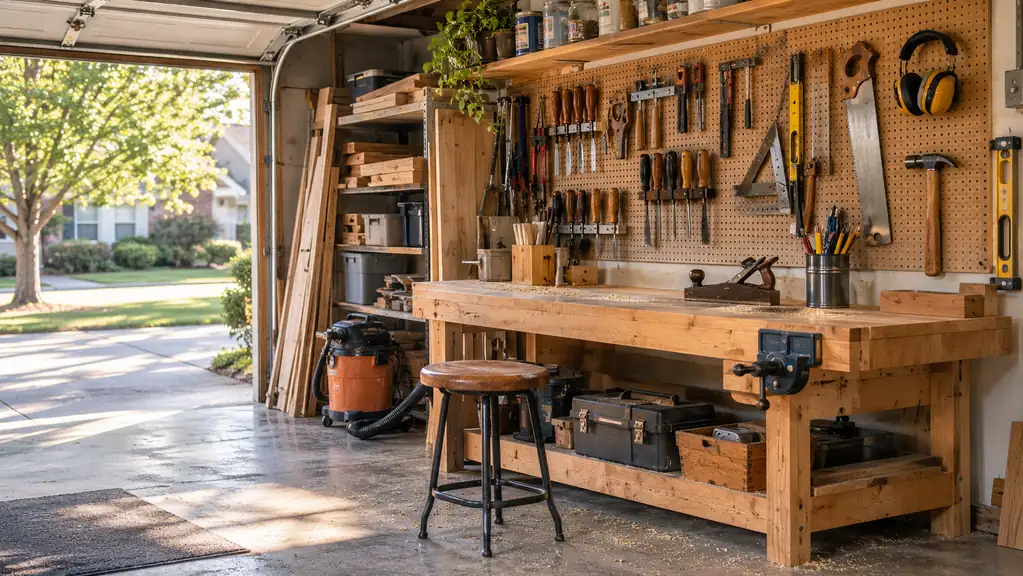
I work in one bay of a two-car garage, about eleven by twenty feet, bench against the wall, pegboard behind it, rolling cart for sharpening in the corner. The neighbors are close and the table saw is loud enough already, so the quiet tools get more use than they did ten years ago. A hand saw sounds like paper tearing. You can use it at seven in the morning and nobody calls.
The other job that convinced me was a run of picture frame miters for a family Christmas. Eight frames, thirty two cuts, every one of them a crosscut at forty five degrees, every one of them needing to close with no gap at the corner. I cut them on the fine edge, checked each against the combination square, and had four corners that needed nothing but glue and clamp pressure. Before this saw I kept a jar of wood filler on the bench for exactly that reason. The jar is still there. It has been opened twice in three years.
The Two Edges, and When Each One Earns Its Keep
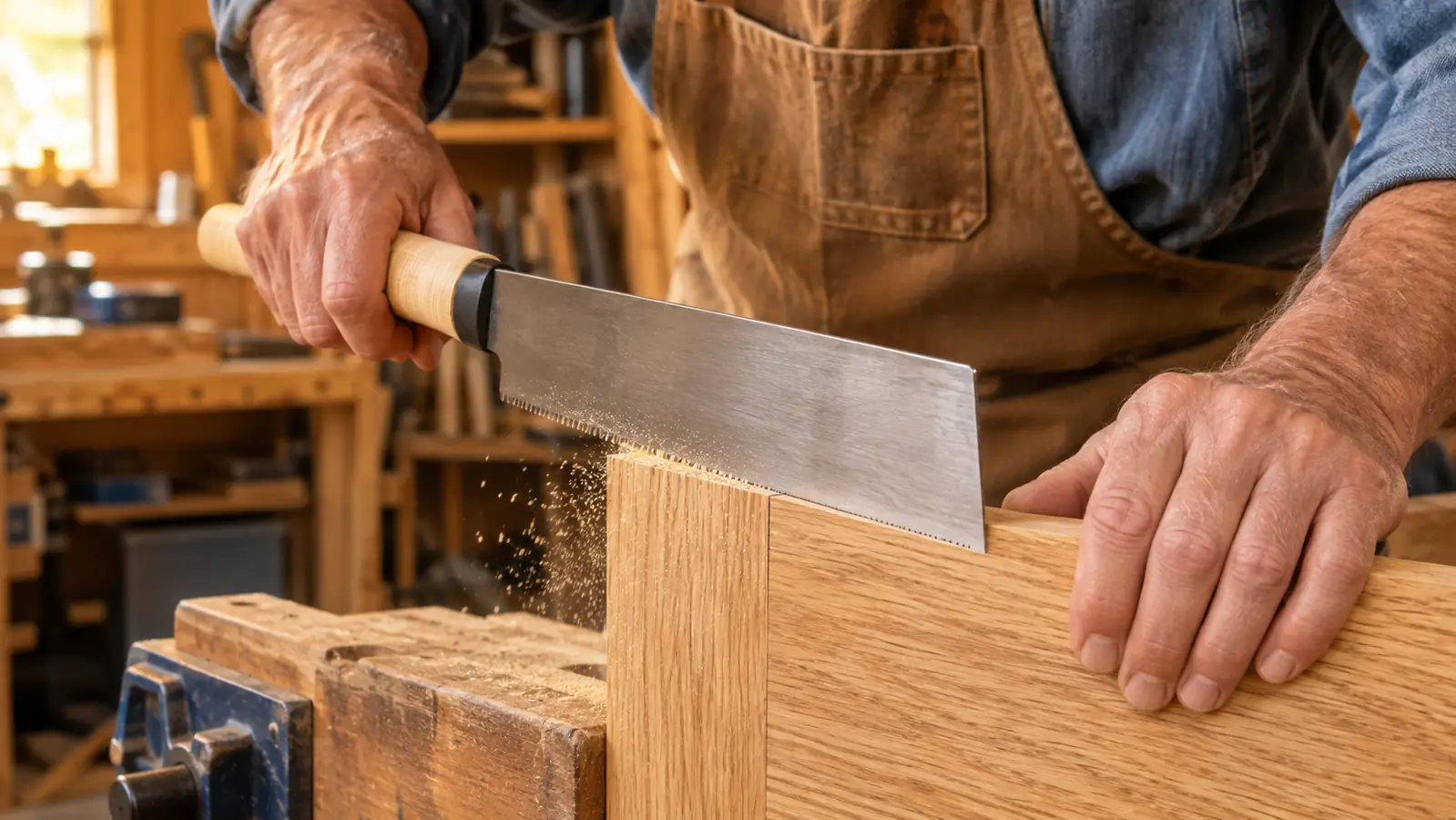
The blade has rip teeth on one edge at nine teeth per inch and crosscut teeth on the other at fifteen. That sounds like a line off the box until you actually cut a tenon. The cheeks are a rip cut running with the grain, and the rip side clears the waste quickly. The shoulders are a crosscut across the grain, and the fine side leaves an edge clean enough to go straight to the chisel without a trip to the shooting board.
The first month I owned it I cut the wrong edge on half my joints because the two sides look nearly identical at a glance. That is the honest downside of a double edge saw and it is why I now hang it with the fine teeth facing me. Cut a crosscut with the rip teeth and you will know, because the cut is rougher and slower. Cut a rip with the fine teeth and you will also know, but you will know it for about fifteen minutes while you finish the cut.
I keep a short pencil mark on the handle now, one stroke on the crosscut side, so my hand knows which way is up before I lift it off the peg. A neighbor who stopped by to look at the bench laughed at the mark. Then he borrowed the saw for a cedar planter and brought it back saying he had cut the wrong edge twice and thought the teeth were dull. It is a small thing that costs you ten minutes the first week and nothing at all after that.
The blade is held by a single screw. When the teeth wear out, you loosen that screw and fit a SUIZAN 9.5 inch ryoba replacement blade, sold separately. I have not replaced mine. Three years of weekend use is not the same as three years of daily use, and the teeth still cut pine and poplar the way they did in the first month. Oak takes more effort than it used to, which is either wear or my imagination, and I am not sure which.
What the Thin Blade Buys You
The plate is about 0.5 mm thick and it leaves a kerf of roughly 0.8 mm. Put plainly, cutting a tenon with this saw removes less wood than cutting the same tenon with a western backsaw. The waste left on the cheek is thinner, so the fit off the saw is closer, and on a dovetail that shows up as a joint that needs less paring before it closes.
That thin plate is also why the saw feels strange the first time. There is no weight in it. The listing puts the whole saw at 0.2 kg and most of that is the handle. You do not push down. You rest the teeth on the line, pull back at a shallow angle, and let the teeth do the work. Push, and the plate bows, and the cut goes wherever the bowed plate wants to go instead of where you aimed it.
The narrow kerf has a second benefit nobody mentions. Less sawdust. That sounds like nothing until you spend an afternoon cutting dovetails at the bench by hand. The pile on the floor is noticeably smaller than the pile from the same eight dovetails with a backsaw, and the bench stays clearer for the layout work that comes next.
Three Years On, What Held Up
The blade guard is still there, sliding over the teeth when the saw hangs on the peg. The listing says the saw ships with the blade and the blade guard, and that is exactly what came. Three years of reaching past it has kept the teeth out of the pegboard and out of my knuckles, which is more than I can say for a couple of chisels I used to hang bare.
The handle has not loosened. That is not a small thing on a saw that gets grabbed by the handle a few hundred times a year. I have had plane knobs work loose and I have had to re-set screws on tools that cost considerably more than this one. The single screw holding the blade has stayed put, and I check it twice a year because I check everything twice a year.
Last month I cut a test tenon in white oak to see whether the extra effort was real or in my head. Four inches of cheek, same board, same clamp, same knife wall. It took about eleven strokes where in the first year it took about eight. That is wear, not imagination, and it is still well inside what I would call sharp enough for joinery. When I do swap the blade, the old one goes in the drawer under the bench as a spare for rough work, because a dull pull saw still cuts pine fine.
The saw measures about 23.2 inches overall and carries a 30 day warranty, which tells you what the maker thinks about defects as opposed to wear. I have never had a reason to test it. What I can tell you is that the saw I bought is the saw I am still using, on the original blade, and I have not babied it.
Where It Frustrates Me
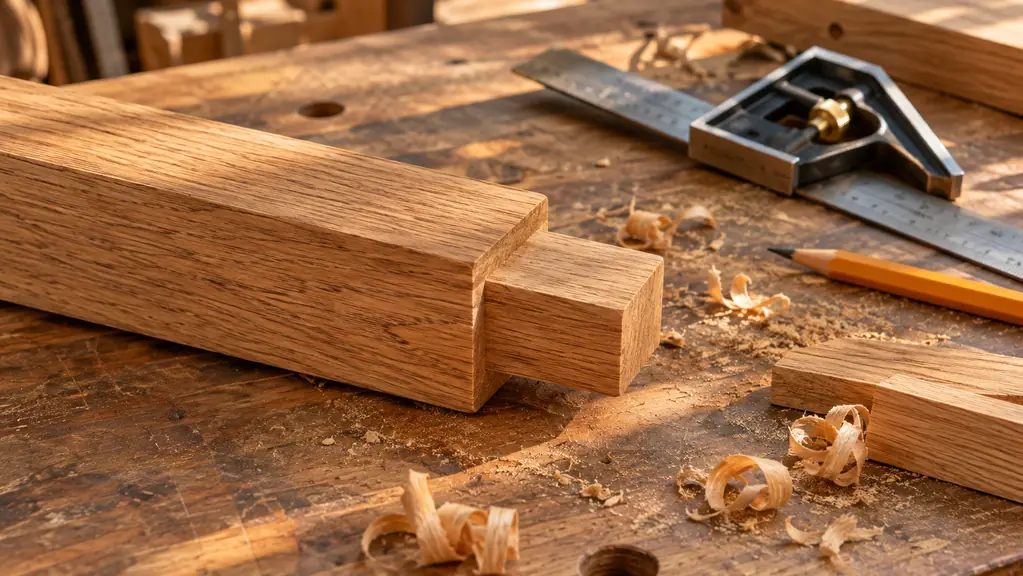
It will not start a cut on a corner unless you give it something to sit in. The teeth are fine and the plate is thin, so if you set it on a pencil line and pull, it will skate across the wood and scar the face. I cut a knife wall with a marking knife on every joint now. Once I started doing that the saw became predictable. That is a technique adjustment rather than a defect, but nobody tells you about it before you buy.
You cannot resharpen it. A western saw can be filed, and if you learn to file you can keep one for forty years and hand it to somebody. This one gets a new blade when the teeth go, and that replacement is a separate purchase. For a hobby shop that is a fair trade. For a person who wants to maintain tools for decades, it is a real difference and you should know it going in.
I mentioned a notch in a step stool stretcher at the top of this piece, so here it is. I was cutting a shallow shoulder on a poplar stretcher, got impatient near the end of the cut, and pushed. The plate bowed, the teeth climbed out of the knife wall, and I took roughly an eighth of an inch off the wrong side of the line. I glued a patch in, planed it flush, and the stool is fine. But I can point to the patch from across the shop, and that was the day I stopped pushing.
The thin plate flexes when you force it, and it does not like manufactured sheet goods. I cut one piece of three quarter inch plywood with it for a jig and the far side came out ragged. That is not what this saw is for. It is a joinery saw. Treat it like one and it will do everything you ask. Treat it like a framing saw and you will be disappointed in both directions.
What I Liked
- The pull stroke keeps the plate straight, so my first cuts came out clean without much technique
- Rip teeth on one edge and crosscut teeth on the other handle tenon cheeks and shoulders without changing saws
- The 0.5 mm plate and 0.8 mm kerf leave a fit that needs less paring before glue up
- One screw holds the blade, so a replacement is a one minute job when the teeth finally go
- Three years of weekend use on the original blade, cutting oak, poplar and pine
- Light enough at 0.2 kg to use at the bench for an hour without my shoulder complaining
Where It Falls Short
- It skates on a pencil line until you learn to cut a knife wall first
- Cannot be resharpened at home, and the replacement blade is sold separately
- The thin plate flexes if you push, and it cuts plywood badly
- The two edges look alike at a glance, so it is easy to grab the wrong side
- The 30 day warranty covers defects rather than wear
Ninety seconds for a tenon shoulder that closed tight, on the first cut I ever made with a pull saw. That is the whole review in one sentence.
Who This Is For
This saw is for the hobby woodworker who has a table saw and a drill and has figured out that the joints are where the work either looks handmade or looks homemade. If you are cutting tenons for a blanket chest, dovetails for a small box, or miters for picture frames, and your current backsaw wanders a sixteenth of an inch over four inches of oak, this will fix that faster than practice will. It is also a sensible first Japanese saw. The SUIZAN costs less than most of the hand tools on my bench and it does one job extremely well.
It is also for the person setting up a first bench in a garage or a spare room. You do not need a saw bench, a vise and a year of sharpening practice to get a clean cut out of it. You need a marking knife, a square and a clamp. That is a short list, and it is why I would hand this to a beginner before I handed them a western saw that has to be sharp and tuned before it behaves.
Who Should Skip It
Skip it if you break down sheet goods, cut construction lumber, or want one saw that does everything. It is poor on plywood, slow on thick stock, and useless for anything you would normally do on a sawhorse with a circular saw. Skip it too if you enjoy filing and maintaining your own tools, because this one is a consumable blade and there is no way around that. And if you already own a well tuned dovetail saw that tracks straight, you do not need this. You just want it, which is a different argument and one I have lost to myself before.
If your backsaw wanders, this is the saw that does not
Two tooth patterns on one blade, a kerf thin enough to fit off the saw, and three years of weekend proof hanging on my own pegboard. Cut a knife wall, pull instead of push, and see what your joints do.
Amazon Check Today's Price on Amazon →