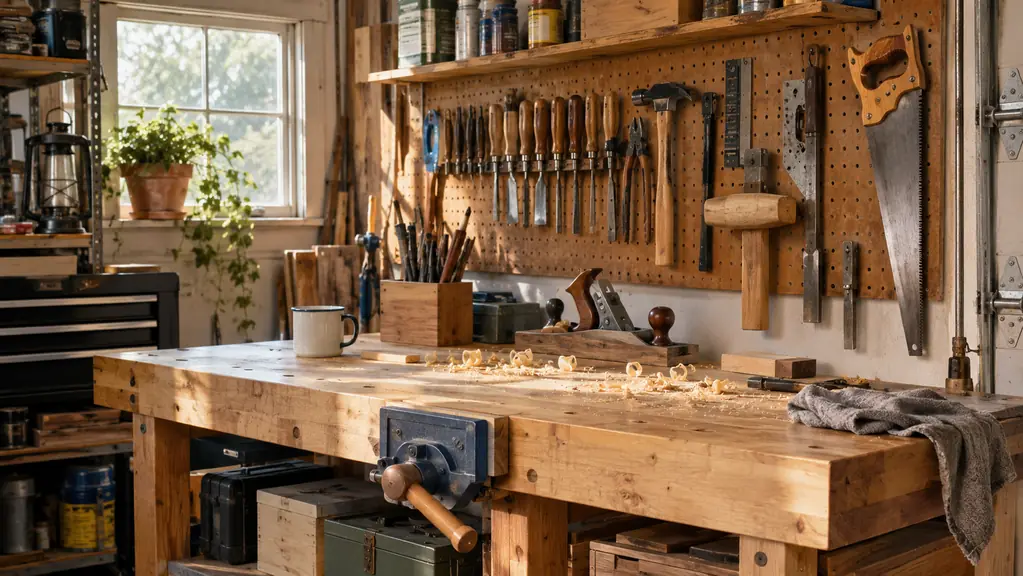
The first time I used a Japanese pull saw, I stopped halfway through the cut and checked the blade. It felt loose in a way a Western backsaw never does, like it was going to fold in the kerf and ruin a good piece of oak. It didn't. That was about three years ago, and the saw hanging on the pegboard next to my combination square is a SUIZAN 9.5 inch ryoba, double edge, rip teeth on one side and fine crosscut teeth on the other. Since then I have cut tenons, dovetails, dowel plugs and shelf shoulders with it in an 11 by 20 foot garage shop in Fullerton, mostly pine, poplar and oak, with some walnut when my grandson asks for something fancy.
Here is the short answer. For joinery in stock under about an inch thick, the SUIZAN ryoba does cleaner work with less fuss than the backsaw I used for the previous twenty years, and it does it with one tool instead of two. For deep cuts, heavy stock, and anything where you want to file your own teeth back into shape for the next thirty years, the Western backsaw still earns its hook on the wall. I own both and still use both. What actually happened is that the ryoba took over most of my joinery, and the backsaw kept the jobs that genuinely need a stiff spine and a plate you can sharpen yourself.
| SUIZAN Ryoba 9.5 in | Western backsaw | |
|---|---|---|
| Cut stroke | Teeth cut on the pull, so a thin plate stays straight under tension | Teeth cut on the push, so the plate has to resist buckling |
| Kerf | 0.03 in kerf from a 0.02 in blade, on both edges of the plate | Similar kerf in a fine dovetail saw, wider in a tenon saw |
| Stiffness in a heavy cut | Thin plate will wander if you crowd it past about an inch of thickness | Folded steel spine holds the plate dead straight through the cut |
| Starting on a line | A pull stroke starts with almost no pressure, easy to place on a knife wall | Needs a thumb-guided start or a notched corner to avoid skipping |
| Sharpening | Hardened teeth, so a dull blade is swapped out with one screw | Can be jointed and filed by hand many times over |
| One tool, two jobs | 9 TPI rip on one edge, 15 TPI crosscut on the other | Usually two saws, a tenon saw and a dovetail saw |
| Depth of cut | No spine to bottom out, so it keeps cutting past where a backsaw stops | Spine limits how deep the plate can travel before it hits the work |
| A hidden nail or painted stock | Hardened teeth chip and there is no filing them back | A chipped tooth can be jointed down and refiled into service |
| Replacement | A SUIZAN 9.5 in replacement blade is sold separately | Any hardware store within driving distance has something on the rack |
| Best for | Joinery under an inch, flush trimming, fine crosscuts | Deep tenons, thick stock, and anyone who likes filing their own teeth |
Where the SUIZAN Ryoba Wins
The kerf is the first thing you notice, and it took me one dovetail to see it. The blade is 0.02 inch thick and leaves about a 0.03 inch kerf, and it leaves that same narrow kerf on both edges of the plate. The tenon saw I had been using cut wider than that, which meant more paring afterward to bring a tail over to the line without going past it. The 15 TPI crosscut side also scores the fibers before it lifts them, so the cut comes off the saw smoother than anything I was getting from a push saw with a similar tooth count. On a picture frame last winter I glued up straight off the saw with nothing but a light pass with a block plane on the end grain. The project that convinced me, though, was a step stool for my youngest granddaughter, built out of poplar because it was what I had on the rack that Saturday. Four legs, two aprons, eight mortise and tenon joints. I cut every tenon with the rip side and every shoulder with the crosscut side, and when I dry fit it on the bench the shoulders closed up tight enough that I could lift the whole assembly by one apron with no clamp on it. The tenon saw would have left me paring for an hour to get the same fit.
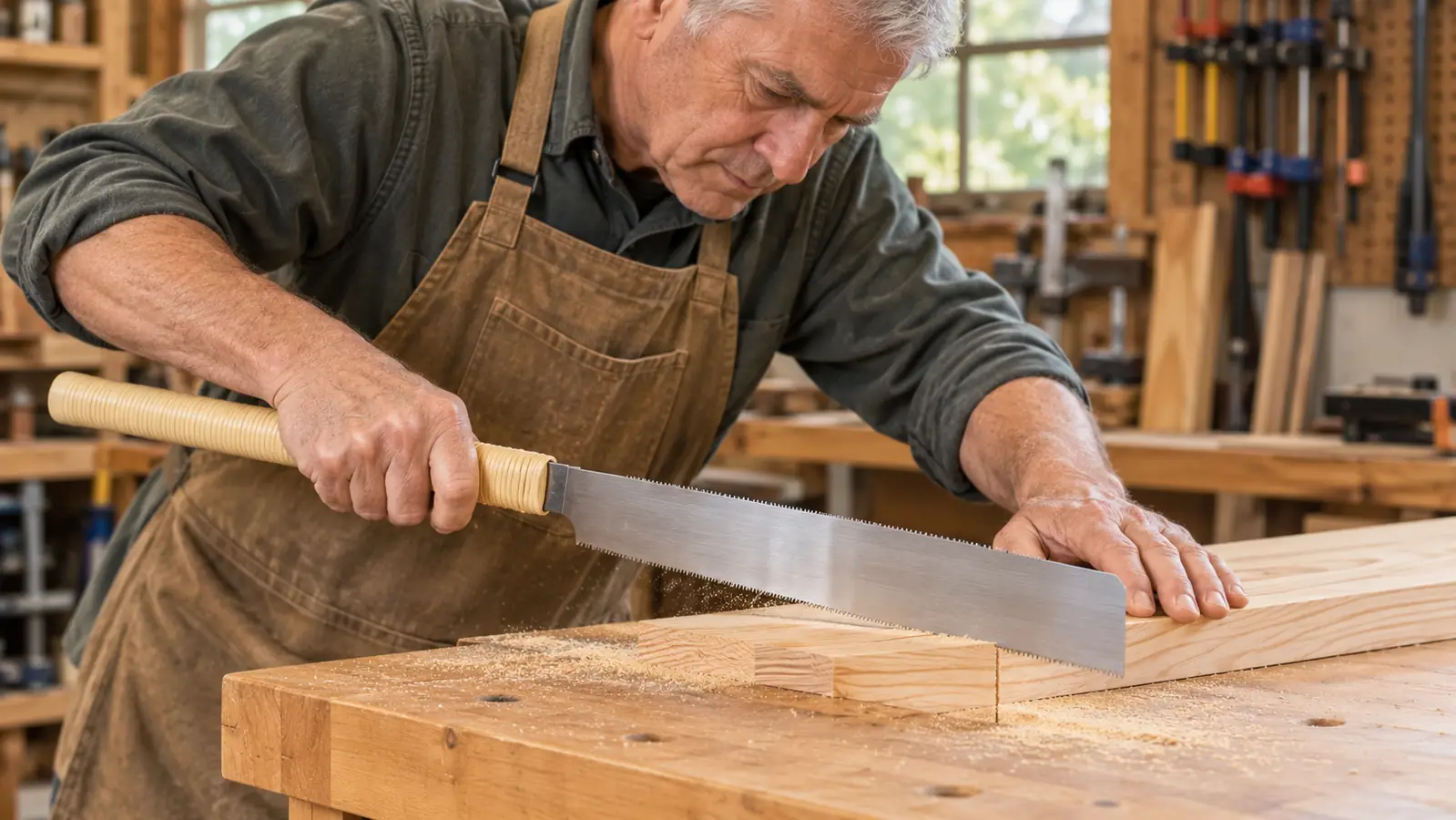
The second thing is that one tool covers two jobs I used to need two saws for. Rip teeth at 9 TPI on one edge, fine crosscut at 15 TPI on the other. I cut tenon cheeks with the rip side, flip the saw, and crosscut the shoulders without setting one tool down and picking up another. Pulling keeps the plate straight, which is the physics of it and also the feel of it, and the result is that a beginner's first cuts come out cleaner than they have any right to. The listing gives the cutting angle as 9 degrees, and whatever that geometry is doing, the saw follows a pencil line without me steering it. Starting a cut on a knife wall takes almost no downward pressure at all, which is the part I still appreciate most on thin stock.
Where the Western Backsaw Wins
Set a piece of eight quarter oak on the bench and the story changes. That thin plate will flex, and if I crowd the cut and let the saw drop out of vertical, it wanders. By the time I catch it I have a tenon cheek that is tapered by a thirty-second and a joint that needs shimming. The backsaw's folded steel spine holds the plate dead straight from the first stroke to the last, and the weight of the saw does some of the work for me. On anything past about an inch of thickness, and on any cut where the far side has to land exactly where I marked it, I still reach for the backsaw. It is the more forgiving tool when the cut matters more than the finish.
The other place the old saw wins is maintenance. A backsaw is a tool you can own for forty years. A saw vise and a couple of files will bring it back, and a tooth chipped on a hidden nail can be jointed down and refiled into service in an afternoon. The teeth on the ryoba are hardened, so when they dull the answer is a replacement blade, sold separately, and when you chip one on a painted board there is no filing it back. That is a real tradeoff and I am not going to dress it up. I learned it the hard way on a length of reclaimed oak shelving Carol dragged home from a curbside pile two streets over. I ran the saw into a finish nail about two inches into a crosscut and felt three teeth go at once. Not chipped. Gone. The backsaw would have lost a tooth too, but I could have jointed it down and filed it back that same evening. Instead the shelf sat on sawhorses in the middle of the bay for eleven days waiting on a blade. Now I run a magnet over anything salvaged before it comes near the bench, which is a habit that saw taught me and I would rather have learned cheaper. The backsaw also wins on the boring practical point that every hardware store in the county has something like it on the rack, and the replacement blade for my saw has to be ordered and waited for.
The Saw That Took Over Most of My Joinery
The SUIZAN 9.5 inch ryoba runs 9 TPI rip teeth on one edge and 15 TPI crosscut teeth on the other, cuts a 0.03 inch kerf, and swaps blades with a single screw when the teeth finally go. Three years on my pegboard and I have not once regretted the space it takes.
Amazon Check Today's Price on Amazon →Three years, one blade swap, and the kerf is still narrow enough that two light passes with a chisel clean up a dovetail corner.
What Three Years of Weekend Use Looks Like
I have changed the blade once. One screw holds it, you loosen it, slide the old plate out, slide the new one in, and tighten it back down. That took me about four minutes on the bench with a cup of coffee going cold next to me. The handle is still tight, the plate still sits straight in the slot, and it weighs about seven ounces, which matters more than I expected, because I can cut a set of dovetails without my forearm letting me know about it the next morning.
The crosscut teeth are the first to go, and they go because of me, not the saw. I have caught a vise jaw once and a bench hook twice, and each time I lost a little sharpness on the fine side. The blade guard it came with lives in the bottom of a drawer now, which is my fault. It came with a 30 day warranty and I never needed it. The handle has held up better than I expected. It has darkened where my palm sits, the way any handle does after three years of Saturdays, but nothing has come loose and there is no rattle when I set the saw down on the bench. The plate picked up a little surface rust near the slot during a humid August two summers back, and a rub with paste wax took it right off. That is the whole of the maintenance I have done in three years, aside from the blade swap. Compare that to the backsaw, which I have jointed twice and filed four times over the same stretch. What I would tell you is that the saw rewards a light hand. Pull it and let the teeth do the work. Push it and you will find out what a wandering kerf looks like.
The Two Saw Bench
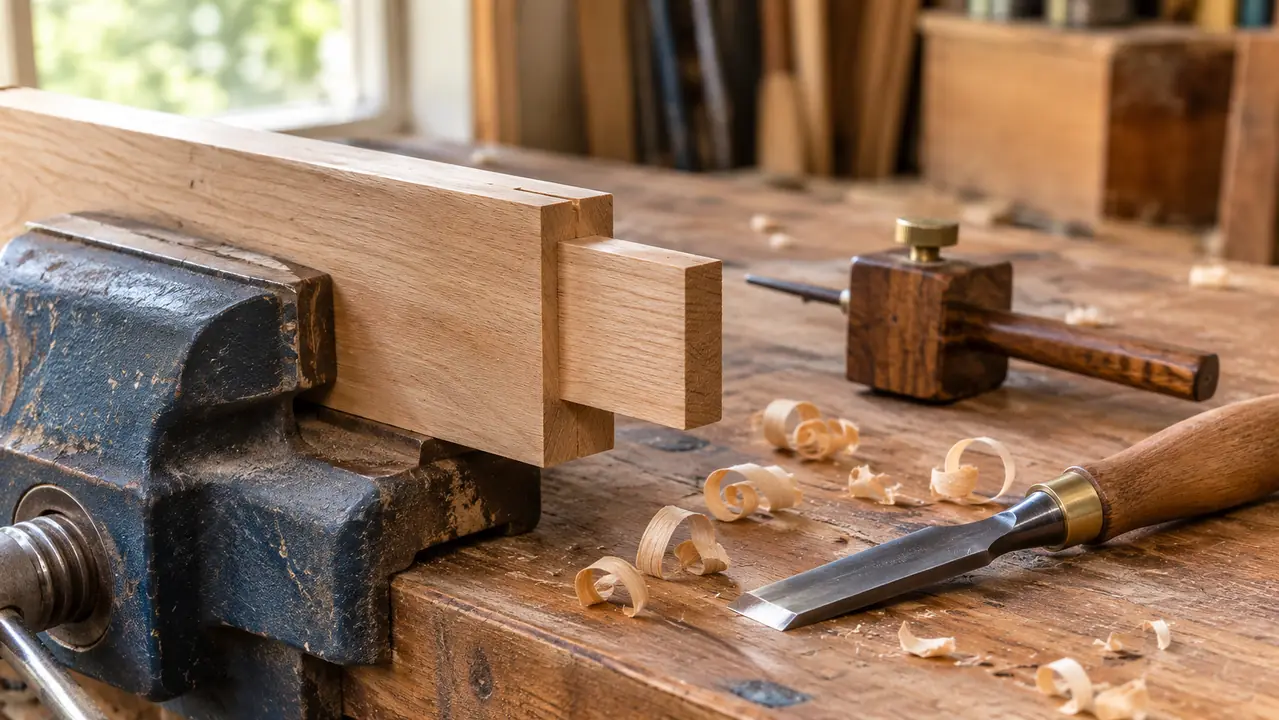
People ask which one to buy as if the other has to leave the shop. Not in my garage. The ryoba handles joinery in stock under an inch, flush trimming dowels, and any crosscut where I want a clean shoulder with a narrow kerf. I lay the plate flat on the surface to trim a plug, keep the teeth clear of the work, and pull. The backsaw handles the heavy cuts, the deep tenons, the pieces where the plate has to stay perfectly vertical through three inches of oak. Neither one is sitting there feeling slighted. The one place I have stopped using the ryoba entirely is a tenon longer than about an inch and a quarter. That is not a knock on the saw, it is a knock on a thin plate doing work it was not shaped for. I mark the shoulder line, cut the cheeks with the backsaw, then clean the shoulder up with the ryoba because it cuts flush down to the line with no spine in the way. That pairing, one stiff saw for the hogging and one thin saw for the finish, took a set of four tenons from about fifty minutes of my Saturday down to under half an hour.
There is also the plain fact of the shop. It is one bay of a two car garage and the neighbors are close. A hand saw makes almost no noise, throws no dust, and takes up a hook on the pegboard. Twenty five years of power tools taught me plenty, and I still use the table saw and the drill. But the cuts I enjoy most now are the ones I make standing still with a saw and a pencil line, and the ryoba is the one I pick up first nine times out of ten.
Who Should Buy Which
If you are setting up a first bench and can only hang one saw this month, hang the SUIZAN ryoba. It covers crosscut and rip in one tool, it starts a cut without fighting you, and it will make your first dovetails look better than your skill level deserves. That last part is not flattery, it is the pull stroke doing the work. A hobby woodworker cutting tenons for a step stool or shoulders for a bookshelf will get years out of it before the blade needs replacing.
If your work runs to thick stock, deep tenons, timber, or reclaimed lumber with old nails in it, keep a Western backsaw and learn to file it. That is the tool that survives the abuse and comes back sharp. It is also the better choice for anyone who likes maintaining tools as much as using them. A backsaw you filed yourself cuts differently, and after a few sharpenings you will know exactly what I mean.
And if you are like most of us, you will end up with both on the same pegboard, six inches apart, and you will stop thinking about it as a contest. Buy the ryoba first because it is the one that will change how your joints come out. Add the backsaw when a project asks for a cut the thin plate cannot hold. That is the order I would do it in if I were starting over in this garage at 33 instead of 63.
Start With the One You'll Reach For Every Saturday
If your joints are under an inch thick, this is the saw that will spend the most time in your hand. Hang it by the bench, not in a drawer, and give it a light pull instead of a push.
Amazon Check Today's Price on Amazon →