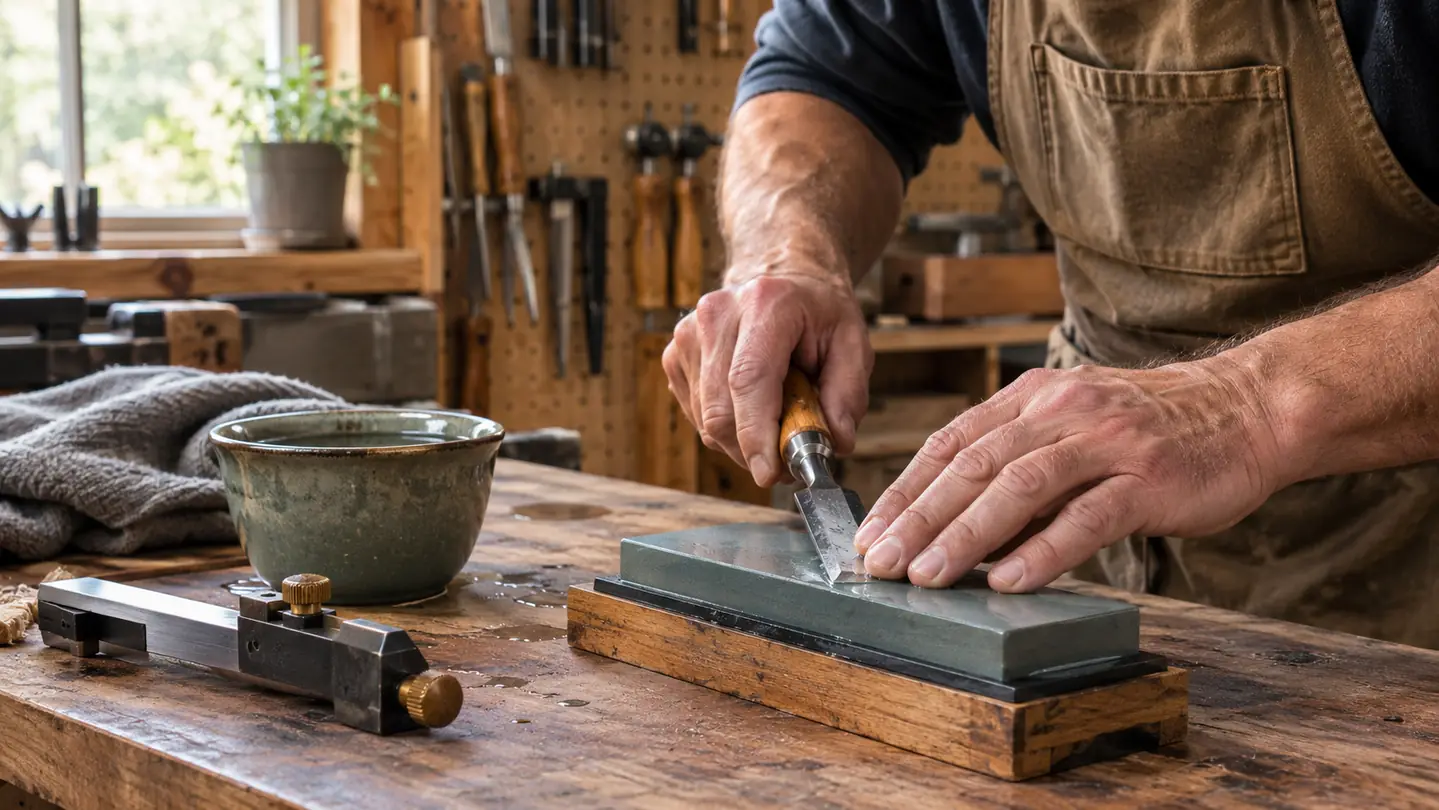
If your chisels are dull enough to skate across end grain, you have two practical choices on the sharpening cart: a diamond stone like the SHARPAL 162N or a waterstone. I have used the SHARPAL 162N in my garage shop for about two years, on the same chisels and block plane I reach for every weekend. I also keep a two-grit waterstone around because I wanted to see what the extra fuss bought me. The short answer is that they are not fighting for the same job. The SHARPAL gets a dull edge back to work fast, with no soaking bucket and no flattening stone. A waterstone gives you a finer polish and a softer feel, but it asks for more time and more upkeep. For most home shops, the diamond stone is the better first buy. If you chase a mirror finish on a paring chisel, the waterstone still earns a spot.
The SHARPAL 162N is an 8 by 3 inch double-sided stone. One side is 325 grit coarse, the other is 1200 grit extra fine. The diamond is monocrystalline, electroplated to a 0.35 inch stainless steel base. The listed dimensions are 8.46 inches long, 3.94 inches wide, and 1.93 inches high. The listed weight is 1.4 kg. It comes in a storage box with a non-slip rubber pad that can be used as a stone base while you sharpen. That is the whole kit. I use mine with water, mostly to keep the surface clean, and I have never needed oil. For a hobby shop, that simplicity matters more than a long grit progression.
| SHARPAL 162N | King 1000/6000 waterstone | |
|---|---|---|
| Resetting a chipped edge | 325 grit cuts fast and brings a damaged edge back in a few passes | A 1000 grit side is slow for chips; you usually need a separate coarse stone |
| Final polish | 1200 extra fine leaves a clean working edge | A 6000 grit side leaves a brighter, more refined edge |
| Flatness in use | Rigid steel plate stays flat under hand pressure | Soft stone dishes and needs flattening |
| Feel at the bench | Hard, crisp feedback with little slurry | Softer, muddy feel that some woodworkers prefer |
| Maintenance | Rinse, dry, put it away | Soak, flatten, manage slurry, dry slowly |
| Speed on a dull chisel | Coarse diamond starts cutting right away | Needs a soak and several grits to do the same job |
| Replacement over time | One plate, no grits to replace | Stones wear and dish, so they get replaced |
| Wide blade support | 8 by 3 inch surface takes a plane blade or a wide chisel | Most two-grit stones are close in width |
| Best for | A home shop that wants one stone for resetting and touch-ups | A sharpener who wants a polished edge and enjoys the process |
What the Numbers Mean at the Bench
Grit numbers are easy to read past. The 325 side is the repair side. It is for a chisel with a nick in the edge, a plane blade that has not been touched since last winter, or a flea market find with a rounded bevel. The 1200 side is the maintenance side. It will not replace a 6000 grit waterstone for a polished finish, but it brings a working edge back in a handful of passes. I use the coarse side maybe once a month, and the fine side before most projects. That split is the reason the stone stays on my cart instead of in a drawer.
The base is stainless steel, 0.35 inch thick, and the diamond is plated to it. That matters because a thin diamond plate can feel springy under a wide blade. This one feels solid. The 8 by 3 inch surface takes a 2 inch chisel or a block plane blade without wobble. The storage box is not a throwaway sleeve. The non-slip rubber pad sits on the cart and keeps the stone from walking while I work. I still put a rag under it out of habit, but the pad does the job.
Where the SHARPAL 162N Wins
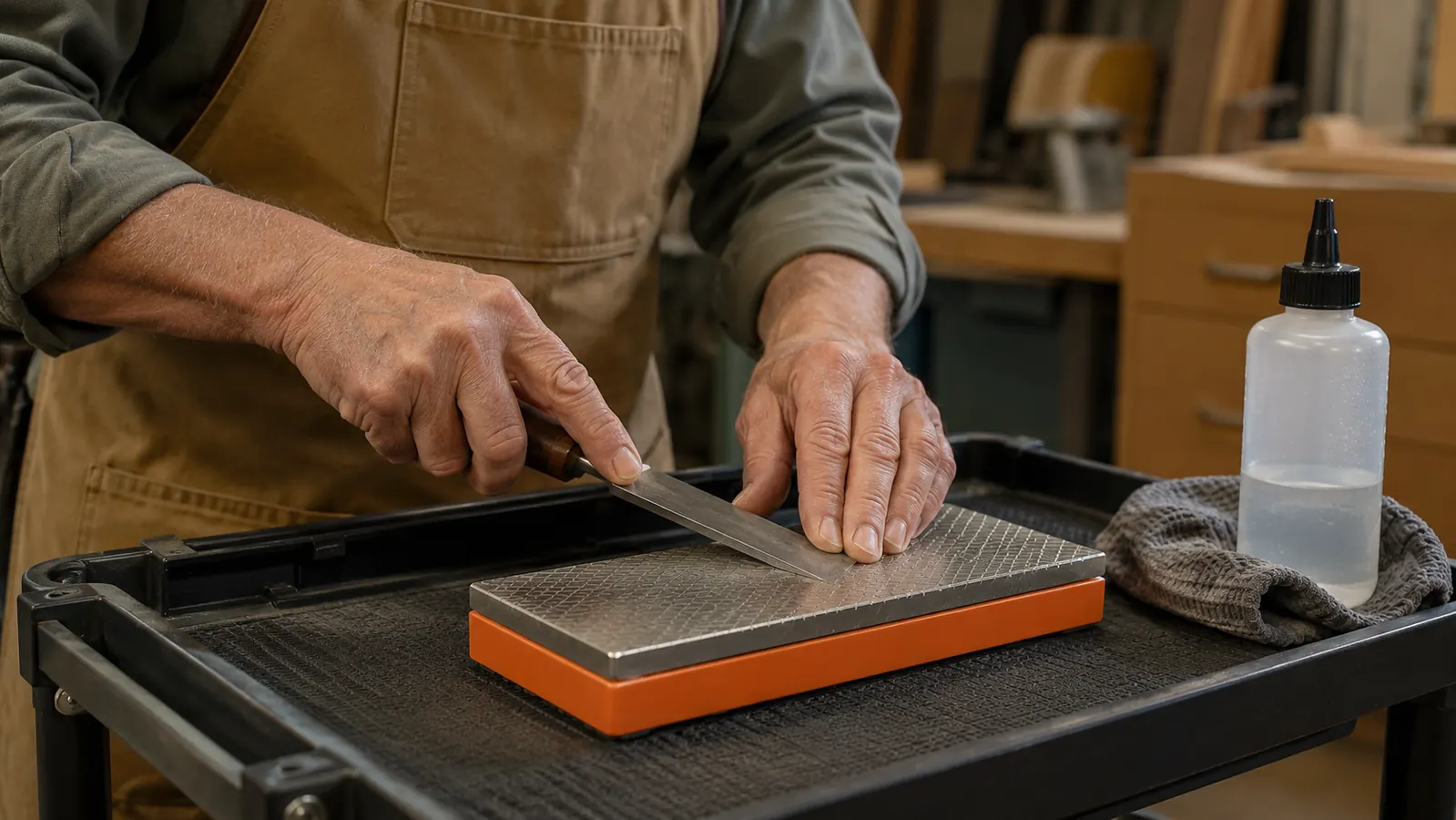
The first win is speed on a dull edge. A waterstone needs a soak, and a 1000 grit side is not the tool I want when a chisel has a chip. The 325 side of the SHARPAL cuts now. I can flatten a back, work out a nick, and be back at the bench in less time than it takes a waterstone to stop bubbling. That matters in a home shop because sharpening is a chore squeezed between glue-ups, not a separate hobby. The tool that gets used is the one that is ready when you pick it up.
The second win is maintenance. I rinse the stone, dry it, and put it back in the box. I do not flatten it. I do not manage slurry. I do not worry about a stone cracking in a cold garage. The stainless base has stayed flat in my use, and the diamond surface has not worn smooth in two years of weekend work. I am not saying it will last forever. I am saying it has not given me a reason to replace it. For a hobby woodworker, that is the whole argument.
Where the Waterstone Wins
The waterstone wins on final polish. A 6000 grit side leaves a brighter edge than the 1200 side of the SHARPAL. On a paring chisel doing fine work in pine or poplar, you can feel the difference. The edge cuts with less resistance, and the surface left behind is cleaner. If you are building furniture and you want a chisel that pares end grain like it is cutting soft cheese, the waterstone gives you the last step the diamond stone does not. That is a real advantage, not a marketing line.
It also wins on feel. A waterstone is softer. It cuts with a muddy slurry that some woodworkers love. The feedback is gentler, and the stone tells you where the blade is sitting. I do not prefer it, but I understand why someone would. There is a rhythm to a waterstone that feels more like traditional sharpening and less like maintenance. If you enjoy the process, the waterstone is the more pleasant tool. If you just want the edge back, the diamond stone is easier to live with.
One stone that resets a chipped edge and touches up a working one
The SHARPAL 162N gives you a 325 grit coarse side and a 1200 grit extra fine side on one 8 by 3 inch plate. It stores in its own box with a non-slip pad. Mine has stayed on the cart for two years and has not needed flattening. If you want a sharpening setup that is ready when you pick it up, start here.
Amazon See the SHARPAL 162N on Amazon →How I Use the SHARPAL 162N in My Shop
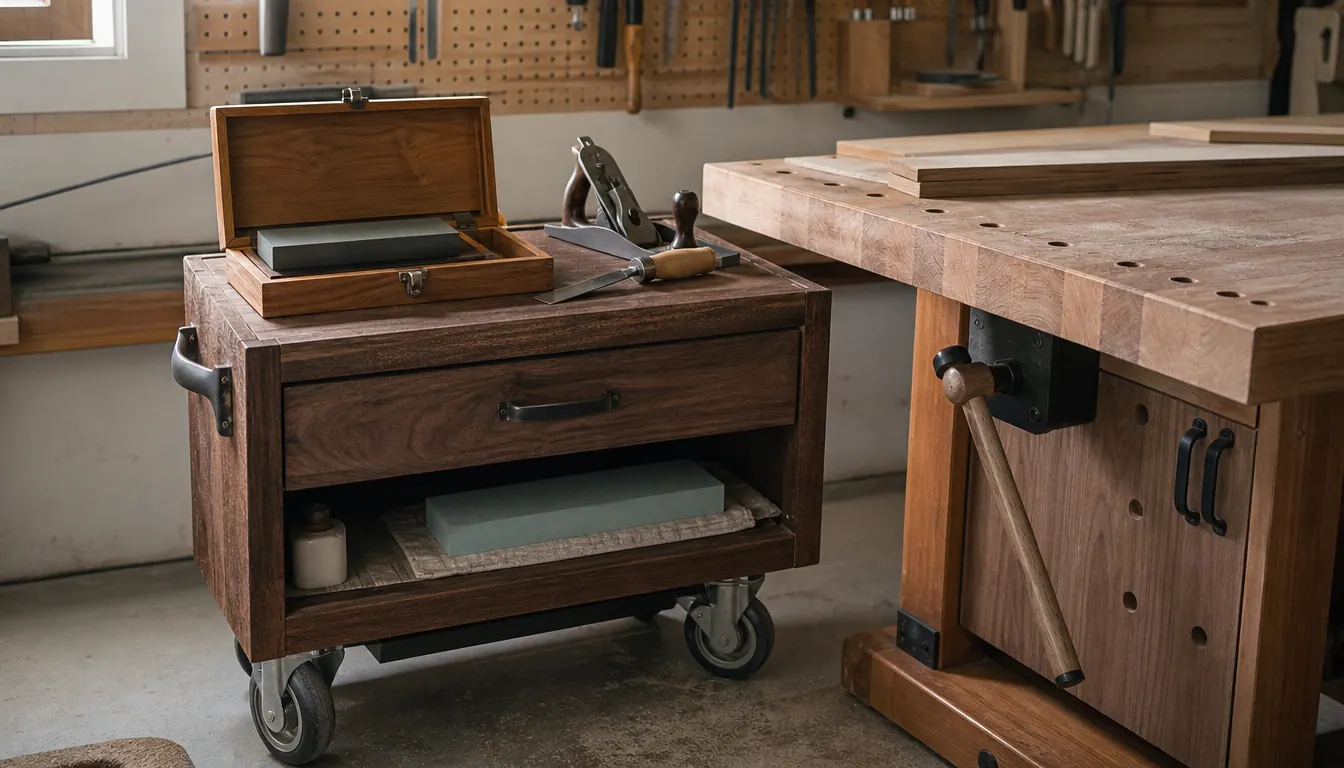
The stone lives on a rolling cart next to the bench, along with a small spray bottle, a rag, and a honing guide I use for plane blades. I set the storage box on the cart, drop the stone into the lid, and wet the surface. The non-slip pad keeps it from sliding. I start on the 325 side only if the edge is damaged. Most of the time I go straight to the 1200 side for a few passes, then strop on a piece of scrap leather. That routine takes about three minutes per chisel. I do it before a project, not during one, unless a nick shows up.
For a block plane blade, I use the coarse side to reset the bevel if it has been a while. Then I work the back flat on the fine side. The 8 by 3 inch surface gives me room to move the blade without running off the edge. I have not measured the flatness with a straightedge and feeler gauge, but I have not seen a problem in the edges it produces. The stone is heavy enough to stay put at 1.4 kg, and the box makes it safe to store on a shelf. That is not a small thing in a garage where everything gets moved.
The SHARPAL does the job most home shops actually need: it puts a working edge back on a chisel in minutes, without a soaking bucket.
What the Diamond Stone Does Not Do
The SHARPAL will not leave the same polish as a 6000 grit waterstone. The 1200 side is extra fine by diamond stone standards, but it is not a finishing stone for someone chasing a mirror bevel. If you run a chisel across the 1200 side and then look at the edge under a bright shop light, you will see a slightly toothy scratch pattern. That pattern cuts well. It does not look like a jeweler's finish. I do not need that finish for the work I do, but I am not going to pretend the stone delivers it.
The other limit is width and pressure. The stone is 8 by 3 inches, which is generous for a chisel or a block plane blade. It is not the tool for a wide jointer plane blade or a drawknife that needs a long, steady stroke. You can work a wide blade on it, but you will need to move the blade across the surface in sections. A larger plate or a long waterstone is easier for that job. Most home shops do not own a jointer plane, so this is a small caveat, not a deal breaker.
The Case for the Waterstone
A waterstone is not a bad tool. It is a different tool. If you already own a coarse diamond plate for repairs, a 1000/6000 waterstone makes a sensible second step. The 1000 side refines the scratch pattern from the coarse plate, and the 6000 side polishes. That progression gives you a sharper edge than the SHARPAL alone. The catch is that you now own two stones, a flattening stone, and a soaking container. That is a lot of kit for a shop that mostly builds step stools and picture frames.
Waterstones also dish. The middle wears faster than the edges, and a dished stone will not give you a flat back. You have to flatten it, often with a diamond plate, which is its own chore. The stone has to dry slowly, and a garage that gets cold at night is not kind to a soaked stone left out. None of this makes waterstones bad. It makes them a commitment. If you sharpen for the pleasure of it, that commitment is part of the appeal. If you sharpen because your chisel is dull, it is friction.
Who Should Buy Which
Buy the SHARPAL 162N if you are setting up a home shop and want one stone that handles the whole job. It is the right pick for chisels, block plane blades, and kitchen knives that need a working edge, not a showroom polish. It is also the right pick if you dislike soaking, flattening, and storing wet stones. The coarse side fixes damage, the fine side maintains, and the box keeps it safe. For a weekend woodworker in a garage, that is a sensible first sharpening purchase.
Buy a waterstone if you already have a way to handle coarse work and you want a finer finish. It suits someone who enjoys the sharpening ritual, has a stable place to soak and dry a stone, and owns a flattening plate. It also suits a woodworker who does fine paring and wants the brightest edge the budget can justify. If you are new to sharpening, I would not start with a waterstone. Start with the SHARPAL, learn what a sharp edge feels like, and add a waterstone later if you want the polish.
Get the edge back without adding a soaking bucket to the cart
The SHARPAL 162N is a double-sided diamond stone with a 325 grit coarse side and a 1200 grit extra fine side. It comes in a storage box with a non-slip rubber pad. If your chisels are dull and you want a simple routine, this is the one I would put on the cart first.
Amazon Check the SHARPAL 162N on Amazon →