I bought the SHARPAL 162N about two years ago, in the same month I retired my mismatched hardware-store chisels and started using a HURRICANE four-piece set. The first chisel I sharpened on it was a 1-inch bevel-edge that had a nick in the edge from a hinge mortise job. I had been putting off the repair because my old oilstone is slow and messy. The SHARPAL cut the nick out in a few minutes. That was the first time in a while I did not dread sharpening. I am 63, I work out of one bay of a two-car garage in Fullerton, and I am not a professional cabinetmaker. I am a retired plant maintenance mechanic who builds step stools, picture frames and the occasional blanket chest. The stone has stayed on my sharpening cart ever since.
The short version: the 162N is a double-sided diamond stone with a coarse 325 grit side and an extra fine 1200 grit side. It is 8 inches by 3 inches, weighs 1.4 kg, and sits on a 0.35 inch stainless steel base. It comes with a storage box and a non-slip rubber pad that you can use as a stone base while you sharpen. I use it with water, not oil. In two years I have used it on chisels, plane irons, a kitchen knife or two, and the occasional scraper. It has not gone out of flat, and the diamond surface still cuts. If you want the short answer, it is a good stone for a small shop where you need one surface to do two jobs. It is not the only stone I own, but it is the one I reach for.
The Quick Verdict
A fast-cutting, low-maintenance diamond stone that handles damaged edges and everyday honing. The coarse side is aggressive, so practice on a beater first.
Amazon Check Today's Price →One stone that fixes a chipped edge and hones it again
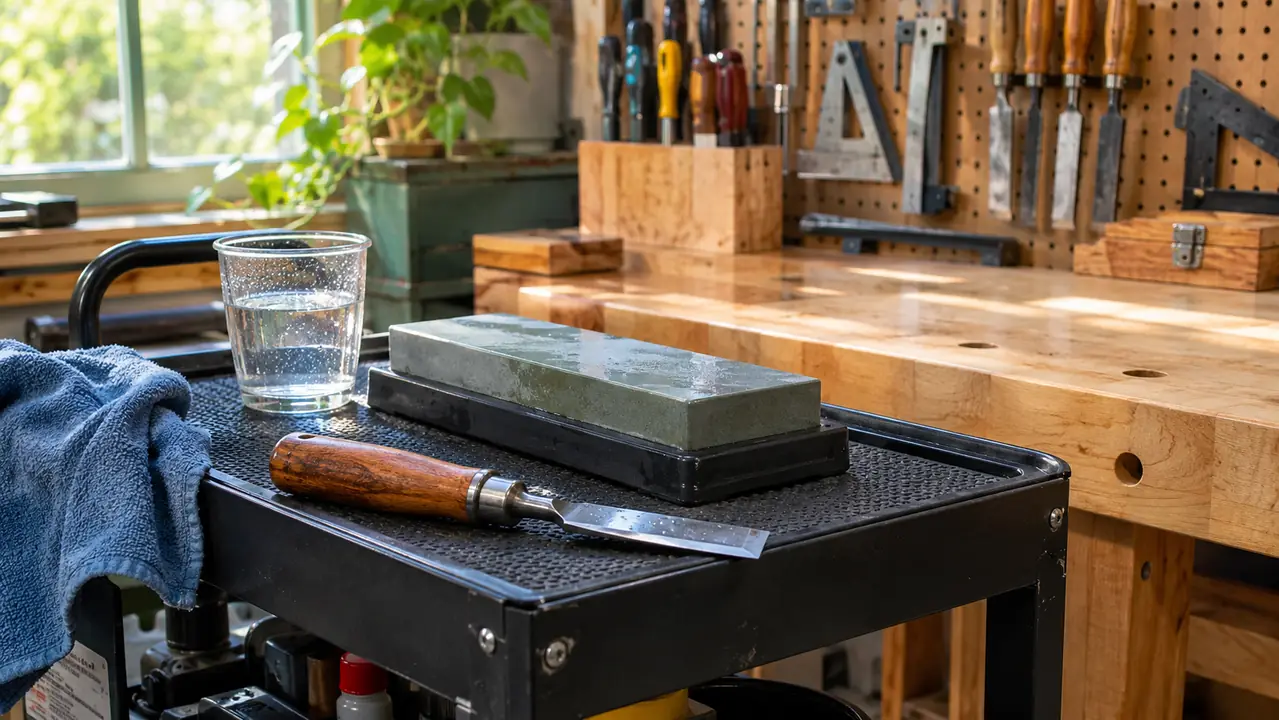
The 325 grit side removes metal quickly. The 1200 grit side brings the edge back to a working finish. I keep mine on the cart with a small cup of water and the box it came in.
Amazon Check Today's Price on Amazon →How I've Used It
My sharpening cart is a rolling cabinet beside the bench. It holds the SHARPAL, a small spray bottle of water, a rag, and a plastic tray. I do not soak this stone. I splash water on the surface, work the tool, and wipe it dry when I am done. The coarse side gets used for flattening the back of a chisel, removing a nick, or resetting a bevel that has gone round. The 1200 side gets used for the final few passes. Most of my chisels only need the fine side. The coarse side comes out when a tool has been neglected or when I buy something old at a flea market and want to see what the steel is like.
The first project I used it on was a set of picture frames for my daughter. I had four mitered corners to fit and a chisel that was tearing end grain. I gave the chisel ten passes on the 1200 side and it stopped tearing. That is not a dramatic story, but that is most of sharpening. You fix the edge before the project goes sideways. The stone made that easy enough that I actually did it instead of pressing harder and making a mess.
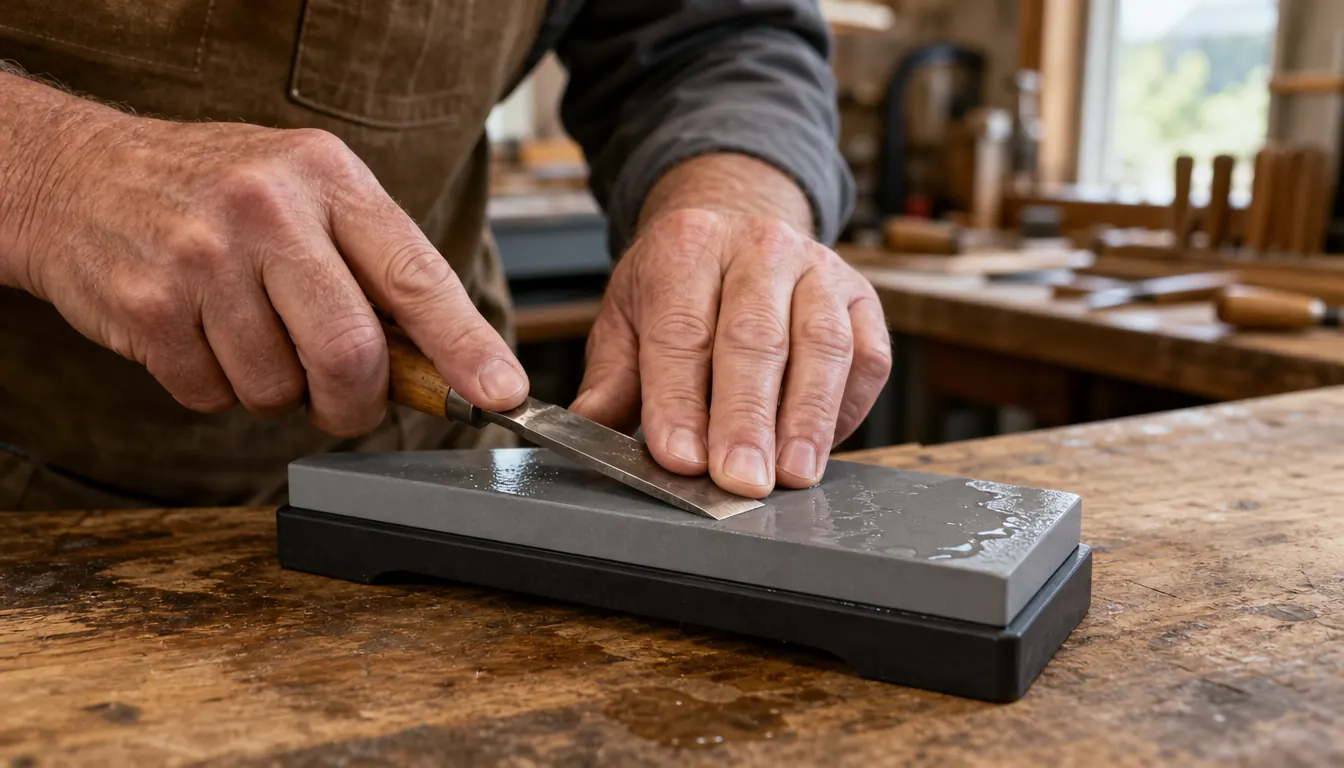
I have also used it on the block plane iron from my JORGENSEN No. 60-1/2. The iron is thin and the stone is heavy, so I hold the iron with both hands and move it across the stone rather than moving the stone. The 1.4 kg weight is an advantage there. It stays put on the rubber pad. I have not had it slide on me, even when the surface is wet. That matters when your hands are arthritic and you do not want to chase a stone across the bench. I bought this one with my own money, no free unit.
What the Two Grits Actually Do
SHARPAL lists the coarse side as 325 grit, which is 45 micron, and the extra fine side as 1200 grit, which is 12 micron. In use, the 325 side is a repair surface. It will take a nick out of a chisel edge, flatten the back of a plane iron, or reset a bevel. It removes metal fast enough that you need to pay attention. Two or three passes too many on a narrow chisel and you have changed the shape of the edge. I learned that on a 1/4 inch chisel. I was not sorry I had the coarse side, but I was sorry I was not paying attention.
The 1200 side is the one I use most. It is fine enough to bring a chisel back to a working edge without polishing it to a mirror. I do not need a mirror. I need an edge that pares end grain cleanly and does not skate across a hinge mortise. The 1200 side does that. If I want a finer finish, I have a waterstone for that. But for most of my work, the 1200 side is enough. It leaves a slight scratch pattern, which is normal for a diamond stone. You can see where you have been, which is helpful when you are trying to keep a bevel flat.
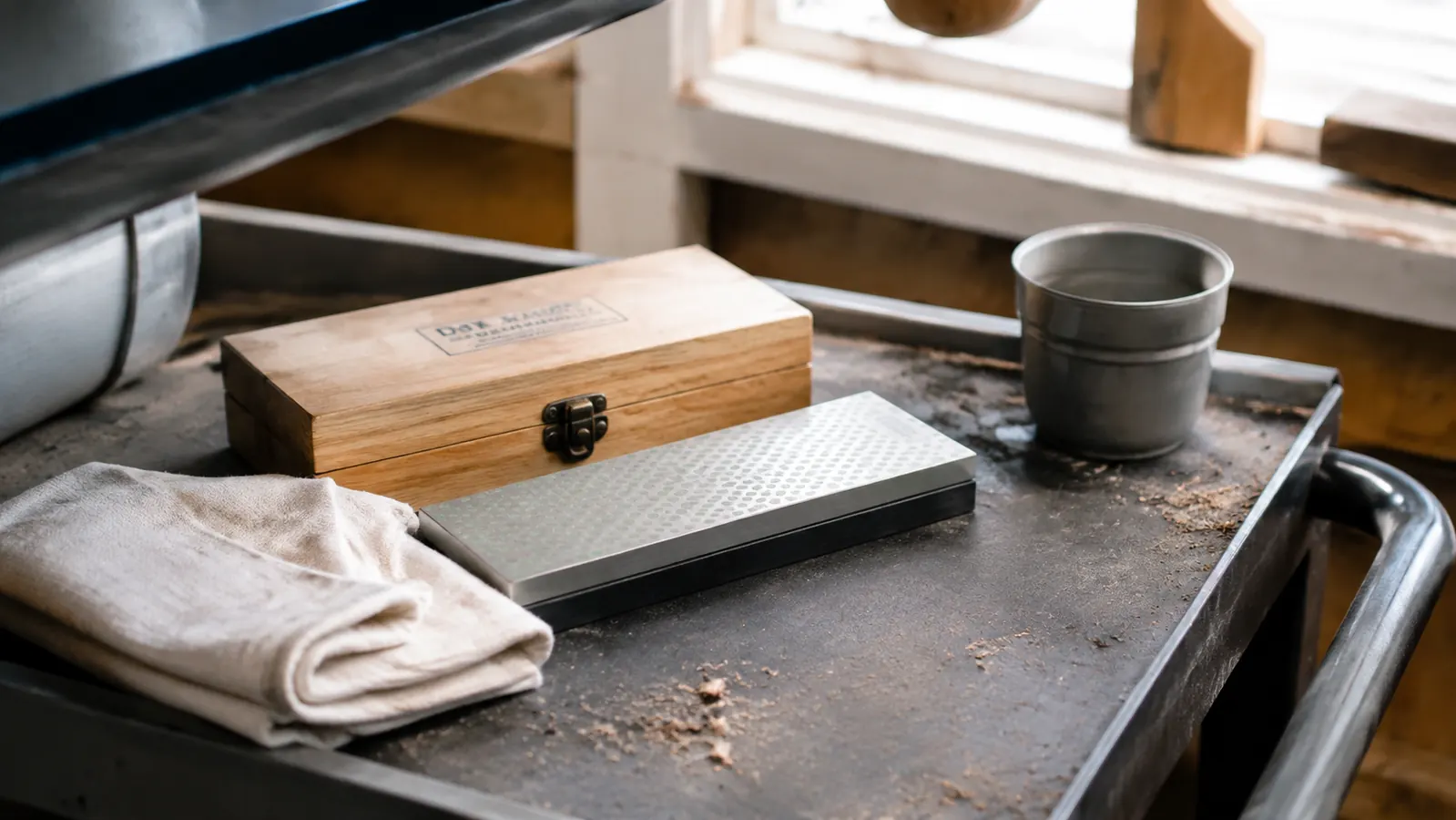
The stone is double-sided, so you flip it over to change grits. That is one less thing to find on the cart. The storage box has a non-slip rubber pad that doubles as a base. I use the pad on the cart and put the stone back in the box when I am done. The box keeps the dust off it and keeps the stone from getting knocked around. The pad also gives the stone a little cushion on the cart, which keeps it from sliding when I press down.
What It Does Well in a Small Shop
My shop is 11 by 20 feet. I do not have room for a sink, a dedicated sharpening station, or a rack of waterstones that need soaking. The SHARPAL fits on a shelf or a cart and needs a splash of water. That is the main reason it stays out. I can sharpen a chisel in the time it takes my coffee to cool, wipe the stone dry, and go back to the project. A waterstone might leave a prettier finish, but it also needs a bucket and a flattening plate and a place to dry. I have a waterstone. I use it less than I used to.
It is also fast on damaged edges. I have a 3/4 inch chisel that I dropped on the garage floor last winter. The corner folded over. On the 325 side I had the damage gone in about four minutes. On my old oilstone I would have been there for twenty. That is not an exaggeration. The diamond cuts faster because the abrasive is hard and stays exposed. The tradeoff is that it can leave a rougher scratch pattern than a waterstone, but you are going to refine it on the 1200 side anyway.
The stone stays flat. That is the other thing I care about. A dished stone will round over a chisel back and you will chase the error for an hour. I have not had to flatten the SHARPAL. I check it with a straightedge now and then, and it is still flat. The stainless steel base is 0.35 inch, so it is stiff. I do not know how long the diamond will last with heavy use. Two years of weekend work has not dulled it. If you sharpen every day in a production shop, your experience may be different.
The 325 side took a folded corner off a 3/4 inch chisel in about four minutes. My old oilstone would have taken twenty.
Where It Falls Short
The coarse side is aggressive, and that is the main caution. If you are new to sharpening, it is easy to rock the chisel and round over the bevel. You can do that on any coarse stone, but the diamond cuts fast enough that the mistake shows up quickly. I would practice on a beater chisel or a cheap plane iron before you touch a good tool. The other issue is the weight. At 1.4 kg, it is not a stone you hold in one hand while you move a chisel with the other. You put it on the bench and move the tool. That is fine in my shop, but if you like to sharpen with the stone in your hand, this is not that stone.
The 1200 grit side is a working finish, not a polishing stone. If you want a mirror bevel, you will need something finer. I do not need that for chisels and plane irons that are going to cut pine, poplar, oak or walnut. I do notice the scratch pattern on the back of a chisel when I am paring end grain on a picture frame, but it does not affect the cut. The stone also needs to be dried after use. If you leave it wet and put it in the box, you will get a mess. I wipe mine with a rag and let it air dry for a few minutes before I close the box.
What I Liked
- Cuts fast on damaged edges and stubborn bevels
- Two grits on one stone, so no searching for a second stone
- Stays flat on a 0.35 inch stainless steel base
- Storage box and non-slip rubber pad are useful, not filler
- Works with water, so no oil mess in a small shop
Where It Falls Short
- The 325 side is aggressive enough to punish a careless angle
- At 1.4 kg, it is heavy to hold in your hand
- The 1200 side leaves a working finish, not a mirror polish
- It needs to be wiped dry before it goes back in the box
What Changed After Two Years
After two years, the stone is not the newest thing on the cart, but it is still the first thing I reach for. The diamond surface shows wear from use, which is normal. It still cuts. I have not noticed a bald spot or a section that has stopped abrading. I have not tried to measure the wear with a microscope. I just use it. The rubber pad has a few nicks in it from chisels, but it still holds the stone. The box has sawdust in the corners. That is the honest report.
The bigger change is in how often I sharpen. Before the SHARPAL, I would wait until a chisel was really dull, then spend a long time fixing it. Now I touch up the edge on the 1200 side for a minute or two and go back to work. That has made my hand tool work better. Cleaner joints, less tearout on end grain, less pressure on the chisel. The stone did not make me a better woodworker. It made it easier to do the maintenance that makes the tools work. That is worth something.
Who This Is For
This stone is for the home woodworker who wants one sharpening surface that can fix a damaged edge and maintain a working edge. It suits a small shop with no sink and no room for a soaking tub. It suits someone who already knows how to hold a chisel at a consistent angle, or who is willing to practice on a beater. It suits the person who owns a few hand tools and wants them to work instead of fighting them. If you build step stools, picture frames, cutting boards, a bookshelf for a grandchild, and you want your chisels and plane irons to cut cleanly, this stone will do the job.
It also suits someone who dislikes oilstones. I used oil for years. The oil gets on your hands, on the bench, on the rag, and eventually on the project. The SHARPAL uses water. I keep a spray bottle on the cart. That is a cleaner process in a garage where the door is closed and the neighbors are close. If you have been avoiding sharpening because of the mess, this removes one excuse.
Who Should Skip It
Skip it if you want a mirror polish on a chisel back or a plane iron. The 1200 grit side is a working finish. You can refine it further on a waterstone or a finer diamond stone, but this is not the last word in polishing. Skip it if you sharpen with the stone in your hand. At 1.4 kg, it wants to sit on the bench. Skip it if you are rough with tools and you want a stone that will forgive a careless angle. The 325 side will not. It will remove metal fast and show you your mistake in a hurry.
Skip it if you are looking for a complete sharpening system with an angle guide and a base that holds everything at once. The SHARPAL comes with a storage box and a non-slip rubber pad, and that is what it is. It is a stone. You still have to hold the tool at the right angle. That is a skill, not a product. If you want a jig, buy a jig. If you want a stone that cuts fast and stays flat, this is a good one.
If your chisels are skipping instead of paring, start here
The SHARPAL 162N gives you a coarse side for repairs and a 1200 grit side for touch-ups. It is the stone I keep on the cart for everyday work in a small garage shop.
Amazon Check Today's Price on Amazon →