
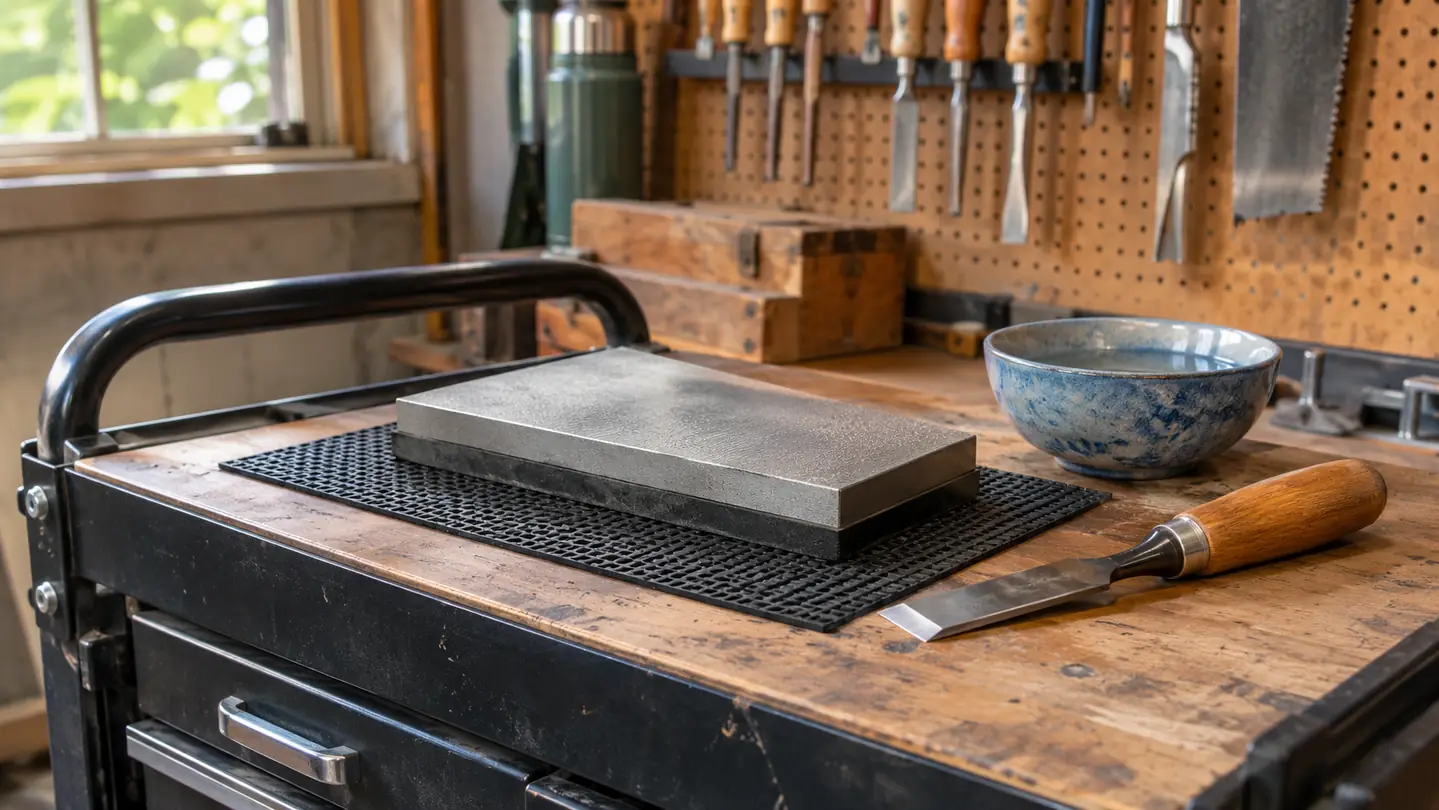
I bought the SHARPAL 162N diamond stone in the same month I bought a new set of chisels, about two years ago, and it has sat on my sharpening cart ever since. That is my entire qualification. I am not a professional sharpener and nobody pays me to do this. I am a retired plant maintenance mechanic who builds step stools, picture frames and the occasional blanket chest in one bay of a two-car garage, and I got tired of chisels that pushed instead of cut. What follows is the honest version of how that has gone, including the parts I would change.
Most sharpening reviews get written in the first week, while the stone still looks new and every pass feels like progress. This one is written after two years of weekend touch-ups, a few chipped edges ground back, one plane iron flattened, and a lot of hours standing at a rolling cart in a garage in Fullerton. Short version: the SHARPAL stone is a good tool that fixed the problem I bought it for, and it is not the last sharpening purchase I will ever make. Both of those things are true at the same time.
The Quick Verdict
A fast, flat, water-only diamond plate that turned sharpening into a two-minute habit instead of an evening project. It leaves a working edge rather than a polished one, and the coarse side is noticeably less hungry in year two than it was in month one.
Amazon Check Today's Price →Two minutes at the cart beats an hour of dull chisels
This is the same plate I have been reaching for every Saturday morning for two years, and it still hones an edge I can pare with.
Amazon Check Today's Price on Amazon →What the SHARPAL 162N Actually Is
Strip off the label and you have a rectangular diamond plate: 8.46 inches long, 3.94 inches wide, 1.93 inches tall sitting in its base, and 1.4 kg, which is about three pounds in the hand. Industrial monocrystalline diamonds are electroplated onto a stainless steel plate 0.35 inch thick, and both faces are coated. One face is 325 grit, roughly 45 micron, which is the coarse side. The other is 1200 grit, about 12 micron, which is the extra fine side. It comes in a storage box with a non-slip rubber pad you can set the stone on while you sharpen, and that pad matters more than the description makes it sound.
In the shop those two numbers mean two jobs on one tool. The coarse 325 side sets an edge and grinds out nicks. The extra fine 1200 side hones an edge back to something that will shave pine end grain and pare a hinge mortise clean. There is no soaking, no slurry to manage, and no flattening session with sandpaper on a glass plate every few weeks. A splash of water and you are sharpening. Against the oil stones I used for years, that dropped the cost of starting from a whole evening to about ten seconds, and I sharpen more often because of it.
The box it ships in is worth a sentence because I fully expected to throw it away and I did not. The stone lives in it between sessions, and when I am working the lid becomes the shallow tray I set the stone in, which keeps the runoff from running off the cart and onto the concrete floor. The rubber pad is the piece I touch every single session. It goes under the stone, grips the cart top, and stops a three pound plate from sliding around while both my hands are busy holding a bevel flat. I have seen sharpening setups where the stone is clamped in a vise to keep it still. This one does not need that, and in two years it has never once moved on me mid pass.
How I Have Used It for Two Years
The chisels get the most time on it. I have a four-piece HURRICANE set I bought about two years ago to replace a mismatched pile of hardware-store chisels, and the stone came home the same month. Those chisels pare dovetails and clean out hinge mortises, which is exactly the work that dulls an edge fastest. The iron from the low-angle block plane comes off the shelf above the bench every few weeks for a touch-up, usually after I have trimmed end grain on a picture frame or fitted a drawer front that was a hair proud.
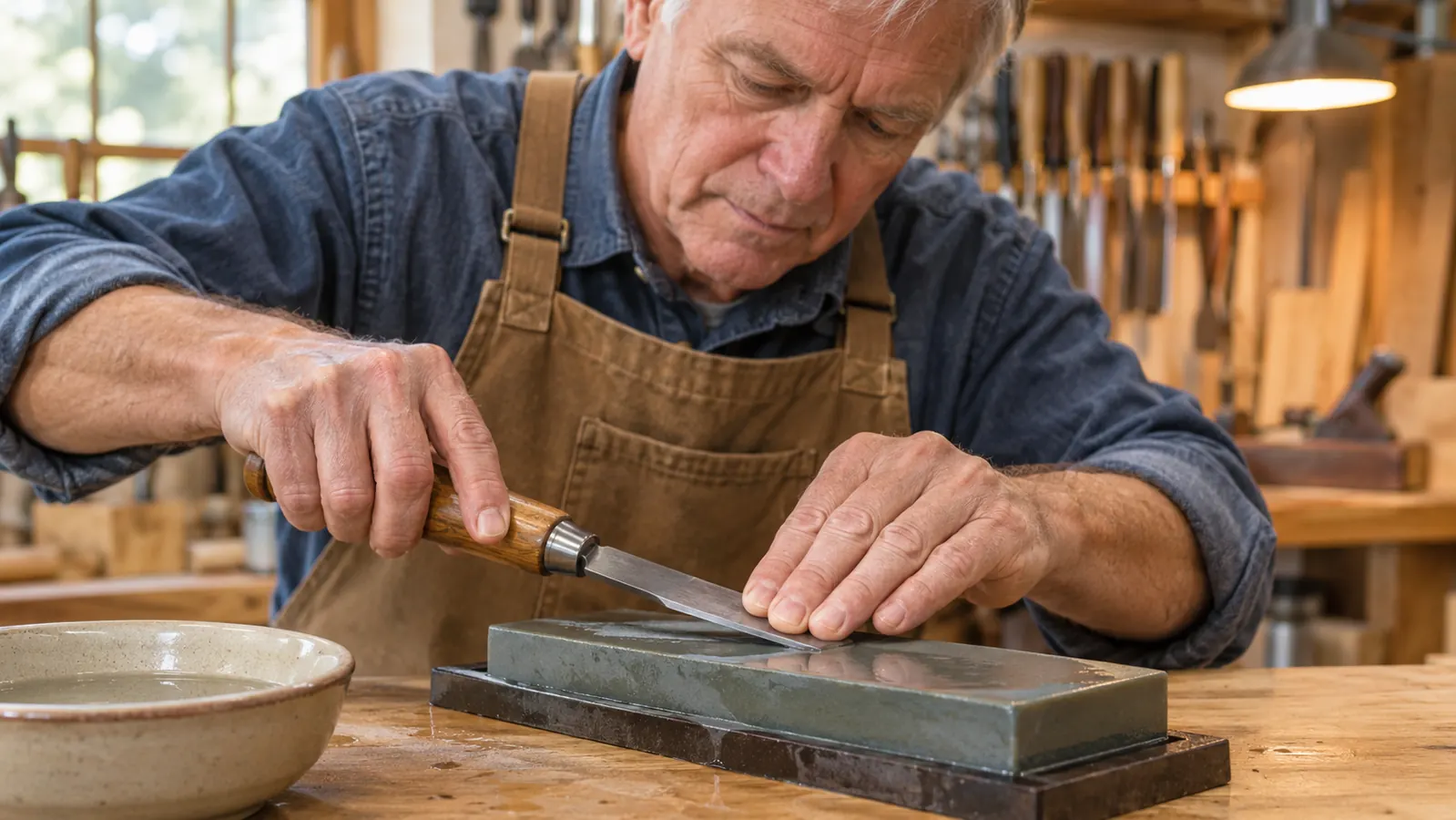
The routine has not changed in two years. Splash water on the coarse side if the edge is damaged, five or six passes with the bevel flat, then eight or ten passes on the extra fine side, then back to the bench. If the edge is only tired, I skip the coarse side completely and the whole thing takes about two minutes. I use water only. I have never put oil on it. After a session I rinse it under the tap, dry it on a rag and set it back on the cart with the coarse face up so I do not have to think about which side I am looking at.
One Saturday last spring I was cutting hinge mortises for a pair of small cabinet doors, and about the third mortise in, the chisel stopped slicing and started bruising the oak. Twenty minutes earlier it had been cutting clean. That is how a chisel goes dull on hardwood, not gradually but all at once, in the middle of a job, usually on the piece you least want to scrap. I walked to the cart, four passes on the 1200 side, walked back, and finished the remaining five mortises without stopping. The whole interruption was under two minutes. On the oil stones that same moment would have ended my morning, because I would have had to choose between pushing a dull chisel through the rest of the job or stopping to soak a stone and clean up the mess afterward. I finished the doors and swept up before lunch.
The job where a diamond plate really earns its keep is flattening the back of a new chisel. That is the boring half of sharpening and the half most people skip, and on my old oil stones it ate an evening. On the 325 side it was minutes per chisel. I did all four in a single sitting on a Saturday morning, which means I started the day with four chisels that were actually flat instead of four I had decided were close enough.
Ten passes on the 1200 side and a chisel that had been bruising end grain was taking shavings I could read the newspaper through.
What It Does Better Than I Expected
Flatness is the first thing, and it is the reason I stopped fighting my old stones. A diamond plate bonded to a stainless base does not dish out in the middle the way a water stone does under a chisel back. I am not dressing it flat every few weeks and I am not sharpening on a hollow that quietly puts a curve in an edge. Two years in, a straightedge laid across the surface still shows no gap I can see under shop light, which is more than I can say for the stones it replaced.
The coarse side is faster than I expected and, at first, faster than I needed. A nicked edge that would have cost me twenty minutes on an oil stone was back in service in under five. The diamonds cut with light pressure, so the work is mostly in holding the bevel flat and letting the plate do the rest. When I stopped leaning on it, the results got better and the stone got less work, which is the opposite of how I had been taught to sharpen.
The block plane iron was the test I did not expect it to pass. A plane iron is wider than any chisel I own, which means a lot more surface to keep flat, and the first time I laid it on the 325 side I assumed I had given up my afternoon. It took maybe twelve minutes, with my fingers spread across the back to keep the pressure even and the iron worked along the plate. I checked the back against a straightedge, found the middle was touching and the corners were not, spent a little longer on the high spot, and it came around. The plane has cut cleaner ever since, and I put that down to its back being genuinely flat instead of nearly flat.
It is also quiet and clean, and that matters more at 63 with close-set neighbors than it did at 40. No oil smell in the garage, no black slurry on my hands, no rag to throw out. The non-slip pad keeps the stone from walking across the cart while I work, so I am not chasing it with one hand while holding a chisel with the other. Small thing. I notice it every single time.
What I Would Change
It is heavier and taller than it needs to be for the way I work. At 1.4 kg and just under two inches tall on the pad, it is not a stone I carry to the bench. It lives on the rolling cart and I bring the tool to it. That is fine in an 11 by 20 foot garage, and it would be a nuisance for anyone sharpening on a job site or at a kitchen table. If portability matters to you, this is the wrong shape of tool.
The 1200 side is not a finishing stone, and the product should not be read as one. It leaves a working edge, slightly toothy, which is exactly what I want on a chisel that is going to pare pine and poplar. It is not what I want on a paring chisel I use for trimming end grain on a walnut frame. For those I still finish on a leather strop with compound. Anyone chasing a mirror bevel needs a water stone above 1200 grit in the sequence, and no amount of extra passes on this plate will invent one. I have thought about adding a strop more than once, and the only reason I have not is that the work most weeks does not demand it. If I were building a walnut blanket chest and wanted the lid end grain to look like glass, I would buy the strop that same week. That is a project problem and not a stone problem, and I would rather say so plainly than pretend the 1200 side does something it does not.
The coarse side is aggressive enough to punish a lapse in attention. In my first month with it I took a visible sixteenth off the width of a quarter-inch chisel because I kept doing just one more pass. That is my mistake and not the stone's fault, but a plate this fast does not give you much warning. Now I count passes out loud on narrow chisels and check the edge against the light between them.
The Wear Question Nobody Warns You About
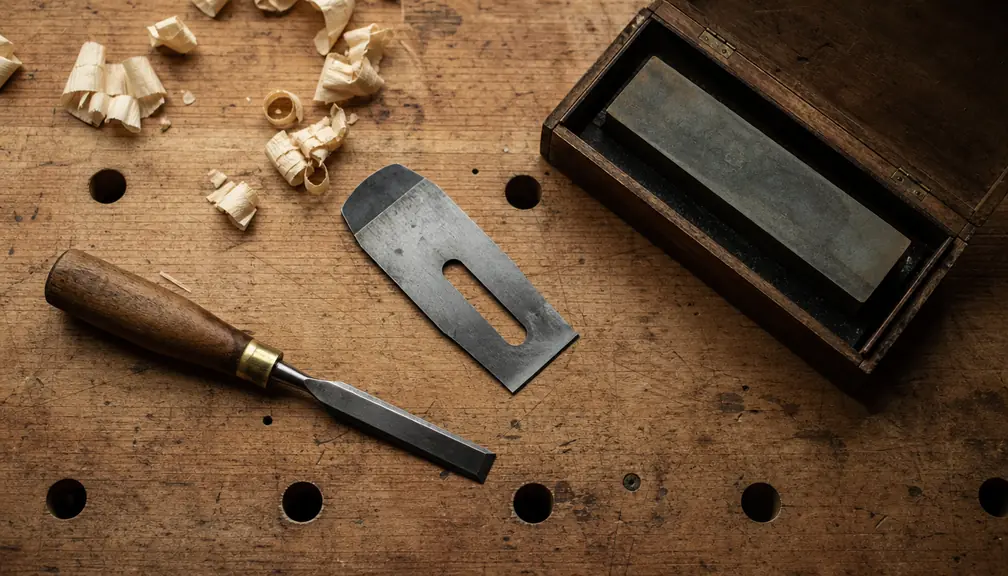
Electroplated diamond is a consumable, full stop. The grit is held to the steel by plating, and every pass wears a little of that plating away. Nobody selling you a diamond plate leads with that, and I do not blame them, but you should know it going in. After two years of weekend use, the coarse 325 side is not as hungry as it was in month one. It still sets an edge. It just takes more passes than it used to, and I have stopped expecting it to behave like new.
I can put a rough number on it. In the first six months, a chipped edge came down to clean steel in maybe eight or ten passes on the coarse side. Now, on the same kind of nick on the same quarter-inch chisel, I am counting closer to twenty, and I stop to check the edge twice as often as I used to. Nothing has failed. It has simply done a lot of work. I sharpen four chisels and a plane iron most weekends, which over two years works out to several hundred tool passes across that face, and every one of them took a little plating with it.
The extra fine side has held up much better, which makes sense because I use it with light pressure and it does less work per session. If I were buying again, the one thing I would change is my own technique: lighter pressure from day one, let the diamonds cut, never bear down to save time. I suspect I would have gotten more years out of the coarse face. The plate has not failed me, and it has clearly moved past its best days on the heavy side.
What I Liked
- Both grits on one plate, so coarse repairs and fine touch-ups happen in one place
- Stays flat on a 0.35 inch stainless base, no dressing or flattening routine
- Water only, no oil, no soaking, no slurry to clean up afterward
- The non-slip rubber pad in the storage box keeps it planted while you work
- Fast enough on 325 grit to bring a chipped edge back in under five minutes
Where It Falls Short
- 1.4 kg and nearly two inches tall on the pad, so it stays put on a cart and does not travel
- The 1200 side leaves a working edge, not a polished one, and will not replace a strop
- The coarse face wears faster than the fine face and is clearly past its best after two years
- The 325 grit cuts quickly enough to take too much off a narrow chisel if you lose count
Where It Stops Being Enough
I keep reaching for it, and I also know exactly when to put it down. If I want a polished bevel on a chisel that only ever pares, this plate takes me to a good working edge and no further, and a progression of water stones above 1200 grit is the honest answer there. Carving gouges need a slip stone that fits the inside of the sweep, and no flat plate does that job no matter how carefully you tilt it. The stone is one station in a process, not the whole process.
There is also a limit to how much correcting the coarse side will do well. When I chipped a chisel badly enough that the nick was a thirty-second deep, I took it back on the 325 face and it worked, but it took a while and I could feel the plate working harder than it should have to. That is the kind of repair where a bench grinder or a coarse water stone is the better first stop and the diamond plate is the finisher. Learning that difference saved me from burning through the coarse face on jobs it was never meant to carry.
What it replaced was a routine I avoided. That is the real measure of a sharpening tool for a hobbyist: not whether it produces the finest possible edge, but whether it makes you sharpen on a Tuesday night when a chisel starts bruising end grain. This one does. I sharpen more, my edges are better than they were three years ago, and my joints have gotten cleaner because of it. Those are the terms I judge it on, and on those terms the SHARPAL 162N has paid for itself many times over.
Who This Is For
This is for the hobby woodworker with four or five chisels and a plane or two who wants a flat, fast, no-mess stone on a bench or a cart and does not want to learn to manage water stones yet. It suits anyone whose sharpening happens in a garage, a basement or a shed where oil and slurry are a hassle and quiet matters. It also suits the newer woodworker setting up a first bench, because a plate that stays flat removes one whole variable while you are still learning to hold a bevel.
Who Should Skip It
Skip it if you need a polished bevel on paring chisels and carving tools, because you will end up buying a fine water stone or a strop anyway and this becomes the middle step. Skip it if you sharpen on site or away from your bench, since the weight and footprint make it a cart tool. And skip it if you expect a diamond plate to last forever. It is a consumable, mine is two years old and showing it, and anyone who tells you otherwise has not used one long enough to know better.
The plate I would buy again, with one change to how I use it
Light pressure, water only, and it will do two years of weekend work before the coarse side starts to fade. That is an honest trade for the money.
Amazon Check Today's Price on Amazon →