
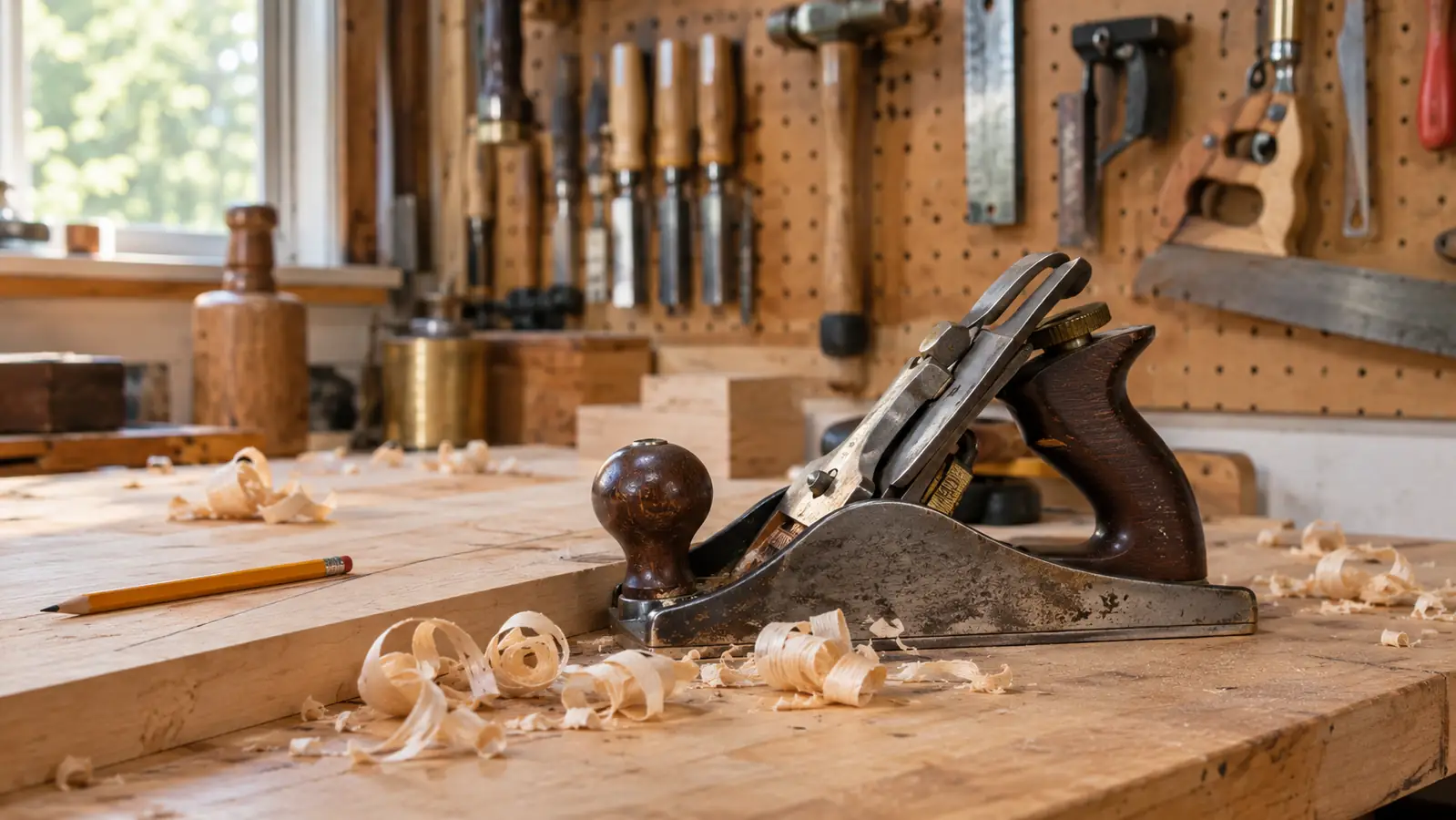
Eighteen months ago I bought the JORGENSEN No. 60-1/2 block plane because I was tired of sanding. That is the whole reason, no clever story behind it. Every chamfer on every step stool and picture frame I built came off a random orbit sander or a folded scrap of 120 grit, and neither one leaves an edge you want to run a thumb along. I wanted a tool that raised a shaving instead of making dust. What showed up was a 6-1/4 inch cast iron plane that weighs a pound and a half, and it has lived on the shelf above my bench ever since. This is the honest account of that year and a half, including the parts I do not love.
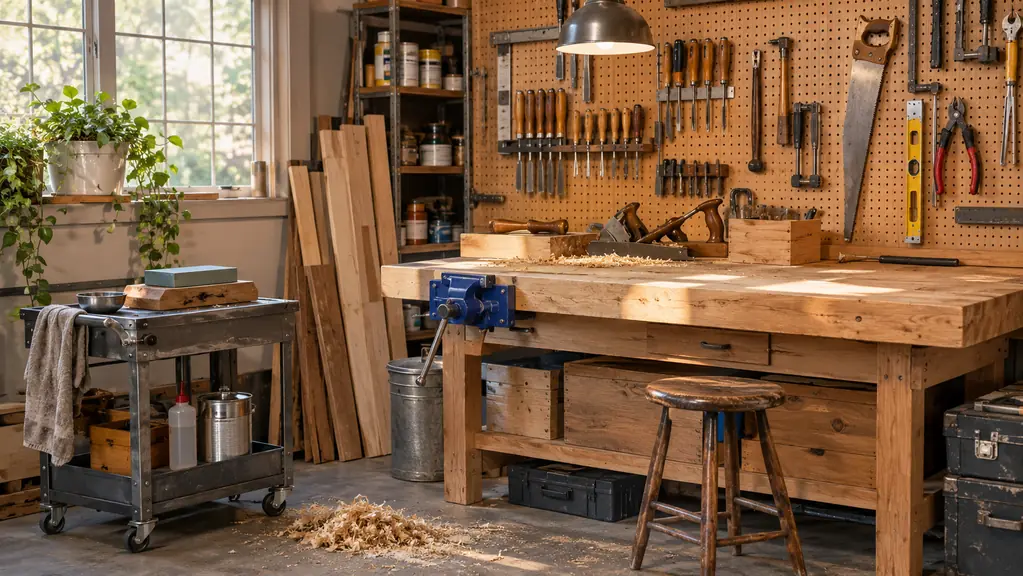
You have probably read a review or two calling this a beginner plane, or a copy of something better, or the best value on the shelf. Some of that is fair and some of it is people repeating each other. I am not a cabinetmaker. I am a retired plant maintenance mechanic with one bay of a two car garage in Fullerton, a maple top bench I built myself, and about thirty years of weekends in pine, poplar, oak and the occasional walnut board. Treat this as one hobbyist's notes rather than a tool test with calipers.
The Quick Verdict
A real low-angle block plane with a cast iron body and a good blade, once you spend twenty minutes sharpening it. The depth knob is the compromise you learn to live with.
Amazon Check Today's Price →The tool that ended my sandpaper habit on edges
Cast iron body, O1 tool steel blade, 1-3/8 inch cutting width, 6-1/4 inches long and 1.5 pounds. It handles the small fitting work that sandpaper does badly.
Amazon Check Today's Price on Amazon →How I've Actually Used It
For the first month I used it on everything, which is how a beginner uses a block plane. End grain on poplar frame stock. Chamfers on step stool legs. The fuzzy edge of a cutting board that had been through the dishwasher too many times. Drawer fronts that rubbed because I had cut them a hair wide and did not want to take the whole face frame apart to fix them. The first week alone I put it against a scrap of pine, a piece of poplar I keep for jigs, and the end of a red oak offcut from a bookshelf, mostly to find out what it would and would not do.
Chamfers and drawer fronts worked on the first try. End grain took longer, and the fault was mine. I was taking too heavy a cut and pushing straight through the board, and the plane answered by blowing out the far corner of a piece of poplar. I shortened that board by an inch and started over. Once I backed the depth knob off and began the cut at the far edge, working back toward me, the same wood gave up a shaving thin enough to read through. The tool had been capable the whole time. I had not been. It took me about three board ends across two weekends before that stopped feeling like luck.
Eighteen months later the routine has settled. It comes off the shelf for chamfers, for end grain on frame stock, for trimming a drawer front or a shelf that is a hair long, and for breaking the edges on cutting boards before they go out the door as gifts. My daughter in law's kitchen shelf and my grandson's room both hold things this plane touched last. It does not come off the shelf for anything large. That is not what I bought it for and it is not what it is good at.

What the Spec Sheet Does Not Tell You
The published numbers are honest. Six and a quarter inches long. One and three eighths of an inch of cutting width. A pound and a half, which I checked on the kitchen scale and Carol asked me what I was doing. Cast iron body, O1 tool steel blade, and a bottom the listing describes as flat and polished. I laid mine on the diamond stone the week it arrived and it was flat. After eighteen months of use it is still flat, because I have not dropped it and I do not store it loose in a drawer.
The depth adjustment is a knob, and that knob is where the feel of this tool lives. It moves the blade in small increments, but there is play in the mechanism before it starts to bite, so your first attempt at any new setting is usually either a shaving you cannot feel or one thick enough to stall the plane in oak. I have gotten used to it and I still overshoot. It rewards a light hand and punishes impatience, which is true of most hand tools and a fair number of the people holding them.
The weight matters more than I expected. A pound and a half is light enough to run along an edge one handed while the other hand keeps the work from sliding, and that is why it gets picked up more than the heavier planes in the shop. It is also light enough that on a hard piece of white oak you have to mean it. Push it and it will follow the cut. Wobble and it will follow your wrist instead, and the board will show you which one happened. I keep a scrap of oak by the vise purely to remind myself of that before I start on anything that matters.
Size is the other thing the numbers hint at but do not say out loud. At six and a quarter inches this plane gets into places a jack plane cannot reach, like the inside corner of a frame or the edge of a drawer front that is still hanging on the cabinet. It is also short enough that it will not flatten anything, which I will come back to.
The Blade Is Most of the Story
Mine arrived sharp enough to shave a pencil and not sharp enough to leave a surface I wanted to put finish on. That is the single thing I would tell anyone buying this plane. Plan on twenty minutes with a stone before you decide what you think of it. I flattened the back on the coarse side of the SHARPAL, worked it through the fine side, and put a fresh edge on the bevel. On end grain the difference was not subtle. It went from tearing the fibers to slicing them clean.
O1 steel is familiar to me from the chisels in the top drawer. It takes a good edge without much work and it does not keep it forever, so I touch the blade up every few projects. More often in oak, less often in pine, and always before a project where the surface is going to be seen. If you want to sharpen once a season and forget it, this is not that steel. If you keep a stone on a cart and touch up while the glue dries, you will get along fine.
I sharpen it the way I sharpen a chisel, because the motion is close enough that learning both at once made sense. Stone wet with water, no oil, back flat, bevel consistent, a few passes on the fine side to finish. The blade comes out without drama and seats back in the same position each time, which matters more than it sounds like it does when you are chasing a fine cut on a visible edge. I keep a pencil mark on the iron about where it sits, and checking it against that mark before tightening has saved me a second setup more than once.
Where It Has Surprised Me
The job it does best in my shop has nothing to do with joinery. It is fitting. When a drawer front sits proud of the face frame, or a shelf needs a sixteenth taken off one end, the JORGENSEN does it in three passes and leaves a surface that does not need sanding afterward. I used to do that work with a block of wood wrapped in paper. It took ten minutes, my arm ached, and the end still was not square.
It also became the tool for breaking edges on cutting boards. Forty five seconds around the perimeter and the edge is softened evenly the whole way. My daughter in law has two of those boards in her kitchen and has never once asked how I got the edges so even. I have decided that counts as a compliment. The first board I did that way was a maple one I had already sanded to 220, and I went back over it with the plane on a whim, then finished it with a rag and some mineral oil. That board is still in use four months on and the edges have held up better than the ones I sanded.
Picture frames were the other surprise. Mitered corners on poplar leave a fuzzy edge where the saw tooth marks sit, and a light pass with this plane cleans them up without rounding the corner over. I have to be careful, because a block plane will take more than you meant if you are not paying attention, but the control is there if you set the cut fine and keep the pressure even.
Where It Falls Short
The depth knob on the JORGENSEN is my real complaint, and I will not soften it. Because the adjustment is a knob rather than something you can set with a tap, backing off for a fine cut means turn, test, turn again, and the play in the mechanism means the first turn or two does nothing you can measure. On a chamfer that is merely annoying. On a drawer front it is a mistake waiting to happen, because one pass too deep and the front has to come off and be recut. I lost a good poplar drawer front to exactly that last spring and had to mill a new one from the same board to keep the grain close.
Figured wood is the second problem. I had a piece of curly walnut set aside for a small box lid, and the plane tore out no matter how fine I set it. I ended up skewing the plane and taking shavings at an angle to get through it, and even then I stopped and went to sandpaper for the last bit. This is not a smoothing plane and it is not going to solve reversing grain. If figured walnut is most of what you build, you want a different tool.
The third is the sole. Six and a quarter inches is exactly what makes this plane useful on end grain and exactly what makes it wrong for flattening. I tried it once on a glue up out of laziness. It found the low spots and made them lower, then rocked over the high ones. That is operator error, and a new woodworker is going to make it, so consider this the warning I did not get.
One more, smaller than the rest. On heavy cuts in hard wood the plane will chatter if you let up halfway through a stroke. It is not a weight problem so much as a rhythm problem, and the fix is to keep the pressure on through the whole pass. When I get tired and lazy at the end of an afternoon, the surface tells on me. Two or three passes with a lighter setting and a steadier hand usually clean it up, but the wood remembers and the finish will show it if you skip that step.
What I Liked
- Raises a real shaving off end grain once the blade is honed, which no sander can do
- Light enough at a pound and a half to use one handed on edges and drawer fronts
- Cast iron body with a sole that was flat on the stone and is still flat after 18 months
- 1-3/8 inch cut is wide enough for a drawer front and narrow enough for small work
- Depth knob adjusts fine enough for a finishing pass in pine and poplar
Where It Falls Short
- Blade needs sharpening before the first use to leave a clean surface
- Play in the depth knob means setting a fine cut takes test shavings
- Tears out on figured walnut unless you skew the plane and take light passes
- The short sole makes it a poor choice for flattening anything
- O1 steel needs touching up every few projects, not once a season
The first shaving I took off the end of a white oak board came off in one curl and landed on the bench, and I stood there looking at it longer than a grown man should.
What I'd Change if I Could
Two changes, both small. I would take the play out of the depth adjustment so a quarter turn means a measurable change instead of a maybe. And I would ship the blade with an edge that matches the rest of the tool, because everything else about this plane arrives ready to work and the blade does not. Neither one is a reason to walk away. They are the reason I gave it four and a half stars instead of five.
Everything else on the JORGENSEN has held up. No rust spots on the body, the knob turns as smoothly as it did the first week, and the sole is still flat on the stone. It looks like a tool that gets picked up every week, because it does. I have owned tools that stayed pretty in a drawer and I have never once preferred them to the ones that got used. The one thing I do now that I did not do in the first month is wipe it down with a rag and a drop of oil before it goes back on the shelf, especially after oak, which seems to leave a film on cast iron faster than pine does.
Who This Is For
This is for the woodworker who already has a table saw and a drill and has started to notice that machine work leaves edges that need help. It is for someone willing to learn sharpening, because that is not optional with any hand plane at any cost, and it is the difference between a tool that works and a tool that skids. And it is for the person who wants one small plane that does three or four jobs well rather than one large job badly.
Who Should Skip It
Skip it if you build large flat panels and want a plane to flatten them. Wrong tool, and no amount of technique will fix that. Skip it if you will not sharpen, because an O1 blade that has gone dull will chatter and skate and you will blame the plane for it. Skip it if figured walnut is your main material. And skip it if you want one plane that covers everything, because this one covers a specific set of small jobs and does them well enough that I stopped wondering what else was out there.
Eighteen months in, it still sits on the shelf above my bench
A cast iron body, an O1 tool steel blade and a 1-3/8 inch cut in a plane that weighs a pound and a half. Hone the blade once, learn the knob, and it handles the small fitting work that sandpaper does badly.
Amazon Check Today's Price on Amazon →