
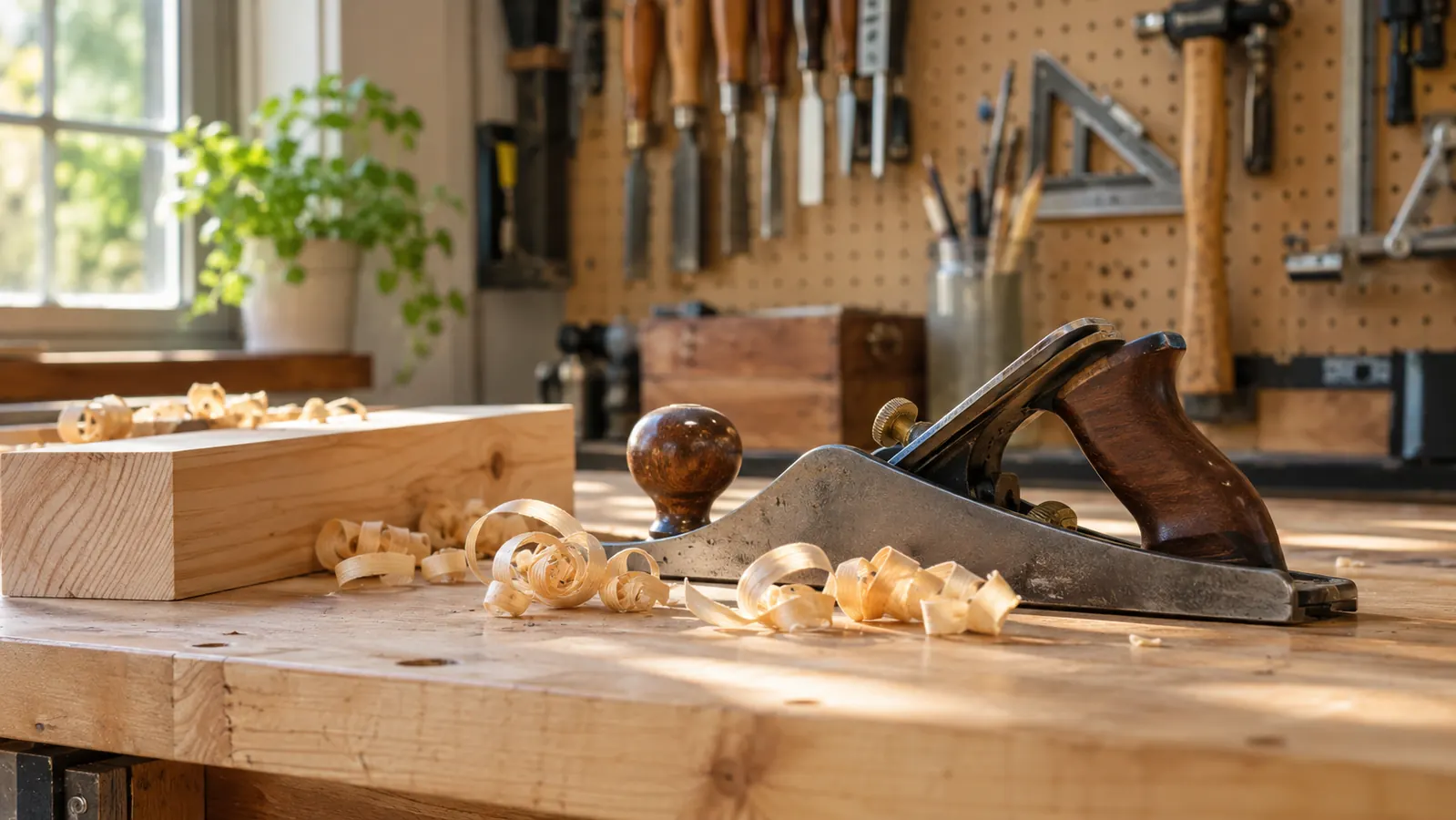
Two block planes come up every time a hobby woodworker asks what belongs on the bench: the JORGENSEN No. 60-1/2 and whatever Stanley is hanging on the pegboard at the local hardware store. I have had the JORGENSEN for about 18 months. It lies on its side on the shelf above my bench in the garage, and it earns that spot three ways: chamfering edges, trimming end grain, and taking a drawer front down until it closes without a rub. Before I owned it, those jobs got sandpaper and some colorful language. Stanley has been building this pattern since before my father was born, and that counts for something. It just does not chamfer a step stool.
So here is the short answer, and then I will show the work. If you want one small plane for a garage shop, you are not going to spend evenings flattening a sole, and you want it cutting the week it lands, get the JORGENSEN. Cast iron base with a polished flat bottom, an O1 tool steel blade, 1.5 pounds in the hand, a 1.38 inch cutting width, and a depth knob you turn with your thumb. That is the whole tool, and for trimming work in a home shop it is enough. If you plan to fettle, if you want to buy a replacement blade from three different catalogs in ten years, and if you like adjustment hardware that moves in small repeatable steps, the Stanley is the smarter long-term buy. Both answers are honest. They are aimed at different people.
| JORGENSEN No. 60-1/2 | Stanley block plane | |
|---|---|---|
| Weight and one-hand control | 1.5 pounds and 6-1/4 inches, steered with one hand while the other holds the part | Heavier, with more mass behind the cut on hard stock |
| Cutting width | 1.38 inches, sized for chamfers, end grain and drawer edges | A wider iron covers more ground on broad faces |
| Blade steel | O1 tool steel, takes a clean edge on a diamond stone | Serviceable factory iron, with a deep aftermarket behind it |
| Sole out of the box | Polished flat bottom, no lapping session needed | Machined, and plenty of owners lap it anyway |
| Depth adjustment | One knob, simple, but the feed is coarse | Finer, more repeatable steps |
| Parts and blades later on | Thin aftermarket | Decades of parts and blade options |
| Resale | Modest | Holds value well |
| Cost to get started | The lighter hit to the tool budget | More up front, more back if you sell |
| Best for | One plane on a garage bench: trimming, chamfers, end grain | A plane you fettle once and keep for decades |
Where the JORGENSEN Block Plane Wins
Weight and one-hand control, first. The plane is 6-1/4 inches overall and weighs 1.5 pounds. That reads like a spec line, so let me put it on the bench. When I chamfer a picture frame, my left hand holds the frame against the bench hook and my right hand runs the plane. A light plane lets me do that for twenty minutes before my wrist files a complaint. Same story on a step stool: four legs, eight edges to break, and the tool is small enough that I am steering it instead of wrestling it. In a shop that is 11 by 20 feet with one bench in it, that matters more than mass does.
The sole arrived flat. The listing says polished flat bottom, and mine came that way. I checked it the way I check everything, straightedge on the sole with a light behind it, and it was close enough that I never carried it over to the sharpening cart and started lapping. If you have never lapped a sole, understand what you are avoiding: it is an evening of figure eights on sandpaper that you do not get back, and it is the single thing that scares new buyers away from hand planes. The JORGENSEN skips that evening entirely, which is a strange thing to praise a tool for and also the most useful thing about it.
The drawer front job is the one I keep coming back to. A pine dresser I built for our daughter, three drawers, and the top front sat proud by maybe a thirty-second of an inch on the left corner. Not enough to see. Enough to catch a fingernail every time you opened it. I tried a sanding block first, which is what I would have done before I owned a plane, and it took the sharp corner off and left a rounded edge where I wanted a straight one. Wrong tool, wrong result, and I knew it about six strokes in. The plane with the 1.38 inch iron took a shaving the width of the reveal, four passes, checking against the combination square between each one, and the drawer closed with a light push. Fifteen minutes, no sanding, no refinishing the face.
Blade and width. The O1 tool steel blade takes a clean edge off my diamond stone, coarse side to set the bevel, fine side to finish, and it holds through a session on oak without me stopping to touch it up. The 1.38 inch cutting width is a feature when the work is small. It fits inside a drawer front reveal. It fits between the pins when I am cleaning up a dovetail corner. It slips under the lip of a picture frame rabbet without gouging the shoulder. A wider iron is lovely on a panel and useless in a corner, and most of what a home shop does is corners.

Where the Stanley Wins
Reach. Stanley puts a wider iron in this class of plane, so on a broad face, the edge of a tabletop or a long chamfer along a blanket chest lid, it covers more ground per pass and you feel it in your shoulder at the end of the afternoon. If most of your planing happens on wide surfaces, that reach is not marketing. It is work.
For what it is worth, I have used the Stanley pattern enough to know it is not a myth. A neighbor up the street has one he bought in the eighties, and I borrowed it for an afternoon when I was building the blanket chest and wanted to clean up the long chamfer along the lid. Two things struck me. First, the mass. On a chamfer that runs the better part of four feet, the extra weight does the pushing and my arm just steers. Second, the depth adjustment. I turned it a hair, took a shaving I could read the grain through, turned it another hair, and got the same shaving again. With the JORGENSEN I would have measured, cut, measured, cut. That afternoon taught me what people mean when they say a plane is settled.
Adjustment, parts, and the long haul. This is where the Stanley earns the reputation it has. The adjustment hardware moves in small steps you can repeat, which matters when you are sneaking up on a drawer fit two shavings at a time. The JORGENSEN depth knob does the job and I use it every session, but the feed is coarser, so I do more measuring and less trusting. Then there is the boring part nobody thinks about on day one: in ten years, when you want a fresh blade or a replacement lever cap, the Stanley pattern has an aftermarket behind it and the JORGENSEN does not, not to anything like the same depth.
And it holds value. If you are the sort who upgrades twice and sells the first one, the Stanley gives more of your money back. Add in that every book and every forum thread describes it, and you get a tool you can troubleshoot from the couch. That is worth something on a Sunday night when a cut goes wrong.
One plane, one hand, and no lapping evening
The JORGENSEN No. 60-1/2 is 6-1/4 inches of cast iron with an O1 blade and a sole that shows up flat. If your bench is one bench in a garage, that covers the whole job.
Amazon Check Today's Price on Amazon →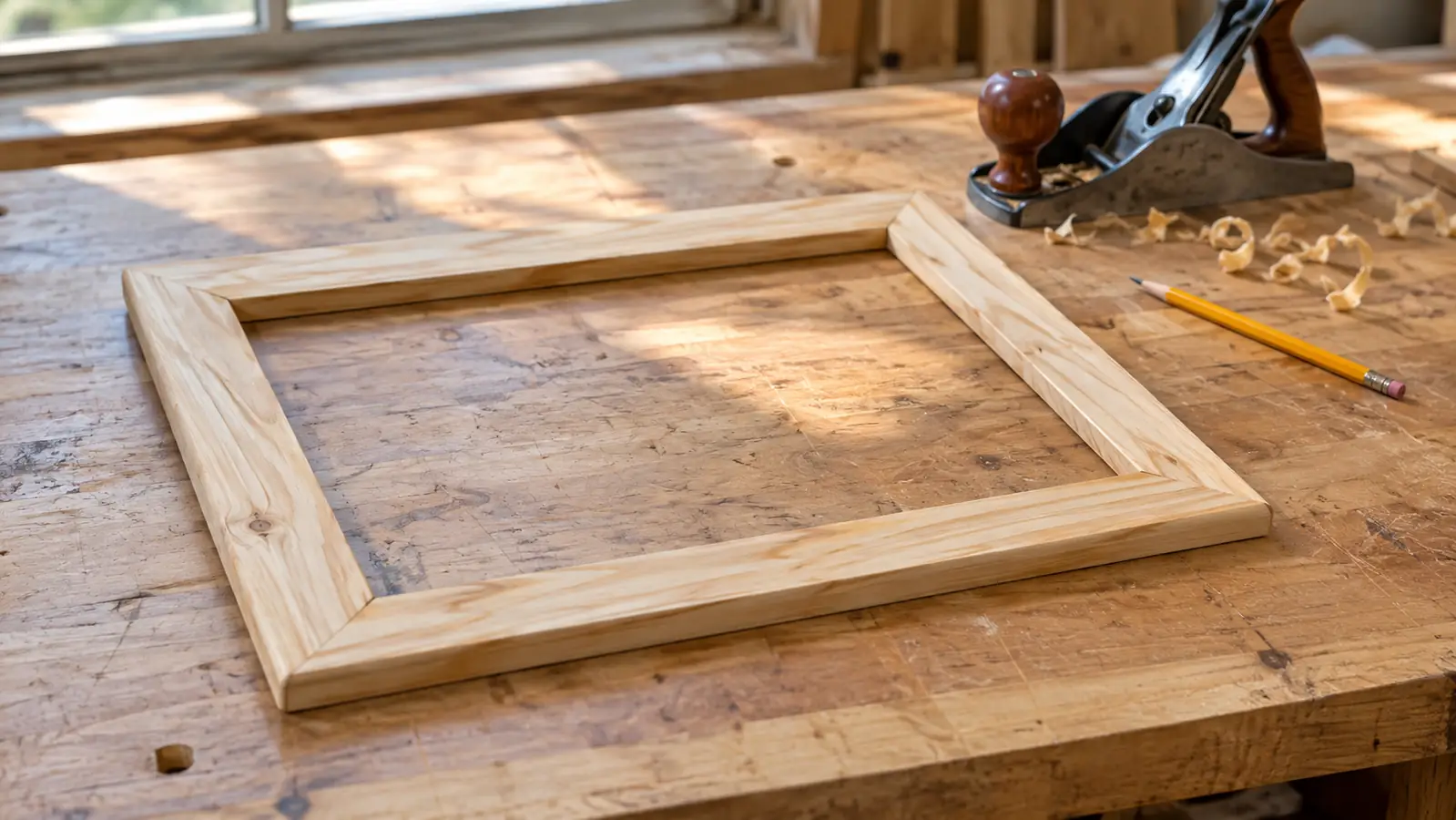
What 18 Months on the Bench Looks Like
The honest usage report. Mine has chamfered every leg on two step stools and one bookshelf for a grandchild. It trimmed the end grain on pine frame stock, which is where a sharp blade earns its keep because end grain punishes a dull one instantly. It shaved oak drawer fronts until they closed with a light push and no rub at the top corner. It has not touched a wide panel, because I have a table saw for that and the 1.38 inch iron would make slow work of it anyway. Know what a tool is for and it stops disappointing you.
Numbers, since I like numbers. Two step stools, four legs each, eight edges to break per stool, so sixteen chamfers before I am done with that project alone. Three picture frames this spring, four rails apiece, both ends trimmed, which is another twenty-four cuts on end grain and the job where a dull blade shows up first. A blanket chest, whose long lid chamfer I did with the borrowed Stanley because the run was too long for a light plane to be pleasant. A bookshelf for the grandchild, six shelves, fronts eased. And the dresser drawer fronts. Call it a hundred and fifty small planing jobs in eighteen months, one blade, honed maybe a dozen times. That is not a cabinetmaker's workload. It is a garage workload, and the tool has matched it exactly.
Maintenance is a wipe with a rag and a few passes on the diamond stone every few sessions, more often on oak than on pine. The body is metal and the base is cast iron, so it does not ask for much beyond keeping it dry and not throwing it in a drawer with the chisels. I store it on its side the way you are supposed to, which also means I can see at a glance whether the blade has picked up a nick.
What I would change, if the company asked. A finer depth feed, so I could creep up on a fit instead of measuring twice and hoping. And I would buy a second blade in a heartbeat so one could stay sharp while the other gets honed. Those are small complaints about a tool that has done everything I bought it for.
What I Liked
- Sole arrived flat, so no lapping session on day one
- 1.5 pounds and 6-1/4 inches, easy to steer with one hand
- O1 tool steel blade takes a keen edge and holds it through oak
- 1.38 inch width gets into drawer reveals and dovetail corners
- Depth knob is simple enough that I never think about it
Where It Falls Short
- Depth feed is coarser than the Stanley pattern
- Almost no aftermarket for blades and replacement parts
- Too narrow an iron for wide panels and heavy stock removal
- Mine wanted a few minutes on the stone before it behaved
Eighteen months on the shelf, one blade, and I have never had to lap the sole.
Who Should Buy Which
Buy the JORGENSEN if this is your first block plane, or your only one, and you want to spend your shop time building rather than tuning. It suits a small bench, a short list of jobs, and a woodworker who wants the tool working the week it arrives. Chamfers on frame stock, end grain on a leg, a drawer front that rubs, a chamfer on a cutting board handle: the 1.38 inch iron and the 1.5 pounds are built for exactly that list. It also suits anyone who has been burned by a bargain plane before and does not want to gamble on whether the sole is flat.
There is one more case worth naming. If you are setting up a first bench and the tool budget is finite, which it always is, the plane that gets used is worth more than the plane that wins an argument on a forum. I watched a friend buy a good old plane at a Sunday flea market, spend a month reading about fettling, and never cut a shaving with it, because the project he bought it for went stale while he was still reading. A tool that works out of the box keeps a beginner in the hobby. A tool that demands a weekend of tuning before its first cut loses a lot of beginners during that weekend. That is not a knock on tuning. It is just what I have watched happen.
Buy the Stanley if you already own planes and enjoy the tuning as much as the building, or if you do wider work and want the extra reach of a broader iron. Buy it if you plan to keep the tool for decades and want parts available in year fifteen, or if you are the type to sell and upgrade and would rather not eat the loss. Buy it, honestly, if you like adjustment hardware that moves in fine, repeatable steps and you will notice the difference every single time you set the depth.
If you are still on the fence, let the jobs decide and stop reading reviews, this one included. Write down the last five times you reached for a plane. If those were corners, reveals and end grain, the JORGENSEN is the fit. If they were panels and long edges, save up and go Stanley. Nobody ever regretted matching the tool to the work.
Start with the plane you will actually use
Chamfers, end grain, drawer fronts. If that is your list, the JORGENSEN No. 60-1/2 covers it without a tuning session first.
Amazon Check Today's Price on Amazon →