
Four years ago I bought the IRWIN 12 inch combination square to replace a try square that had quietly gone out of true. I found out the hard way, on a picture frame, when three corners closed up tight and the fourth had a gap you could slide a nickel into. That is the trouble with a bad square. It never tells you it is the problem. You blame your saw, you blame your technique, you blame the wood, and you keep cutting.
What nobody tells you about a combination square is that buying one is the easy part. Learning when to trust it and when to check it takes longer. This review is not going to pretend the IRWIN is flawless. It has two things that genuinely bother me and one that bothers me only when I am in a hurry. But it has hung on the pegboard next to my saw for four years, it has been dropped on a concrete floor more than once, and I have never once gone shopping for a replacement. Take that for what it is worth.
The Quick Verdict
Accurate, heavy enough to feel planted, and the etched scales have not worn off in four years of garage use. The head is bulkier than I want in tight spots, and the locking action could be smoother than it is.
Amazon Check Today's Price →The square that has stayed on my pegboard for four years
Accurate 45 and 90 degree marking, a stainless blade, and etched 1/16 inch scales you can still read after four winters in an unheated garage. Worth a look if you are setting up a first bench.
Amazon Check Today's Price on Amazon →What Nobody Tells You Before You Buy One
There is a version of this tool that costs less than lunch and a version that costs more than a used table saw, and in a photograph they look about the same. What separates them is not the printing on the package. It is whether the head sits flat against the blade, whether the 90 degree stop is actually 90 degrees, and whether the whole thing stays put when you tighten it down.
The IRWIN lands in the middle of that range and it does the three things that matter. Mine has been checked against a drafting square and against the fence of my table saw, and it reads square. It has stayed square through hot Fullerton afternoons and cold garage mornings, which is more than I expected for the money.
Before the IRWIN I went through two cheap squares in about three years, and both of them taught me something. The first came in a two pack from a hardware store and looked perfectly fine on the shelf. By the second summer the head had worked loose enough that I could rock it with my thumb, a few thousandths of an inch of play. That does not sound like much. On a 14 inch drawer side it turns into a visible gap at the far end and a drawer that rubs on the frame every time you open it. The second square never went out of true but the printed numbers wore off in under a year, so I was guessing at graduations on the one tool I owned that was supposed to settle arguments.
The check I do now takes about a minute and I do it every spring. I hook the head over the edge of the bench, draw a pencil line along the blade, then flip the square over and draw the same line from the other side. If the two lines agree, the square is true. If they diverge, it is not, and no amount of blaming the saw will fix it. Mine has passed that test four years running. I also lay the blade along the table saw fence when I think of it, mostly because the fence is the longest straight reference in the shop and it is already standing there.
The other thing nobody mentions is that a 12 inch blade is a specific size with specific limits. It is long enough to lay out a step stool side and short enough to live in the top drawer under the bench if you want it there. It is not long enough to check a full sheet of plywood, and no amount of wanting it to will change that. If you are breaking down sheet goods you still need a long straightedge. A combination square is for joinery and layout, not for panels.
How the IRWIN Has Actually Been Used
Four years is enough time for a tool to show you what it really is. Mine has been used on cutting boards, picture frames, a blanket chest, two step stools, a bookshelf for a grandchild, and a set of shop drawers that took three weekends because I kept changing my mind. Almost none of that work needed a fancy square. All of it needed one I could trust.
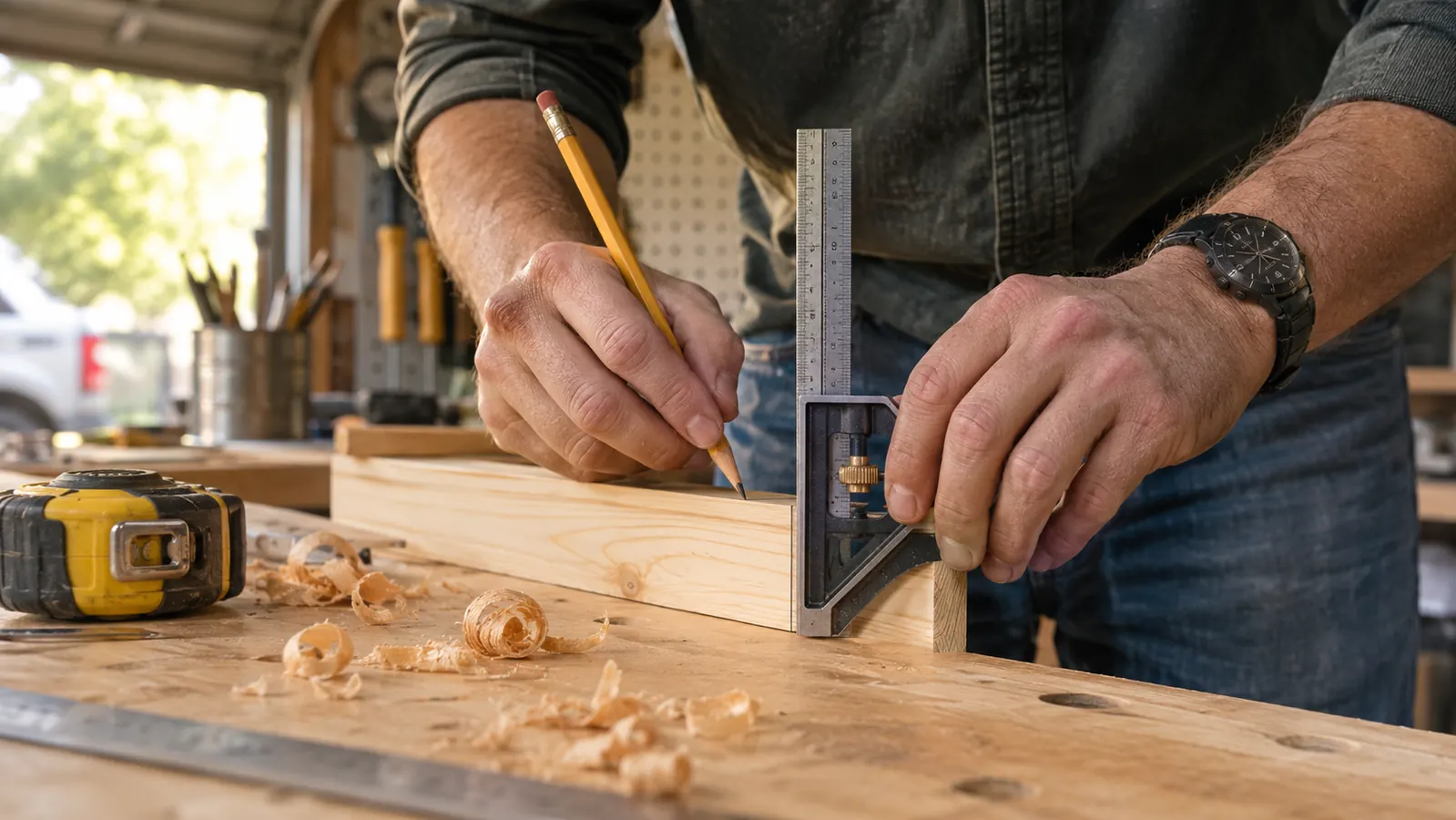
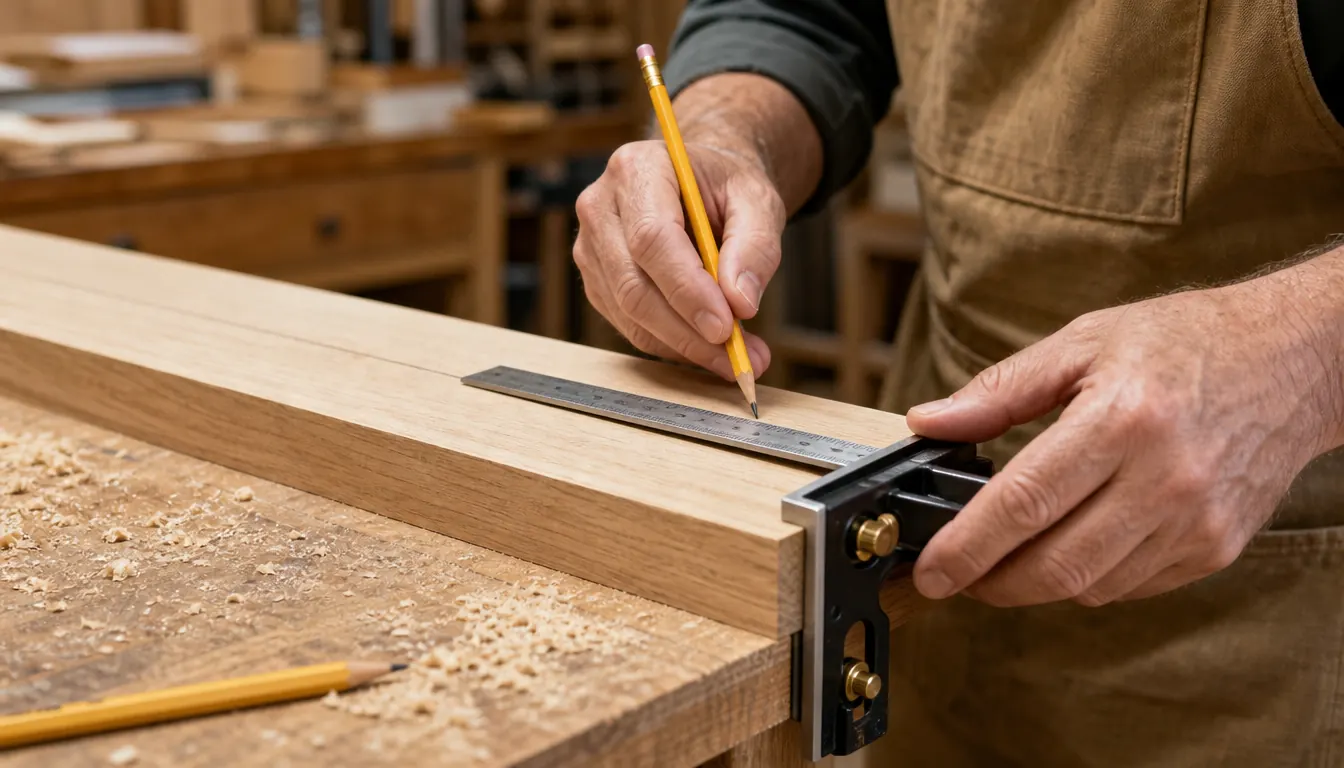
The job it does most is marking cut lines. I set the head at the width I want, hold it against the edge of the board, and drag a pencil along the blade. Because the scales are etched into the stainless rather than printed on top, the pencil does not skate and the line stays where I put it. I have also used it as a depth gauge, sliding the blade until it matches the depth of a dado and then transferring that measurement to the workpiece. The listing calls that using it as a gauge for transferring measurements, and it is the single most useful thing about the tool that people do not think to do.
The second job is checking square on glue ups. When a carcass goes together and you have thirty seconds to decide whether it is racked, you do not want to be hunting for a tool. This one hangs within arm's reach. I check the diagonals first, then lay the square on the corners. Twice in four years it has caught a cabinet going together out of square before the glue set, and both times that saved me an afternoon and a lot of bad language.
The bookshelf for my granddaughter is the project that made me stop thinking about it. It is 30 inches tall, 24 wide and 10 deep, built from pine with three shelves in stopped dados. I set the head once at 1/2 inch for the shelf thickness and left it locked for the entire job, checking it against the bench every now and then out of habit rather than worry. Nine shoulders and two sides later, the shelves went in with hand pressure and no mallet. That is not a thing that happens when a square has drifted. I have built enough crooked furniture over thirty years to know the difference between a good afternoon and a lucky one.
One smaller habit came out of the same period. When I have set the table saw blade height and I want to confirm it without walking around to find a ruler, I stand the square on the insert with the blade down beside the saw blade and read the depth against the insert surface. It takes five seconds and it gives the same answer every time, which is really what you want out of a measuring tool. It is also the sort of thing you only start doing once a square has proven it is not going to lie to you.
What Holds Up: The Blade and the Etched Scales
Scales on cheap squares are printed. They look fine in the store and they are gone in a year, worn off by sawdust and thumb pressure and the occasional wipe with a rag. The IRWIN scales are etched into the stainless, which means they do not rub off. Four years in, I can still read the 1/16 inch graduations without putting on the reading glasses I keep on the bench for exactly this.
The blade itself is stainless and it has not rusted. My garage is not climate controlled, and anything plain steel in that shop gets a bloom of rust if I look at it wrong. The blade on this square has a couple of dull spots near the head but nothing that has touched accuracy or legibility. That is the whole ballgame for a tool that lives in a garage.
The body is metal, and the whole thing runs 14.4 ounces. That sounds like a small detail until you use a light square on a board that is not perfectly flat. The weight keeps it planted while you are reaching for a pencil. It also means it will dent a softwood edge if you drop it, which I have done, and it means it is not the tool I hand to a grandchild who wants to help.
The drop is the story I tell about this thing. Two winters back I knocked it off the pegboard reaching past it for a saw. That is roughly four feet onto bare concrete, metal head first, and I fully expected to be ordering a replacement that afternoon. I picked it up, laid the blade against the table saw fence, and it was still reading true. The corner of the head had a small ding on it and the blade was untouched. I have dropped it once more since, from lower, with the same outcome. That is not a promise yours will survive the same fall. It is just what happened to mine on a Tuesday in February.
The stainless earns its keep more in my shop than it would in a climate controlled one. Fullerton is not Seattle, but an unheated garage still collects condensation on cold mornings when the sun hits the door and warms the air faster than it warms the cast iron. Anything plain steel in there picks up a brown haze by February unless I keep it wiped down with paste wax. The blade on this square has never needed that treatment. I wipe the dust off when it gets thick and put it back on the peg.
What I Liked
- Etched scales are still readable after four years
- Stainless blade has not rusted in an unheated garage
- Held square through heat and cold cycles and two drops onto concrete
- Heavy enough to stay put on the workpiece
- Works as a depth gauge for transferring measurements
- Limited lifetime warranty
Where It Falls Short
- Head is bulky and gets in the way in tight corners
- Locking action is not as smooth as it should be
- Heavier than a speed square for ladder work
- No case included
Four years of hot afternoons and cold garage mornings, and I can still read the 1/16 inch graduations without my bench glasses.
What I Would Change
The head is my main complaint. It is a solid chunk of metal and it is thicker than it needs to be for the work I do. When I am marking the inside of a drawer side, or working against a shoulder that is already cut, that bulk holds the blade further off the surface than I want and I have to reset the pencil at a different angle. A slimmer head would get into corners more easily.
The place it bites me most is stopped dados and hinge mortises, where the surface I have to register against is only an inch and a half wide. The head sits on that narrow shoulder with the blade riding above the face instead of on it, and the line I get is a pencil width off true. A pencil width is enough to make a hinge sit proud and enough to make me reach for a chisel to fix it. What I do now is mark those with a marking knife, tapping a line against the blade while I hold the head at a slight angle so the blade can touch down. It works. It is fussier than it should be. A head half this thick would let me lay the blade flat anywhere I wanted it, and the square would do the job it was bought for without a workaround.
The locking action is the second thing. It holds, and it has never slipped mid cut, which is the part that matters. But tightening the head down has a rough spot about two thirds of the way through the travel where it drags instead of turning clean. It is not a defect exactly, more a texture in the thread. Still, if you are trying to set a precise depth one handed you will chase it. I have learned to set it with the head resting on the bench and the blade free, and that solved the problem. I just should not have to develop a technique for a tool I use every week.
Third is the missing case. Mine hangs on a peg and has done fine, but if you carry tools to a job or keep them in a bag, an unprotected blade is going to get knocked around. It is a small gripe about a tool that costs real money. The limited lifetime warranty is good and I have never had to use it, which is the best thing you can say about a warranty.
The Small Annoyances That Add Up
There are no graduations on the back of the blade, so if you are laying out from the opposite face you have to flip the work or do the arithmetic in your head. For most of what I build that is fine. On the occasional piece where I am working from both faces, it means an extra step every single time, and I notice it more now than I did in year one.
The 45 degree function gets used less than the 90, but on picture frames and small trim pieces it is the reason to own this instead of a plain try square. It is accurate on mine, checked against a miter I cut on the table saw. I would not want to cut a picture frame without it.
One thing I notice more as I get older is that a heavier tool is not automatically a better tool. On the bench, weight is an asset. Up a ladder or reaching across a bench, it is not. If most of your work is trim and you are working overhead, this is the wrong square and you probably already know who you are.
Who This Is For
This is for the person setting up a bench who wants one square that handles layout, depth setting and square checking without buying three separate tools. It is for the hobby woodworker who is tired of a cheap square that went out of true and never told them. It suits anyone working at a bench on boards and small parts, which is most of us on a Saturday.
It is also, honestly, the tool I would buy again. Four years, no rust, still reading square, still legible, still surviving my clumsy moments. If mine disappeared tomorrow I would order the same one rather than start comparing.
Who Should Skip It
If your work is framing and decks, buy a speed square. It is lighter, it fits a tool belt, and you are not marking joinery to a 1/16 inch anyway. If your work is sheet goods, you need a long straightedge and a different approach entirely. And if you want a square that lives in an apron pocket, this is not that either.
The last group is anyone who wants to set it and forget it without ever checking. Any square, at any price, can be knocked out of true by a fall onto concrete. Check whatever you buy against a known reference before you trust it on a project. Mine has been fine, and I still check it in the spring.
One square that has earned its spot on the pegboard
Metal body, stainless blade, etched 1/16 inch scales, and 45 and 90 degree marking. If you are building a first bench, this is the one I would start with.
Amazon Check Today's Price on Amazon →