
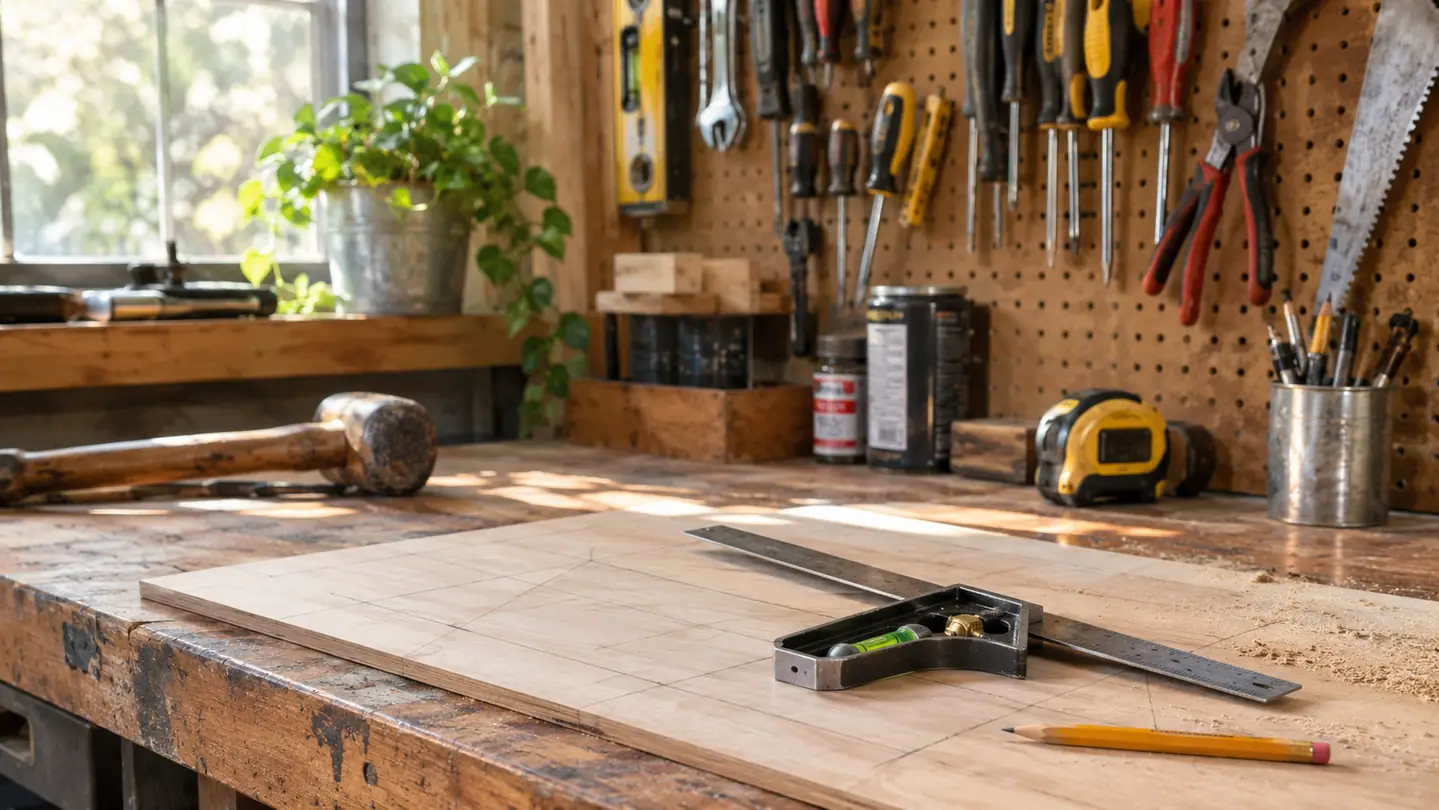
The first time I tried to mark a hinge mortise with a speed square, I got a line that was close and a door that rubbed. Close is the whole problem. A speed square is fine for framing and fine for cutting a stud to length, but it has no sliding head, so it cannot step off a repeatable depth or transfer a measurement from one piece to the next. That is the gap the IRWIN combination square fills, and it is why a 12 inch one has hung on my pegboard for about four years now.
I am not going to pretend it is the only layout tool in my shop. It is not. But it is the one I reach for first on cutting boards, picture frames, step stools and the bookshelf I built for a grandchild. Below are ten reasons it earned that spot, in the order I actually noticed them, plus the two things about it that still annoy me.
One square, two angles, no second trip to the bench
The IRWIN metal-body combination square handles 90 and 45 degree marking with a rust proof stainless blade and scales graduated to 1/16 inch. It is the layout tool that stays on my pegboard instead of living in a drawer.
Amazon See today's price on Amazon →It finds a true 90 degrees before you cut, not after
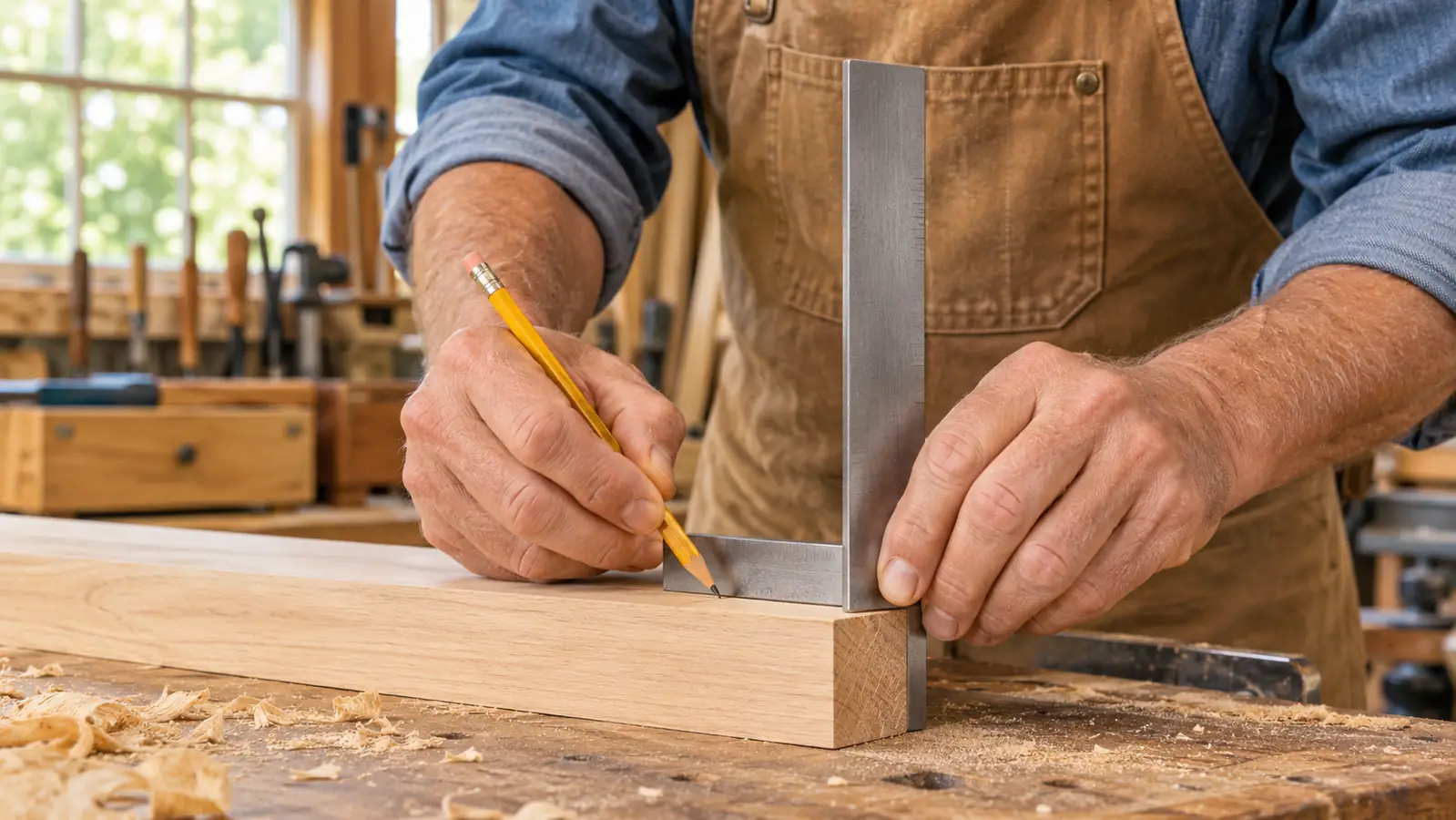
Most of the cuts I get wrong are wrong before the saw starts. The line was off a degree, or the board was not tight to the bench when I marked it. A combination square reads 90 degrees off the face edge, and the metal head sits flat against the board so the mark goes down where you aimed it. On a step stool I built this spring I marked all four leg shoulders with it and the joints closed with light hand pressure. That is what a square is for: it takes the guess out of the part you do before the saw.
The 45 degree face cuts mitered frame corners in one pass
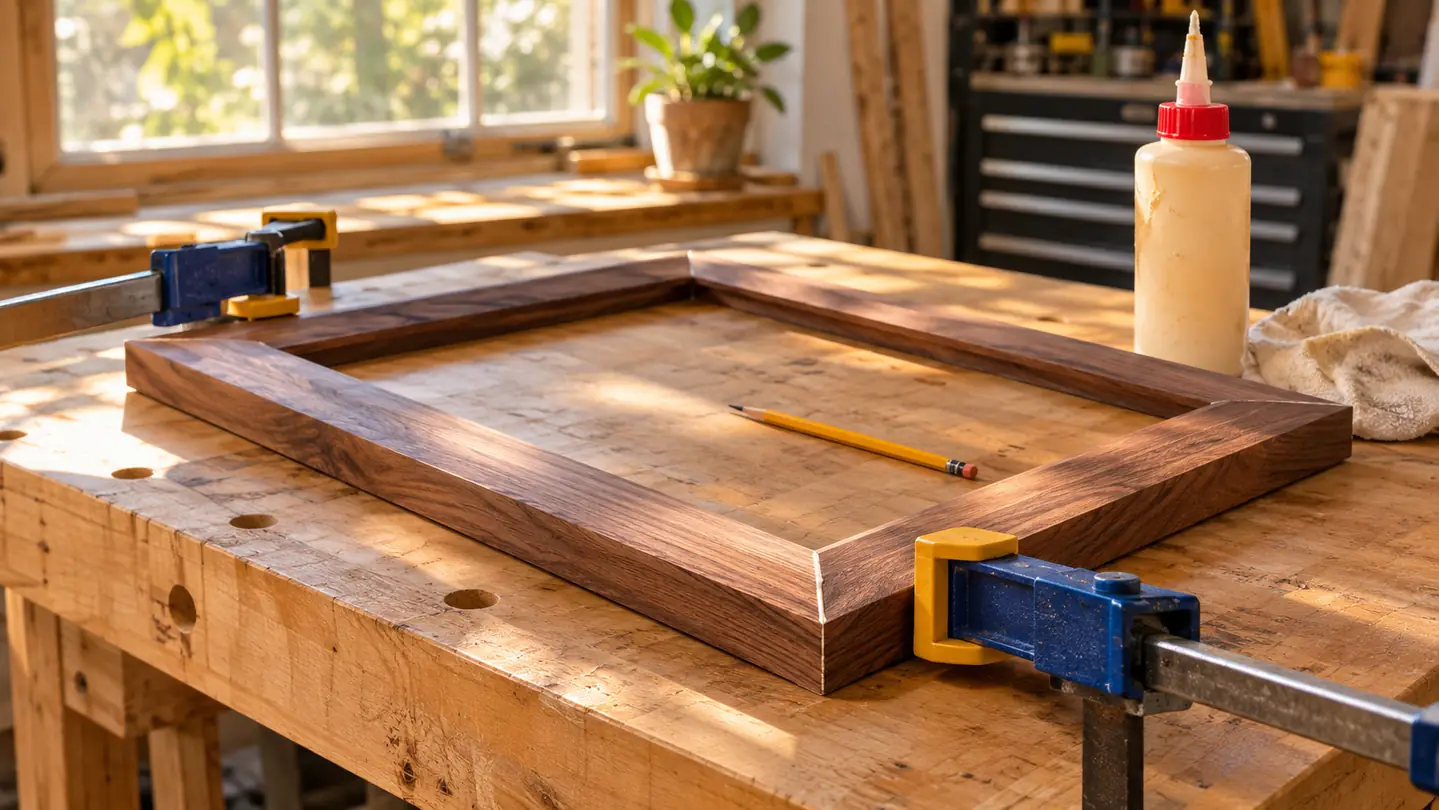
Picture frames are where the 45 side earns its keep. I cut a miter, check it against the square, and if the two faces do not meet light-tight I know the saw or the fence moved before I glue anything up. The listing calls it perfect for 90 and 45 degree marking, and that matches what I have seen at the bench. The 45 side is also how I mark the ends of frame rails before they go to the saw. It is a mark, not a cutting jig, but it is the mark everything else depends on.
The head turns the tool into a depth gauge for hinge mortises
The feature I use most is not marking. It is the head used as a gauge for transferring measurements. Set the head on the blade at the depth you want, lock it, then hold it against the work and scribe that depth. Hinge mortises on a small cabinet door are the usual job. I set the head to the leaf thickness, mark the mortise, and clean it out with a chisel. Before I had this, I was using a folding rule and a pencil and getting depths that wandered a 32nd from one hinge to the next.
Precision-etched 1/16 inch scales are still readable after four years
The scales are graduated in 1/16 inch and etched into the blade rather than printed on it. Four years of marking oak, poplar and pine, with the blade riding in and out of an apron pocket, and I can still read every mark. That sounds like a small thing until you have owned a cheap square where the numbers wore off in the middle two inches. The middle is exactly where I read most often.
The stainless blade ignores a damp garage morning
My shop is one bay of a two-car garage in Fullerton, and it gets damp in the mornings. Tools left on the bench overnight will show it. The blade on this square is stainless, and the listing calls it rust proof, which I will take their word for. What I can say is that four years in that air has not left a spot on the blade. I still wipe the whole tool down before it goes back on the pegboard, head included.
One head setting repeats the same measurement on every leg
Set the head once and every piece comes out the same. That is the whole idea behind building a step stool that does not rock. I set the head for the leg shoulder, then mark leg one, leg two, leg three, leg four without touching the lock in between. Four marks, one setting. You can do that with a tape and a pencil if you are careful, but careful is the part that fails at the end of an afternoon.
Twelve inches of blade covers a cabinet side in one pass
The blade is 12 inches long, and the listing gives 12.4 by 5.51 inches for the overall tool. A foot of blade covers most of what a hobby shop does: cabinet sides, shelf dados, the rails on a blanket chest. It is long enough to be useful and short enough to leave on the bench between jobs. If I did nothing but small boxes I would want a 6 inch version too, and I say that as a person who resisted buying any second square for years.
At 14.4 ounces it stays where you set it down
The tool weighs 14.4 ounces, and that weight matters more than it sounds like it would. A light square skates when you set it down on a planed surface. This one stays put while you get your pencil hand into position. The head is listed at 2 inches thick, so it registers against the edge of a board with a face you can actually hold against while you mark.
It checks a glue-up square from inside the box
Checking a carcass for square is the job I used to skip, because a framing square is too big to sit inside a blanket chest. A 12 inch combination square fits inside the box, lays against the corner and tells you whether the diagonals agree. When they do not, you find out before the glue sets instead of after. That single use has saved more of my projects than any marking job I have put the tool to.
A limited lifetime warranty on a tool that actually gets used
IRWIN lists a limited lifetime warranty for this square. I have not had to use it, and I am not going to pretend a warranty is a reason to buy a hand tool. But it tells you how the maker expects a metal-body square to hold up after it gets dropped on a concrete floor now and then. For the money you spend on layout tools, that is the kind of backing I want behind one. It is the honest reason mine has never been replaced.
What I'd Skip
Two things about this square bother me. The first is the lock. If you do not tighten the head down, it will move mid-mark, and you will not notice until the cut is wrong. That is not a defect, it is how every combination square I have handled works, but it is a habit you have to build. Set it, check it, tighten it. The second is that 12 inches is a lot of blade in a tight spot. Inside a drawer box or between two close dividers, a shorter blade would be handier, and I would rather own a second small square than fight a long one in a corner.
And if all you do is frame walls and cut studs to length, skip this. A speed square does that job with one hand and you likely already own one. The combination square is for work where a mark has to be right the first time: joinery layout, glue-up checks, transferring a depth from one piece to another. If your projects do not need that, this tool will sit in a drawer and you will not miss it.
Four years of marking oak and poplar, and I can still read the 1/16 inch graduations. That is the whole test.
Four years on the pegboard, and it is still the first thing I reach for
If you are setting up a first bench, this is one of the few layout tools I would buy before a second power tool. The IRWIN metal-body combination square marks 90 and 45 degrees, transfers measurements off a set head, and goes back on the pegboard after a knock. Check the current listing and the warranty details before you buy.
Amazon See today's price on Amazon →