
There is a version of this review that tells you a four piece chisel set solves everything, and there is the version I wish somebody had handed me two years ago. This is the second one.
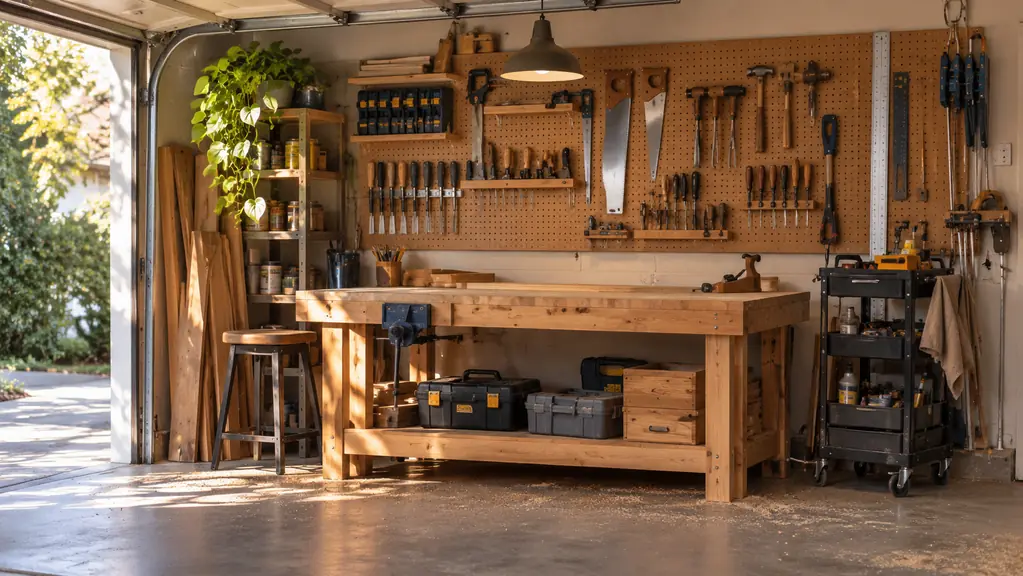
I am Russ Penhallow. I am 63, retired from plant maintenance, and I build furniture, shop fixtures and gifts in one bay of a two car garage in Fullerton, California. That bay is about 11 by 20 feet and holds one bench, a maple top I laminated myself, a front vise, a pegboard wall and a rolling cart for sharpening. About two years ago I bought the HURRICANE 4 piece wood chisel set to replace a coffee can full of mismatched chisels that had followed me home from hardware stores since the 1990s. The set lives in its own box in the top drawer under the bench. It is what I reach for now, and it is not the only chisel I have ever owned.
Here is the part that does not make it into the product photos. A chisel is a simple object, and almost all of the difference between a good one and a bad one shows up after the first month, not in the first five minutes. Out of the box, nearly every chisel will cut wood. The real questions are whether the edge survives a set of hinge mortises, whether the back is flat enough that you are not fighting it every time you hone, and whether the handle still feels like a handle after two winters in an unheated garage. Those are the questions I can actually answer, because I have owned this set long enough to be irritated by it in specific ways and pleased by it in specific ways.
The Quick Verdict
A genuinely good working set for a hobby shop. Three of the four blades arrived ready to pare end grain. The PVC handles get slick the moment your hands are damp, and that is the one thing I would change.
Amazon Check Today's Price →Four sizes in one box, and an edge that survived two winters in the garage
The half inch, three quarter and one inch chisels came out of the box cutting clean. The quarter inch needed ten minutes on a stone. Everything else about the set has held up, including the blade guards.
Amazon Check Today's Price on Amazon →How I Have Actually Used This Set
Most of my work is small. Step stools, picture frames, cutting boards, a blanket chest, a bookshelf for a grandchild. The chisels earn their keep on two jobs in particular: cutting dovetails by hand and paring them to the line, and cleaning out hinge mortises. The mortise is the one that ruins a cheap edge. It is a series of shallow cuts across end grain and cross grain in the same shallow hole, and a dull chisel bruises the wood instead of slicing it. You see it immediately, a little crushed lip around the edge of the mortise that no amount of sanding hides.
The set covers 1/4 inch, 1/2 inch, 3/4 inch and 1 inch. That is a sensible spread for furniture scale work and I have never felt a gap in it. The quarter inch gets into corners and cleans waste out of a dovetail. The half inch does the bulk of the mortise work. The three quarter and the one inch show up for wider paring, shaving a tenon cheek flat, and any job where I want a broad flat back to register against a marked line.
What surprised me is how little I think about them now. That is meant as a compliment, and it took about three months to earn. In the first weeks I thought about them constantly, because I was sharpening them constantly. That settled down once I built a routine around the stone instead of around the chisel.
The shorter version of the whole review is this: the steel has been fine and the handles have been the compromise. Everything below is detail on those two sentences.

The Blades, Which Is Where the Money Went
The blades are chromium vanadium steel, drop forged, with heat treated edges and a 25 degree bevel. That is the recipe most working chisels use at this level of the market, so the practical question is not what the steel is called. The question is whether the heat treatment was done with any care, and you only learn that by using one for a year.
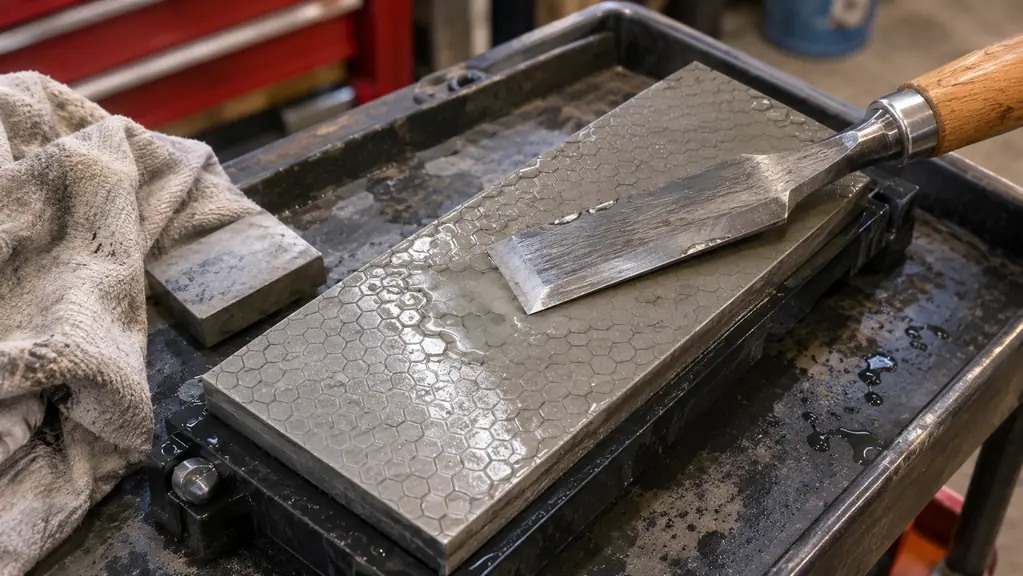
Mine was done with care, mostly. The half inch, three quarter and one inch chisels arrived with edges that would take a shaving off a piece of poplar without any work from me. The quarter inch did not. It would cut, but it wanted to skate across end grain, and when I laid the back on my diamond stone I could see a slight hollow in the middle. Ten minutes on the coarse side flattened it and put a proper edge on it, and it has behaved ever since. One chisel out of four needing a tune up is normal at this level. Three out of four and I would be writing a very different piece.
The 25 degree bevel is a fair compromise for a set that will see softwood, hardwood and the occasional piece of plywood. It leaves more steel behind the edge than a shallower paring angle would, so it survives a mallet, and it still cuts cleanly in pine and poplar. On white oak it wants attention sooner. That is true of any 25 degree edge, so I do not hold it against this set.
How long the edge lasts, in real terms: on pine and poplar I can pare for a whole evening and only strop. On oak I touch up the half inch roughly every forty minutes of honest chopping. That is a working edge, not a magical one. If you are used to a premium chisel you will notice the difference in how often you walk to the stone. Since my sharpening cart rolls and the stone is already wet, a touch up is about thirty seconds of my life, so I have stopped caring.
The backs of all four blades flattened without a fight. None of them had a warp I could find with a straightedge. The bevels are ground square to the sides, which matters more than people give it credit for, because a skewed bevel means the chisel drifts when you pare down a wall and you spend the rest of your life correcting with your wrist.
The Handles, Which Is the Part I Would Change
The handles are high impact PVC. They are tough, and I mean that literally. I have dropped the one inch chisel off the bench onto a concrete floor twice. It bounced, it did not crack, and the edge came through both times with nothing worse than a touch up. I have hit the three quarter with a wooden mallet more times than I could count and the handle has not split at the socket.
The problem is not toughness. The problem is texture. PVC is smooth, and smooth plastic goes slick the instant there is sawdust or sweat on your hands. In February, with the garage door open and my hands cold and dry, the grip is fine. In August, after an hour of sawing and paring, my hands are not dry, and the one inch chisel has rotated in my grip twice. One of those times it slipped while I was paring a hinge mortise and I put a nick in a door stile I had already finished. I fixed it. I still remember it.
There is no grip texture molded into these handles. No knurling, no flats, no rubber overmold. At this end of the market that is the tradeoff that got made, and it is the one thing I would pay more to avoid if I were buying again. A strip of self adhesive grip tape around the fat part of the handle solves it for about the price of a coffee, and that is what I did on the one inch and the three quarter. I should not have had to, but here we are.
The shape itself is fine. The handles are comfortable in a choked grip for paring and long enough to get a second hand on for chopping. The flat at the back of the handle takes a mallet squarely, which is more than I could say for the wooden handled chisels I owned before this set.
Three of the four blades pared end grain straight out of the box. The quarter inch took ten minutes on a diamond stone. That ratio is normal at this level, and it is worth knowing before you open the case.
The Caps and the Case
Every chisel comes with a blade guard, and the set comes with its own case. The guards matter more than they sound like they do. A chisel rolling around loose in a drawer with an exposed edge is how you get a chipped edge and a cut finger in the same afternoon. These snap over the blade and stay put. Two years in, all four guards are still with me, which for small plastic parts is unusual enough that I noticed.
The case is basic and it works. It holds the four chisels and it closes. It is not a roll, it is not felt lined, and there is no room in it for anything else. Mine sits inside the top drawer under the bench and I pull chisels out one at a time. That is the whole job, and it does the whole job.
Two Years In, a Condition Report
The honest test of a chisel set is not the first project. It is the tenth. Here is where mine stands after two years of weekend use in a garage that gets hot in summer and cold enough in winter that I wear a flannel.
No handles have cracked. No ferrules have loosened. None of the blades have chipped badly enough to need more than a touch up on the fine side of the stone, and that includes the time the one inch hit concrete. The socket where the blade meets the handle is still tight on all four, with no wobble and no rust bleeding out of the joint, which is more than I could say for the bargain bin chisel this set replaced.
What has changed is the amount of honing each blade wants. All four want it more often than they did in the first six months, which is not a defect. That is what happens when you sharpen steel. The set has not degraded so much as it has settled into being a working set.
What I Would Change
Three things, in order of how much they bother me.
First, the handle texture. I would mold a few flats or a band of texture into the PVC. That single change would take this from a set I recommend with a caveat to a set I recommend without one.
Second, I would like the quarter inch chisel to leave the factory with the same edge as the other three. One blade out of four needing work is acceptable. It is still work I did not want to be doing on the afternoon the box showed up.
Third, the case could use a divider so the blades do not knock against each other in transit. That is a small thing and I know I am reaching for a complaint there.
What I Liked
- Three of the four blades pared end grain straight out of the box
- Chromium vanadium steel holds a working edge through an evening of pine and poplar
- Blade guards stay on in a drawer and all four have survived two years
- Handles take a mallet without splitting at the socket
- Four sensible sizes in one box, so sharpening and grip carry from one chisel to the next
- No rust at the socket after two winters in an unheated garage
Where It Falls Short
- PVC handles get slick with sawdust or damp hands, with no molded texture
- The quarter inch chisel needed flattening and honing out of the box
- Basic case with no dividers between blades
- The 25 degree bevel needs more frequent touch ups on oak
How It Compares to What I Had Before, Honestly
Before this set I had a mismatched collection. Two wooden handled chisels from a hardware store, one inherited chisel I had re seated the handle on myself, and a cheap plastic handled one that I am fairly sure came out of a bargain bin. The HURRICANE set is better than all of them, and the reason is not really the steel. It is that all four chisels are the same family, so my sharpening routine, my grip and my expectations carry from one to the next without adjustment.
I have also used a friend's Narex chisels enough to have an opinion, and the honest version is that his hold an edge longer than mine and feel better in the hand. They also cost more and I do not own a set, so I am not going to pretend that is a fair fight. I wrote that comparison up separately, because it deserves more than one sentence in somebody else's review.
The point is not that this set beats everything on the shelf. It is that you are making a value decision, and this set does the job the job actually requires. If you pare dovetails every weekend for money, buy better steel. If you build four or five projects a year in a garage on a Saturday, this is enough chisel and the extra money is better spent on a decent stone.
Who This Is For
This set is for the hobby woodworker who wants hand tools that hold an edge without a second mortgage. If you are setting up a first bench and you need four sizes that will handle dovetails, mortises, tenon cheeks and general paring, the HURRICANE set covers all of it in one box and the steel will not embarrass you. It suits someone who is willing to spend ten minutes flattening a back on the day the box arrives, and who owns or intends to own a stone. It also suits the person who has been making do with a coffee can of mismatched chisels and has finally had enough, which is exactly where I was two years ago.
Who Should Skip It
Skip it if your hands are damp for most of the working day and you want a handle you can trust without modification, because you will be reaching for grip tape within a week. Skip it if you cut dovetails or chop mortises several times a week and edge retention is your main cost, because there are chisels with better steel and you already know it. And skip it if you are not going to sharpen, because no chisel at any price stays sharp on its own, and this set will disappoint you in the same way every other one would.
The set is not perfect. It is the set I still reach for two years later
Four sizes, a working edge, guards that stay on, and one handle problem you can fix with a strip of tape. If that trade sounds fair to you, this is the set.
Amazon Check Today's Price on Amazon →