
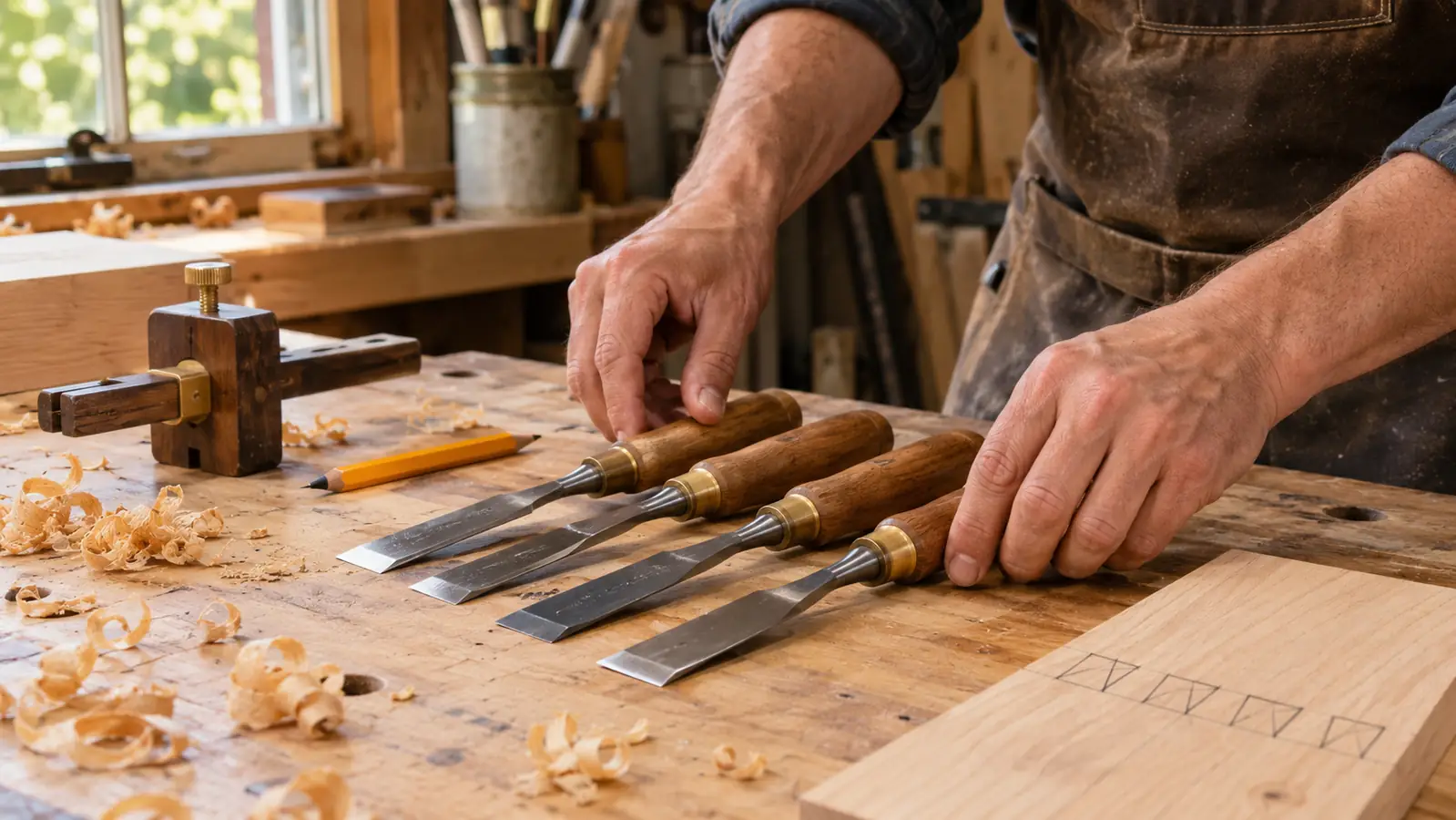
Short answer first, because that is what I want when I read one of these. If you are setting up a bench in half of a two-car garage and you want four chisels that will cut pine, poplar and oak without you fussing over them, the HURRICANE 4 Piece Wood Chisel Set is what I would put in your hand. If you cut dovetails most weekends and you want an edge that stays put through an entire drawer, the Narex set is worth the extra money. The rest of this is why.
One disclosure up front, and it matters more in a comparison than in a review. I own the HURRICANE set. I bought it about two years ago to replace a mismatched pile of hardware-store chisels, and it lives in the top drawer under my bench. I do not own a Narex set. I handled one at a woodworking show for maybe five minutes, I have read the maker's published specifications more than once, and I have talked at length with two men who use them hard. So the Narex side of this comes from a spec sheet and two sets of calloused hands that are not mine. I would rather say that out loud than write a comparison that pretends I ran both sets through a test rig.
| HURRICANE 4 Piece Set | Narex bevel-edged set | |
|---|---|---|
| Blade steel | Drop-forged CR-V steel with heat-treated edges | Chrome-manganese steel, hardened and tempered |
| Edge holding | Needs a pass on the stone between projects | Holds a working edge noticeably longer |
| Handle | PVC, high impact, comfortable but slick when hands are damp | Beech with a steel hoop, grips better as your hands sweat |
| Sizes in the box | 1/4, 1/2, 3/4 and 1 inch | 6, 12, 19 and 25 mm, close to the same four but metric |
| Storage and edge protection | Case plus a guard on every blade | Boxed set, most owners end up making a roll |
| Cost of learning on it | Inexpensive enough that a ruined edge is not a disaster | You will be careful, and careful slows the learning down |
| Best for | A first real set on a home bench | Regular joinery and a sharpening habit you already have |
Read that table the way I meant it, not the way a sales page would. Three rows go to HURRICANE, three go to Narex, and the last one is a genuine tie because these two sets are not chasing the same buyer. A table where my own set wins every row would tell you nothing except that I am fond of my own chisels.
Why a Budget Set Is Even in This Conversation
Because that is the decision most people actually face. The chisel shelf splits in two. One end is the inexpensive sets, four chisels in a case for not much money. The other end costs several times that, and the labels talk about hardness and treatment and country of origin. A weekend woodworker with a step stool to finish has to decide whether that difference is real or whether it is marketing set in a nicer font. I have stood in front of that shelf more than once.
Last spring I stood in the aisle of a woodworking store with both sets in front of me and did the only test a store allows: I picked each one up. The Narex felt denser through the handle and the hoop sat tight against the wood. My set felt lighter, and a little more like a tool you would hand to a neighbor without a lecture. Neither feeling told me which one would hold an edge through a board of white oak. That is the whole problem with choosing in a store, and it is why I ended up out in the parking lot reading spec sheets with the engine off.
My situation is probably yours. One bay of a two-car garage, about 11 by 20 feet, a maple-top bench I built myself with a front vise, and pegboard on the wall. I own a contractor table saw and a cordless drill. Hand tools took over because they are quiet and my neighbors are close. In that shop a chisel does four jobs: paring dovetails, cleaning out hinge mortises, trimming end grain, and knocking a corner off when a piece will not sit flat. None of that needs the finest steel ever made. All of it needs a chisel that is genuinely sharp, and that is a separate problem from the one you solve with money.
Where HURRICANE Wins
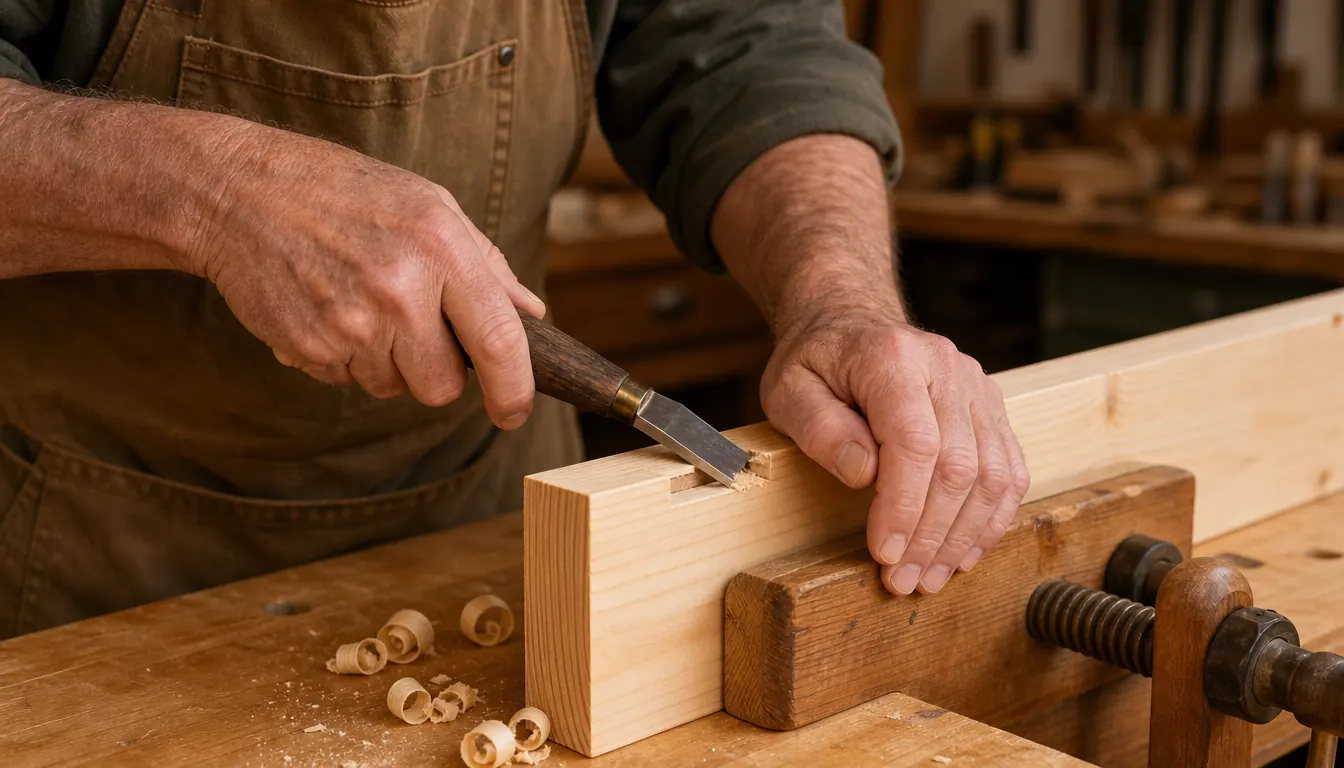
Sizes, first. My plans are in inches, my square is marked in inches, and the lines I strike are in inches. A 3/4 inch mortise wants a 3/4 inch chisel. A 19 mm blade is close enough that you will not measure the difference on a hinge, but close enough gets tiresome when you are paring to a line you struck with an inch-marked square and the blade keeps landing a hair to one side of it. The HURRICANE set is 1/4, 1/2, 3/4 and 1 inch, and every one of those lines up with a mark I have already made. On a home bench, that convenience is worth more than a marginally better alloy.
Here is one from February, so it is not all theory. I was fitting two hinges into the face frame of a small oak cabinet, and the mortises were 3/4 inch wide and 4 inches long. I used the 3/4 inch blade to take the corners square and the 1/2 inch to shave the last sliver off the bottom. Because both blades matched the marks I had struck with the IRWIN square, I never had to rechalk a line or sneak up on the size from the safe side. Two hinges, twenty minutes, no swearing. With a mismatched set that same job takes longer and I could not tell you exactly why, only that it does.
The case and the blade guards are the next thing. Each chisel in the HURRICANE set comes with a guard sitting over the edge, and the four of them live in a case that fits the top drawer under my bench. Before this set my chisels were loose in a coffee can, and I have a small white scar on one knuckle to prove how that ends. The third advantage is harder to put a number on: the set was cheap enough that I was willing to learn sharpening on it. I made mistakes. I tipped the 1/2 inch blade early on and rounded the edge. Had that been an expensive chisel I would have been irritated for a week. Instead I went back to the stone and fixed it in ten minutes.
Where Narex Wins
Steel and edge holding, and this is the real one. Narex builds its standard bevel-edged set from a chrome-manganese steel, and the two men I talked to said the same thing without prompting each other: it holds a working edge longer than the budget sets they came up from. My HURRICANE blades are drop-forged CR-V with heat-treated edges and a 25 degree bevel. They take a fine edge off the fine side of my stone and they will shave end grain when fresh. They just do not keep it. On a run of hard maple I can feel the edge going off partway through the second board, and I finish the job knowing the next one starts at the stone.
Handles, second, and this is the detail that surprised me. The PVC handle on my set is the one thing I would change if I could change exactly one thing. It is high impact, it does not work loose, and in dry weather it is perfectly comfortable in the hand. Get a little sweat on your palms in July and it turns slick, and a slick handle on a paring chisel is a chisel that slides past your layout line. The Narex beech handle with a steel hoop goes the other direction: the wood grips better as the work gets harder and your hands get damper. Small thing. It shows up on every single project.
At the show I did get one thing out of handling them, and it was not the steel. The Narex handle carries more length between the ferrule and the butt, so the balance sits further back in your palm. On a paring cut, where you are driving with the heel of your hand and not a mallet, that rearward balance settles the blade in a way I noticed inside ten seconds with a scrap of pine. Whether that is worth the difference in money is a question only your own bench can answer. Mine already has its answer sitting in the top drawer.
Four chisels, one case, and a drawer that finally closes
The HURRICANE set is what is still in my bench drawer after two years of weekends. Four sizes in inches, a guard on every edge, and steel that takes a fine edge without you treating it like glass.
Amazon Check today's price on Amazon →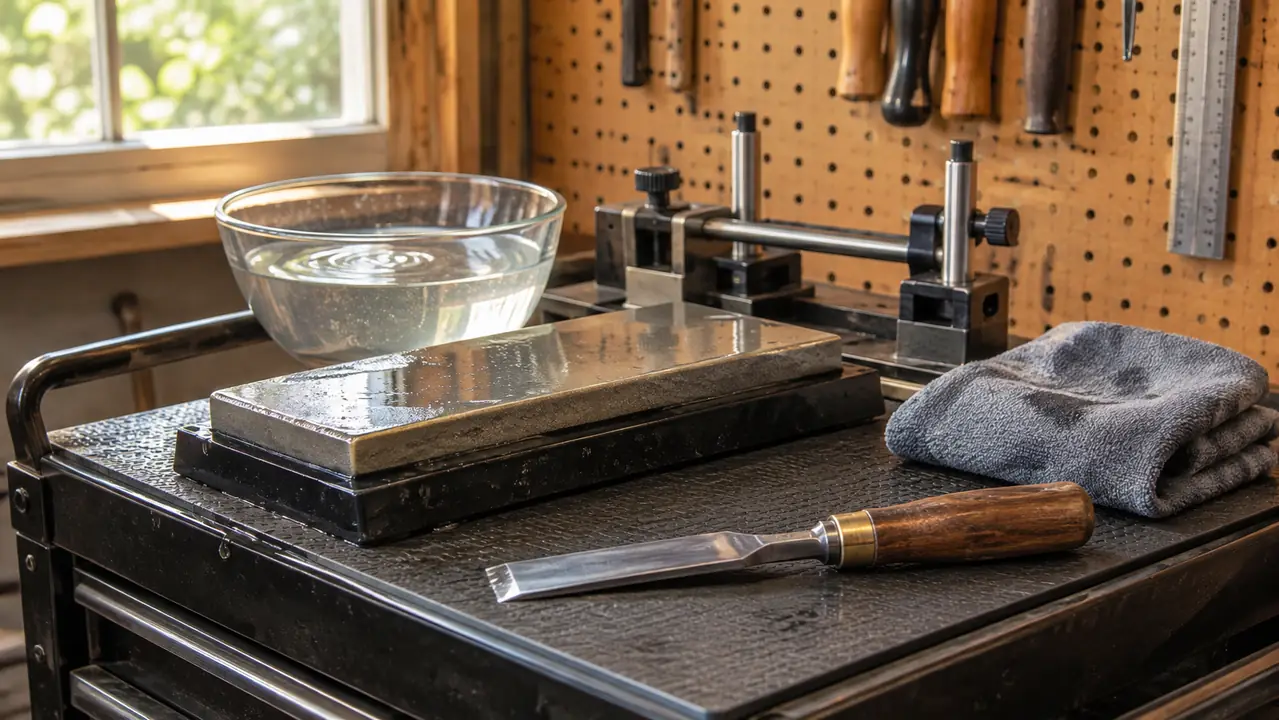
What Two Years Actually Did to the Edges
Setup first, because everyone asks and the answer is better than you would expect at this price. The backs came close to flat out of the box. I laid each one on the coarse side of the SHARPAL 162N with water and worked it until the scratch pattern ran the full width of the blade. Three of the four took a few minutes each. Only the 1/4 inch fought me, and it took about ten minutes and some patience before the back sat where I wanted it. That was my whole first evening with the set, and most of the evening was that one blade.
Two years on, here is the honest shape of it. The edges need touching up more often than a premium chisel would, and that is the trade for the price. The stone sits on a rolling cart beside the bench, water only, no oil. Coarse side for a nick or to redo a back, fine side for a few passes. I touch up every second or third project, more if I have been working oak. It has become part of setting up for a job the way sweeping the floor is part of it. The handles have not cracked, the guards still snap on, and the case has not come apart at the hinge.
One more thing worth knowing, and it is the story I tell when someone asks whether cheap steel is a false economy. In the fall I dropped the 1 inch chisel off the bench onto the concrete, edge first, which is the classic way to learn a lesson. It took a nick about the width of a grain of rice out of the bevel. Twenty minutes on the coarse side with water and it was back to paring clean. That is the argument for inexpensive steel in a single paragraph: the mistake cost me twenty minutes instead of a replacement. I have not dropped one since. I am still glad the one time it happened, it happened to this set.
A sharp inexpensive chisel beats a dull expensive one every time, and the sharpening lesson costs the same on either set.
The Sharpening Question Nobody Asks Before Buying
Almost nobody asks how a chisel sharpens before they buy it. They ask how sharp it is out of the box, which is the wrong question, because it will not be sharp by the time you have made a dozen cuts. The right question is whether you can put an edge back on it with the stones you already own and the ten minutes you have. Both of these sets answer yes. A 25 degree bevel on the HURRICANE set is a standard angle and comes up fast on a diamond stone. The Narex bevel-edged set is also a conventional flat-back chisel, so the same stones and the same wrist motion apply to both.
Where they differ is how often you have to do it. Mine asks for the stone more often. If you find sharpening tedious, that frequency is a real cost and it is the honest argument for spending more on the Narex. If you find it mildly satisfying, which I do now, the frequency is practice, and practice is the thing that finally made my dovetails close without a gap you could read the newspaper through. I spent my first year blaming chisels for gaps that were entirely my own fault.
What I Liked
- Sizes match imperial plans: 1/4, 1/2, 3/4 and 1 inch
- A guard on every blade plus a case that fits a bench drawer
- Backs were close to flat out of the box, three needed only a few minutes each
- Drop-forged CR-V blades with a 25 degree bevel take a fine edge
- Inexpensive enough to learn sharpening on without flinching
Where It Falls Short
- Edges need touching up more often than a premium chisel
- PVC handles get slick once your hands are damp
- Only four sizes, so metric plans need converting
- No 1/8 inch blade for fine paring work
Who Should Buy Which
Buy the HURRICANE set if you are where I was two years ago. One bench in a garage, a few projects a year, plans in inches, a stone you are still learning to use, and no interest in becoming a chisel collector. You want four sizes that match your marks, guards so the drawer is safe, and enough steel to finish a blanket chest without a fuss. That is this set, and it has done every one of those jobs on my bench from cutting boards to a bookshelf for a grandchild.
Buy the Narex set if the chisels are the point and not just the means. If you cut dovetails most weekends, if you keep a stone flat and a strop loaded, if you notice the difference between an edge that lasts one board and an edge that lasts three, then the extra money buys something you will actually feel in your hands. It also gets you a handle that grips better when your hands are damp. What it does not buy is a shortcut. Both sets still need you to learn the same skill, and neither one will close a joint for you.
The set I would hand you at the bench
Four sizes in inches, blade guards on every edge, and two years of weekends behind it. If you are setting up a first bench, start here and spend your worry on the sharpening instead of the invoice.
Amazon Check today's price on Amazon →